Physical Address
Arthur Avenue , BrookField , ILLINOIS , 60513 , United State
Physical Address
Arthur Avenue , BrookField , ILLINOIS , 60513 , United State

Last Updated: July 2026
| Quick Information | |
|---|---|
| Platform | CLAAS WebTIC |
| Developer | CLAAS |
| Category | Cloud-Based Fleet Management & Remote Diagnostics |
| Supported Equipment | Compatible CLAAS tractors, combines, forage harvesters and telehandlers equipped with telematics |
| Primary Purpose | Remote monitoring, fleet management, machine diagnostics and service planning. |
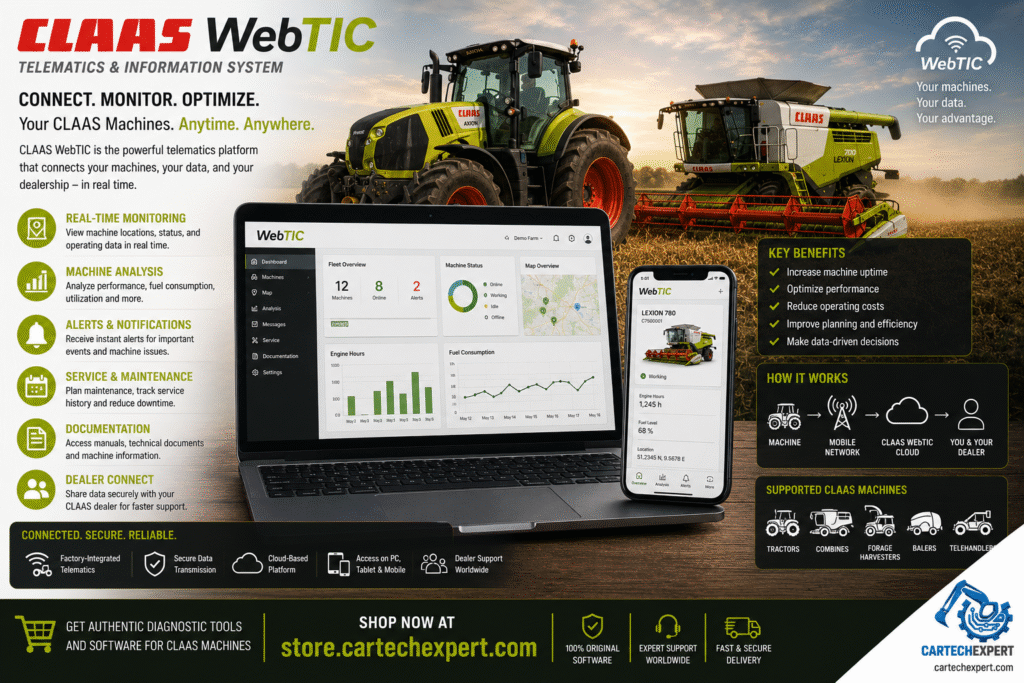
CLAAS WebTIC is the official telematics platform developed by CLAAS to help owners, fleet managers and service technicians remotely monitor compatible agricultural machines. It combines machine operating data, GPS positioning and maintenance information in a web-based environment that helps improve productivity and reduce downtime.
Unlike CLAAS CDS, which is used for direct diagnostic communication in the workshop, CLAAS WebTIC focuses on remote fleet management. The platform allows users to monitor machine health, review operating statistics, manage maintenance schedules and support service planning.
| Machine Family | Typical Coverage |
|---|---|
| LEXION Combine Harvesters | Telematics-enabled models |
| JAGUAR Forage Harvesters | Supported generations |
| AXION & ARION Tractors | Compatible models |
| SCORPION Telehandlers | Supported telematics systems |
| Other CLAAS Equipment | Models equipped with compatible telematics hardware |
| Feature | Description |
|---|---|
| Machine Location | GPS-based fleet tracking |
| Operating Hours | Monitor utilization |
| Fuel Consumption | Review efficiency trends |
| Maintenance Planning | Schedule service intervals |
| Machine Status | View supported alerts and operating information |
| Fleet Reports | Export operational summaries |
Depending on the machine configuration and subscription, WebTIC can provide machine location, working hours, fuel usage, performance indicators and selected service information through an internet-connected dashboard.
It is primarily a telematics and fleet management platform. Workshop diagnostics are typically performed using CLAAS CDS.
Compatible machines equipped with supported telematics hardware can provide GPS-based location information.
Yes. Maintenance reminders and remote monitoring can help identify service needs before they become major failures.
Fleet data becomes much more valuable when reviewed consistently. Tracking operating hours, idle time and maintenance history can help identify machines that need attention before harvest or other critical work periods.
CLAAS WebTIC extends machine management beyond the workshop by providing remote visibility into compatible CLAAS equipment. When combined with CLAAS CDS and good preventive maintenance practices, it helps maximize productivity and fleet availability.
