Physical Address
Arthur Avenue , BrookField , ILLINOIS , 60513 , United State
Physical Address
Arthur Avenue , BrookField , ILLINOIS , 60513 , United State

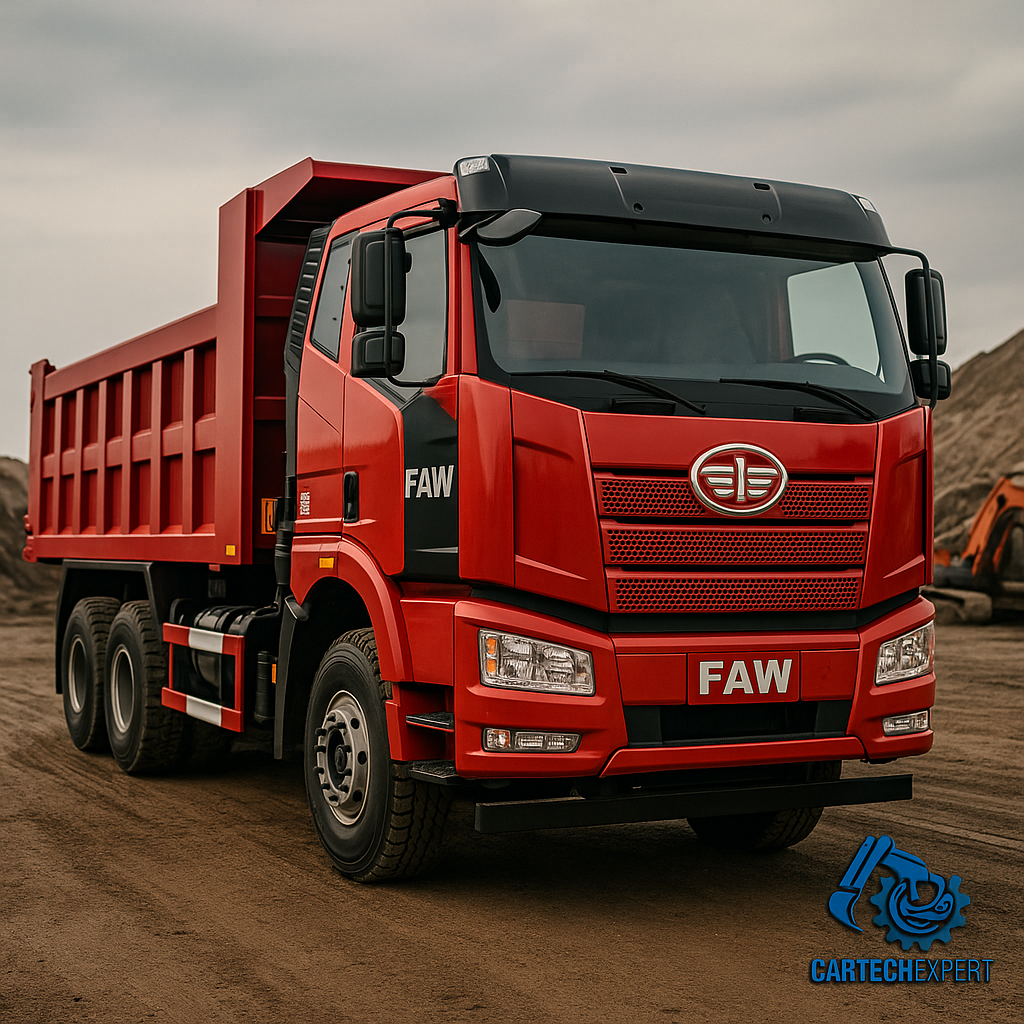
There is a distinct character to a FAW truck—strong, purposeful, and built for the kind of heavy-duty demands that define modern Asian industry. For technicians, operators, and fleet managers, FAW represents more than a manufacturer; it is a symbol of China’s industrial rise, a legacy that started with the nation’s very first automobile and grew into one of the world’s largest commercial vehicle groups.
From construction sites to long-haul freight corridors, FAW trucks carry the engineering spirit of a company that helped shape China’s automotive future. Their durability, powerful engines, and practical design make them a vital part of developing and globalizing markets.
“FAW – China’s Oldest Automotive Group” refers to First Automotive Works, established in 1953 as China’s first car and truck manufacturer. Over the decades, FAW evolved into a global automotive conglomerate producing:
FAW’s commercial trucks—especially the Jiefang (“Liberation”) brand—are among the most widely used in China and several international markets.
FAW was established in Changchun, Jilin Province, as the central hub of China’s first automotive production base. It symbolized the industrial modernization of the newly founded People’s Republic of China.
In 1956, FAW rolled out the CA10, China’s first domestically produced truck. Based on the Soviet ZIS-150 design, the CA10 became a nationwide workhorse, powering:
During the 1960s and 1970s, FAW remained the backbone of China’s industrial and military transportation, shaping the early stages of the nation’s heavy engineering sector.
As China opened to global trade, FAW began integrating international technologies and redesigning truck platforms. Key advancements included:
FAW established joint ventures with global automotive leaders, including:
These partnerships accelerated FAW’s engineering capabilities, safety standards, and manufacturing processes.
Today, Jiefang (FAW J6, J7, and other models) represents the backbone of FAW’s commercial vehicle division. These trucks are known for:
The FAW JH6 and J7 series introduced advanced features, such as:
FAW exports trucks to more than 80 countries, with strong markets in:
FAW is actively developing:
| Engine | Displacement | Power | Applications |
|---|---|---|---|
| Weichai WP10 | 9.7L | 300–380 hp | Regional haul |
| CA6DM | 10.5L | 350–460 hp | Heavy-duty |
| Weichai WP13 | 12.5L | 430–560 hp | Long-haul |
| Task | Interval | Purpose |
|---|---|---|
| Oil Change | 15,000–25,000 km | Lubrication |
| Fuel Filter | 20,000 km | Clean injection |
| Cooling System | Annual | Engine temperature control |
Yes. FAW trucks are designed for demanding environments and offer strong value for cost.
Most FAW heavy-duty trucks use Weichai engines, known for strong torque and durability.
Yes. Modern J7 and JH6 models are designed for long-distance comfort and efficiency.
Yes. FAW is developing multiple new-energy commercial platforms, including battery-electric and hydrogen fuel-cell trucks.
“FAW is one of China’s largest automotive manufacturers, producing commercial trucks known for durability and affordability.”
FAW’s journey from China’s first truck manufacturer to a global commercial-vehicle leader reflects the nation’s industrial transformation. With strong engineering roots, powerful diesel engines, expanding export markets, and emerging new-energy technology, FAW continues to shape the future of transportation across Asia and beyond.
For more technical articles and heavy equipment insights, visit:
cartechexpert.com
Shop professional tools, diagnostic systems, and workshop equipment at:
store.cartechexpert.com
