Physical Address
Arthur Avenue , BrookField , ILLINOIS , 60513 , United State
Physical Address
Arthur Avenue , BrookField , ILLINOIS , 60513 , United State

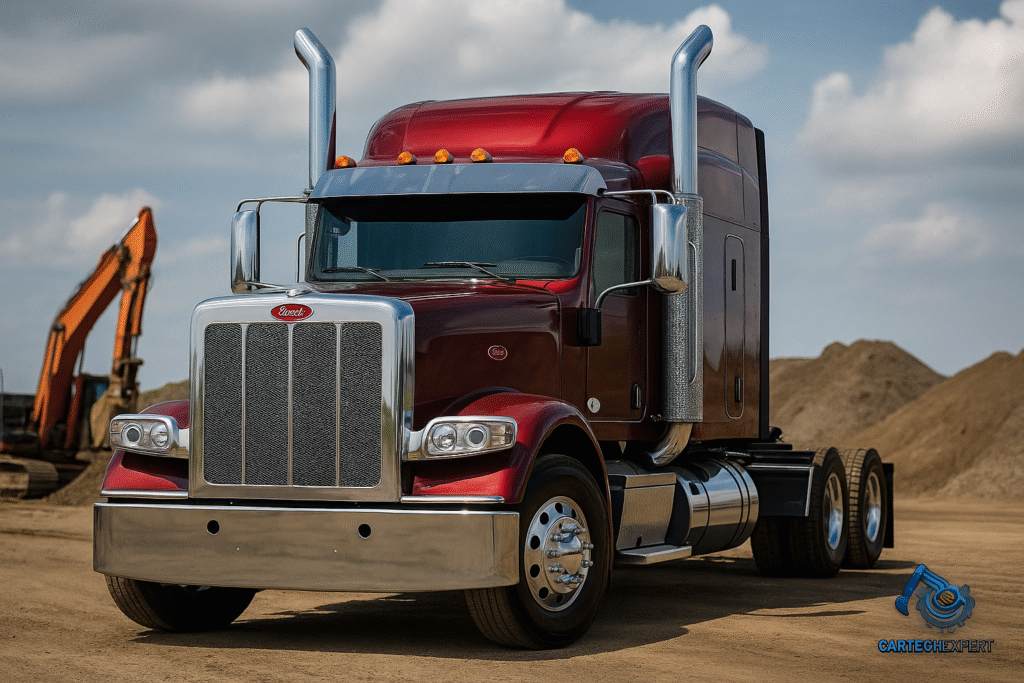
Every technician, engineer, and heavy-duty operator knows the feeling: the deep rumble of a diesel powerplant, the weighted authority of a long hood stretching forward, and the unmistakable silhouette of a machine engineered not just to perform—but to endure. That is the presence Peterbilt has carried since its birth.
At CarTechExpert.com, we honor the legacy of the machines that shaped North America’s industrial muscle. And for those who want to explore related truck histories, don’t miss our previous articles:
Peterbilt’s story began in 1939 when T.A. Peterman—an entrepreneur in the logging industry—sought to solve a critical problem: hauling logs more efficiently across tough terrain. The early Pacific Northwest demanded rugged machinery, and Peterman responded with innovation, rebuilding and modifying military trucks until he crafted a platform capable of taking on the harshest work environments.
Peterbilt built its reputation through disciplined engineering—combining durability, driver-focused ergonomics, and unmatched chassis customization. From the foundational Model 260 to the legendary 379 and today’s aerodynamic 579, every generation refined a core philosophy: strength paired with precision.
Today’s Peterbilt models integrate advanced engineering with digital intelligence. Their technologies elevate performance, safety, and efficiency.
For technicians and fleet managers, proper maintenance is essential for longevity and safety. Peterbilt trucks are designed for accessibility and simplified service.
Need professional-grade tools? Visit our store: store.cartechexpert.com
Operator safety remains a top priority. Modern Peterbilt cabins, chassis designs, braking systems, and driver-assist technologies work collectively to reduce risk. For engineers and heavy-equipment professionals, staying aligned with OSHA and FMCSA standards is essential.
| Generation | Key Models | Notable Features | Era |
|---|---|---|---|
| Early Logging Trucks | Model 260, Model 334 | Heavy-duty frames, logging design | 1939–1950s |
| Classic Era | 281, 351 | Long nose, powerful diesel engines | 1950s–1970s |
| Iconic Long-Haul | 359, 379 | Premium work truck identity, customizable | 1980s–2000s |
| Aerodynamic & Smart Era | 579, 567, EV series | Aero design, electric options, advanced safety | 2010s–Present |
Peterbilt trucks combine durability, customization, and advanced technology, forming a premium platform trusted by professionals across logistics, construction, and long-haul industries.
The Peterbilt 359 and 379 are widely considered the brand’s most iconic and classic long-haul trucks.
Yes. The integration of Paccar MX engines, aerodynamic design, and smart powertrain controls improve fuel efficiency significantly.
The recent 579EV and 220EV models bring clean-energy solutions to urban and regional fleets.
Peterbilt’s origins are rooted in ingenuity and the relentless pursuit of better engineering. From the logging trails of 1939 to the intelligent, electric-ready machines of today, Peterbilt remains a symbol of American perseverance, innovation, and industry leadership.
For more truck histories, diagnostics insights, and heavy-equipment expertise, explore our full knowledge hub at CarTechExpert.com.
