Physical Address
Arthur Avenue , BrookField , ILLINOIS , 60513 , United State
Physical Address
Arthur Avenue , BrookField , ILLINOIS , 60513 , United State

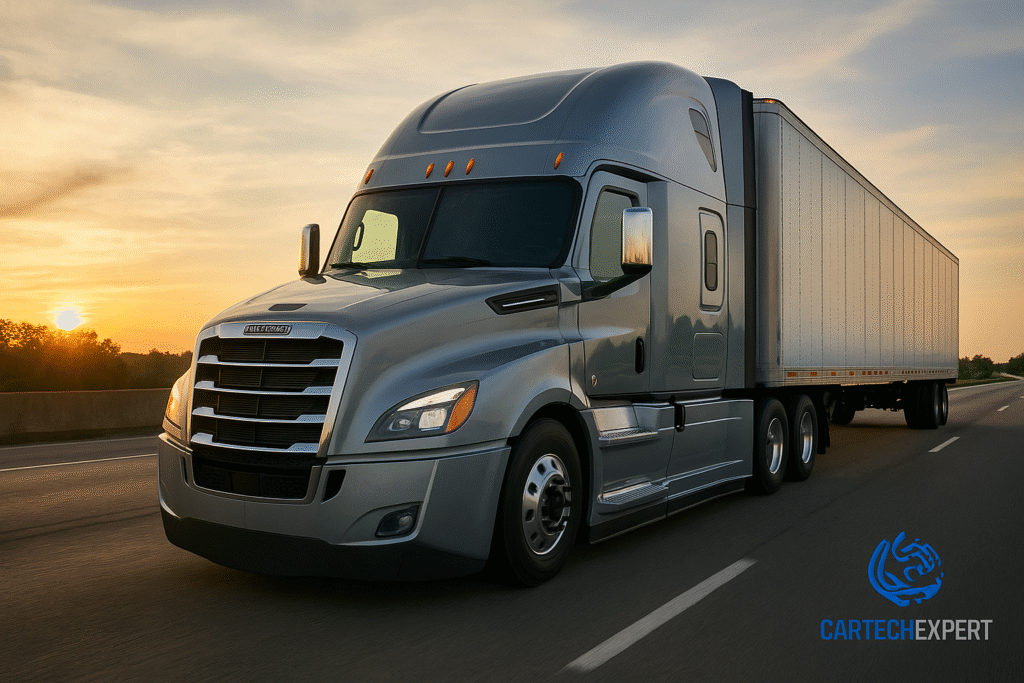
Picture the endless American highway: chrome reflecting the sunrise, the hum of a diesel engine pushing through the morning mist. For decades, one name has been synonymous with strength, reliability, and innovation—Freightliner. Whether you’re a fleet manager optimizing uptime or a mechanic working on a Detroit engine, Freightliner represents a blend of engineering excellence and real-world performance that’s built for the long haul.
In this comprehensive guide, we’ll explore how Freightliner evolved from a regional builder to a global technology leader in trucking, reshaping the way heavy-duty vehicles are designed, diagnosed, and driven.
Freightliner’s story began in Portland, Oregon in 1942, founded by Leland James, who believed that trucks could be both lightweight and powerful. His vision led to the creation of some of the first aluminum long-haul trucks—revolutionary in an era dominated by heavy steel frames.
After becoming a major player in the U.S. trucking scene, Freightliner joined forces with Daimler-Benz AG in 1981, gaining access to global resources and cutting-edge German engineering. This partnership paved the way for new technologies in fuel efficiency, safety, and driver comfort that would define the brand for decades to come.
Freightliner has always focused on one principle: innovation through function. From the early days of the Freightliner FLD series to the advanced Cascadia line, each truck was engineered to push boundaries in aerodynamics, performance, and safety.
Modern Freightliner trucks are rolling data centers. With the introduction of Detroit Connect, Freightliner redefined how fleet operators and technicians monitor vehicle health, driver performance, and route optimization in real time.
Technologies like Virtual Technician allow mechanics to receive remote diagnostic reports the moment an engine fault occurs. Combined with the Detroit Connect Portal, this data empowers faster decision-making and improved uptime—a major competitive edge for fleet operators.
Diagnostics have moved from manual tools to intelligent platforms. Freightliner’s commitment to smarter servicing means fewer surprises for technicians. Their integration of onboard diagnostics (OBD) and advanced CAN bus communication ensures that every component, from the transmission to the brake system, is constantly monitored.
For technicians, this means real-time access to data streams that make troubleshooting faster and more precise. When paired with professional diagnostic tools available on CARTECHEXPERT’s store, these systems help minimize downtime and extend vehicle lifespan.
| Brand | Country | Key Strength | Technology Focus | Popular Model |
|---|---|---|---|---|
| Freightliner | USA | Fuel efficiency, telematics, uptime | Detroit Connect, OBD Integration | Cascadia |
| Kenworth | USA | Driver comfort, build quality | PACCAR MX Engines | T680 |
| Peterbilt | USA | Design, performance | SmartLINQ Diagnostics | 579 UltraLoft |
| Mack Trucks | USA | Durability, heavy-haul capacity | GuardDog Connect | Anthem |
Freightliner’s innovation journey is far from over. With the launch of the eCascadia and eM2 electric trucks, the company is taking bold steps toward sustainability and automation. Daimler Truck North America is actively testing autonomous truck systems in partnership with Torc Robotics, marking a new era in logistics and transport efficiency.
Freightliner’s ability to integrate AI-driven diagnostics and predictive maintenance will further redefine how fleets operate in the next decade—ensuring uptime, safety, and cost control at levels once unimaginable.
From its humble beginnings in Oregon to becoming the heart of America’s logistics industry, Freightliner has never stopped innovating. For mechanics, understanding Freightliner’s evolution means mastering the tools that keep these giants running at peak performance.
Explore more diagnostic solutions, telematics tools, and training guides at CARTECHEXPERT.com and find professional diagnostic equipment at store.cartechexpert.com.
Freightliner isn’t just a truck—it’s a statement of innovation, endurance, and American engineering at its finest.
