Physical Address
Arthur Avenue , BrookField , ILLINOIS , 60513 , United State
Physical Address
Arthur Avenue , BrookField , ILLINOIS , 60513 , United State

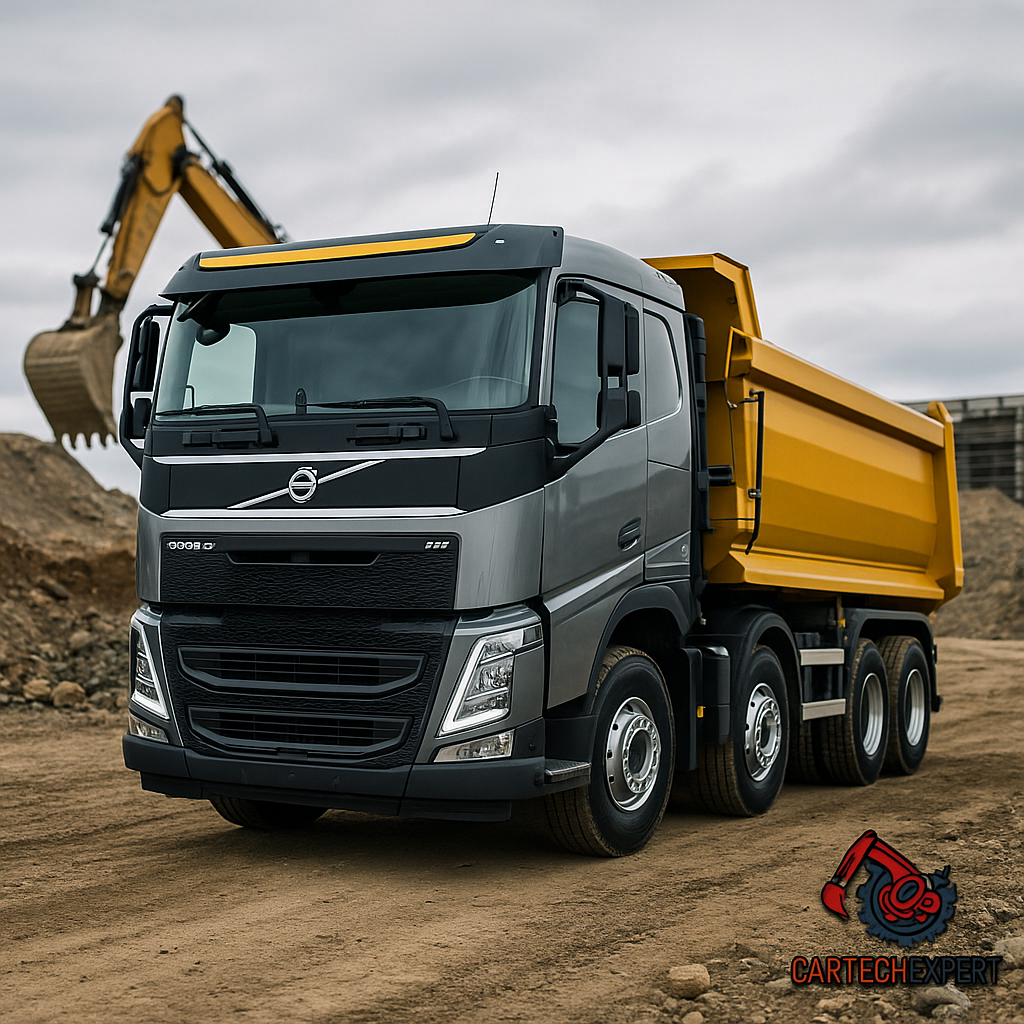
There are mornings on worksites when the light hits a cab just so — cool, purposeful, a silhouette that suggests order in the chaos of earthmoving and logistics. An operator climbs into the driver’s seat, settles the lumbar, and for a moment the truck is more than metal and hydraulics: it is a promise. A promise that the route will be kept, the payload protected, and that the machine will return to the depot ready for tomorrow. That tactile confidence — the sense that a vehicle was conceived by people who understood the realities of heavy work — is the essence of Volvo trucks.
From the salt-stiff air of Gothenburg to sun-baked highways across continents, Volvo Trucks has built a design language and engineering philosophy that blends Scandinavian clarity with industrial rigor. This article maps that journey: the innovation milestones, the technical choices, the service practices, and the safety culture that together explain why Volvo Trucks projects Swedish design and claims global dominance.
“Volvo Trucks – Swedish Design & Global Dominance” describes the sustained engineering and commercial trajectory by which Volvo (originating in Sweden) has developed trucks characterized by robust safety systems, human-centered ergonomics, modular chassis engineering, and an expanding portfolio of low-emission and electrified drivetrains — and how these design principles supported its growth into a major global truck manufacturer.
This definition covers four intertwined dimensions:
Volvo was founded in 1927 in Gothenburg, Sweden, with a mission that emphasized durability and safety from the outset. Early Volvo trucks were designed to perform reliably in the harsh Scandinavian climate — cold starts, salted roads, and long hauls over rugged terrain — setting performance expectations that shaped engineering choices for decades.
In these early decades Volvo introduced truck lines that emphasized payload efficiency and structural durability. Engine developments focused on simple, reliable diesel designs with a priority for torque at low rpm — essential for heavy loads and steep gradients.
After World War II, Volvo consolidated its reputation on diesel technology. Engine blocks were redesigned for longevity, with sleeves and improved metallurgy. The company standardized modular chassis platforms that allowed different wheelbases, axle configurations, and duty-specific bodies to share core components — a key efficiency for production and field maintenance.
Volvo engineered both conventional (long-nose) and cab-over-engine (COE) configurations, optimizing for regional regulations and operator visibility. COE designs became popular in Europe for space efficiency; long-nose layouts retained advantages in cooling and crash structure.
From the 1980s onward, electronics steadily moved from simple control modules to integrated vehicle networks. Volvo pioneered electronic engine management systems that optimized injection timing and turbocharger control to meet tightening emission regulations while improving drivability and fuel economy.
Volvo’s Scandinavian design philosophy matured into tangible ergonomic outcomes: daylight-optimized glazing, low-effort controls, adjustable steering columns, and seats engineered to reduce whole-body vibration exposure. These choices lowered fatigue and improved overall safety.
Streamlined cabs, underbody fairings, and attention to wheel-tunnel aerodynamics delivered measurable fuel savings. Volvo also optimized driveline ratios and introduced advanced automated manual transmissions (AMTs), which reduced driver error and optimized shift patterns for load and terrain.
Volvo Trucks has aggressively pursued battery-electric vehicles (BEV) and hybrid systems. Models such as the Volvo FL Electric and Volvo FH Electric demonstrate scalable batteries, modular e-axles, and integrated thermal systems to maintain battery performance in extreme climates. These systems are designed with redundancy and modular battery packs for ease of maintenance and quick service turnaround.
Volvo integrates driver assistance systems including adaptive cruise control, lane keeping, and collision mitigation. Research and pilot programs extend into autonomous convoys and low-speed automation in controlled industrial environments where repetitive routes and mapped geofences enable safe operation.
Volvo’s telematics platforms provide real-time diagnostics, route optimization, predictive maintenance alerts, and driver behavior insights. This digital layer transforms trucks into networked endpoints that increase uptime, reduce operating costs, and deliver measurable improvements in fleet logistics.
Volvo trucks are engineered for long service life when subject to proactive and structured maintenance. The following guidelines are oriented toward workshop teams, fleet engineers, and technicians who need robust practices that minimize downtime and repair costs.
Safety in Volvo’s design is both active and passive. The company treats safety as an engineering requirement equal to payload, not an add-on. Below are the main safety strategies and how they are implemented in hardware and operational protocols.
| Era | Powertrain Type | Typical Output | Key Benefit |
|---|---|---|---|
| 1950s–1970s | Inline diesel, mechanical injection | 120–250 hp | Robust torque and simplicity |
| 1980s–2000s | Turbocharged diesel, electronic control | 240–480 hp | Emission control, efficiency |
| 2010s–2020s | Euro VI diesels & hybrid variants | 300–520 hp | Lower emissions, higher fuel economy |
| 2020s–present | Battery-electric & fuel-cell prototypes | Equivalent to 300–600 hp | Zero local emissions, regenerative braking |
| Task | Conventional Diesel | Electrified (BEV) | Purpose |
|---|---|---|---|
| Oil & filter | 30,000–50,000 km | N/A (only gearbox fluid) | Engine protection |
| Battery Health Check | N/A | Every 6–12 months | Preserve capacity & thermal balance |
| Brake inspection | Every 10,000 km | Every 20,000 km (regenerative braking extends life) | Safety |
| Cooling system | Annually | Bi-annually (battery thermal systems) | Prevent overheating |
Volvo’s product philosophy emphasizes functional minimalism, ergonomic clarity, and safety-first engineering — hallmarks of Scandinavian industrial design. These principles manifest in practical cabin layouts, simple control hierarchies, and a visible commitment to driver wellbeing that engineers and fleet operators recognize immediately.
A combination of robust engineering, strong aftersales support, regional manufacturing partnerships, and early adoption of telematics and electrified drivetrains. Volvo’s modular platforms allow rapid configuration for local markets, while its safety and fuel-efficiency credentials resonate across regulatory regimes.
Yes — though suitability depends on duty cycle. BEV trucks excel in predictable, regional, and urban distributions where return-to-base charging is feasible. For long-haul heavy-duty work, battery energy density and charging infrastructure are improving rapidly; Volvo’s modular approach allows hybrid or range-extender solutions where needed.
Start with route audit and duty-cycle mapping, then pilot BEV models on low-range, high-turnover routes. Use telematics to capture energy usage and refine charging schedules. Invest in operator training and set up dedicated charging and maintenance protocols.
Volvo historically embeds safety into its engineering requirements, from structural crashworthiness to fatigue-reducing seats and advanced driver assistance systems. Safety is measured through long-term KPIs and reinforced by training and telematics-based behavior modification.
Old Article Placeholder:
“Volvo Trucks combines Scandinavian design with manufacturing excellence. Historically built to survive northern climates, Volvo trucks offer robust build quality, efficient powertrains, and an emphasis on driver comfort and safety. Their vehicles are used worldwide and are recognized for reliability and innovation.”
Volvo Trucks represents a case study in how coherent design philosophy, sustained engineering discipline, and strategic investments in technology can translate into global market strength. Swedish design is not merely aesthetic here — it is a practical framework that elevates safety, operator comfort, and maintainability. Combined with electrification and data-driven fleet management, Volvo’s approach positions it to remain a dominant player as the trucking industry reshapes itself for a low-emission future.
If you are an engineer, technician, or fleet manager working with Volvo trucks, we want to hear from you: share your maintenance tips, your fleet transition plans, or stories about how Volvo vehicles performed under extreme conditions. Join the conversation at cartechexpert.com, and explore tools, parts, and technical resources in our store at store.cartechexpert.com.
