Physical Address
Arthur Avenue , BrookField , ILLINOIS , 60513 , United State
Physical Address
Arthur Avenue , BrookField , ILLINOIS , 60513 , United State

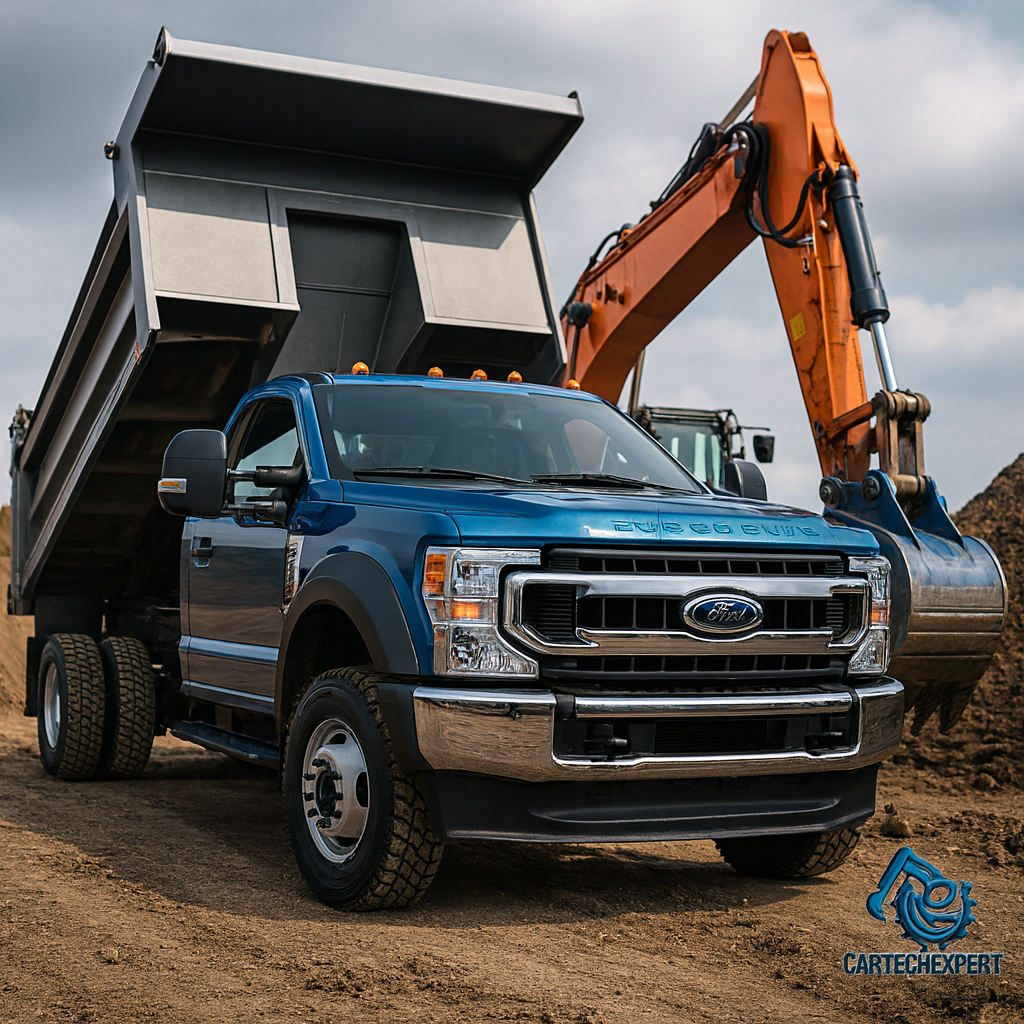
There are moments in every technician’s life when a machine becomes more than cold steel—it becomes a companion. Anyone who has ever stood beside an idling truck at dawn, feeling the vibration run through the concrete, knows the power of engineering done right. Ford trucks carry that legacy. From dusty fields where the first farmers relied on the rugged Model TT, to modern construction sites dominated by the mighty Super Duty, Ford’s evolution has shaped the automotive and heavy-equipment world for over a century.
As a platform dedicated to technicians and professionals—CarTechExpert.com—we explore this evolution not just as history, but as a technical journey that continues to influence diagnostics, maintenance, and innovation today.
The phrase captures more than a timeline. It represents:
Ford’s journey began in 1917 with the Model TT, built to haul loads that passenger cars could never endure. Fast forward to the present and the Super Duty lineup (F-250, F-350, F-450…) stands among the strongest and smartest trucks designed for demanding commercial and industrial environments.
The Model TT was Ford’s first truck, combining a Model T front with a reinforced chassis capable of carrying one ton. It was the backbone of early logistics, agriculture, and industrial expansion.
The introduction of the F-Series marked a revolutionary shift. The F-1, F-2, and F-3 introduced better cab comfort, stronger axles, and improved load capability.
Ford introduced stronger frames, V8 engines, improved transmission technology, and diesel power units that served contractors, transporters, and farmers around the world.
The Super Duty platform redefined heavy-duty trucking with dedicated chassis, Power Stroke diesel engines, advanced towing systems, computer-assisted diagnostics, and durability built for extreme work conditions.
| Model | Years Active | Engine Type | Payload Capacity | Key Innovation |
|---|---|---|---|---|
| Model TT | 1917–1927 | 20 HP Inline-4 | 1 Ton | First dedicated Ford truck chassis |
| F-100 / F-Series Early | 1948–1960s | Flathead V8, Inline-6 | Up to 1.5 Tons | Modernized cab and suspension |
| F-Series Heavy Duty | 1970s–1990s | Diesel V8 Options | Up to 3 Tons | Diesel integration & stronger frames |
| Super Duty (F-250+) | 1999–Present | Power Stroke Diesel / V8 Gas | 3–7.5 Tons (config dependent) | Advanced electronics, towing tech, diagnostics |
To explore diagnostic tools compatible with Ford trucks, visit our store: store.cartechexpert.com
Technicians should use modern OBD-II & heavy-duty diagnostic scanners. For full reviews of tools, explore: Best Diagnostic Tools Guide
| Component | Inspection Interval | Action Required |
|---|---|---|
| Engine Oil | Every 5,000–10,000 km | Replace oil + filter |
| Tires | Monthly | Check pressure + alignment |
| Cooling System | Every 6 months | Check coolant level + leaks |
| DPF (Diesel Models) | As needed | Monitor regen cycles |
Operating or servicing Ford trucks involves significant risks. Technicians must maintain strict safety protocols:
Safe technicians are productive technicians—this is the core philosophy behind industrial maintenance culture.
The Model TT was a simple one-ton workhorse, while modern Super Duty trucks offer multi-ton capability, digital diagnostics, electronic towing assistance, and high-performance Power Stroke engines.
Yes. They are widely used in construction, mining, agriculture, and logistics due to durability, payload capacity, and advanced towing systems.
Follow scheduled oil changes, monitor DPF cycles, inspect turbo pressure, and use certified diagnostic tools to identify early issues.
You can explore professional tools on our official store: store.cartechexpert.com
From the humble Model TT to the powerful Super Duty series, Ford’s trucks carry more than cargo—they carry a legacy of innovation and reliability trusted by millions. Understanding this evolution helps technicians and engineers appreciate how far modern automotive technology has come, and how critical proper maintenance and diagnostics are for long-term performance.
For more articles, comparisons, and professional guidance, visit: CarTechExpert.com
