Tesla – Electric Disruption & the Future of Transportation
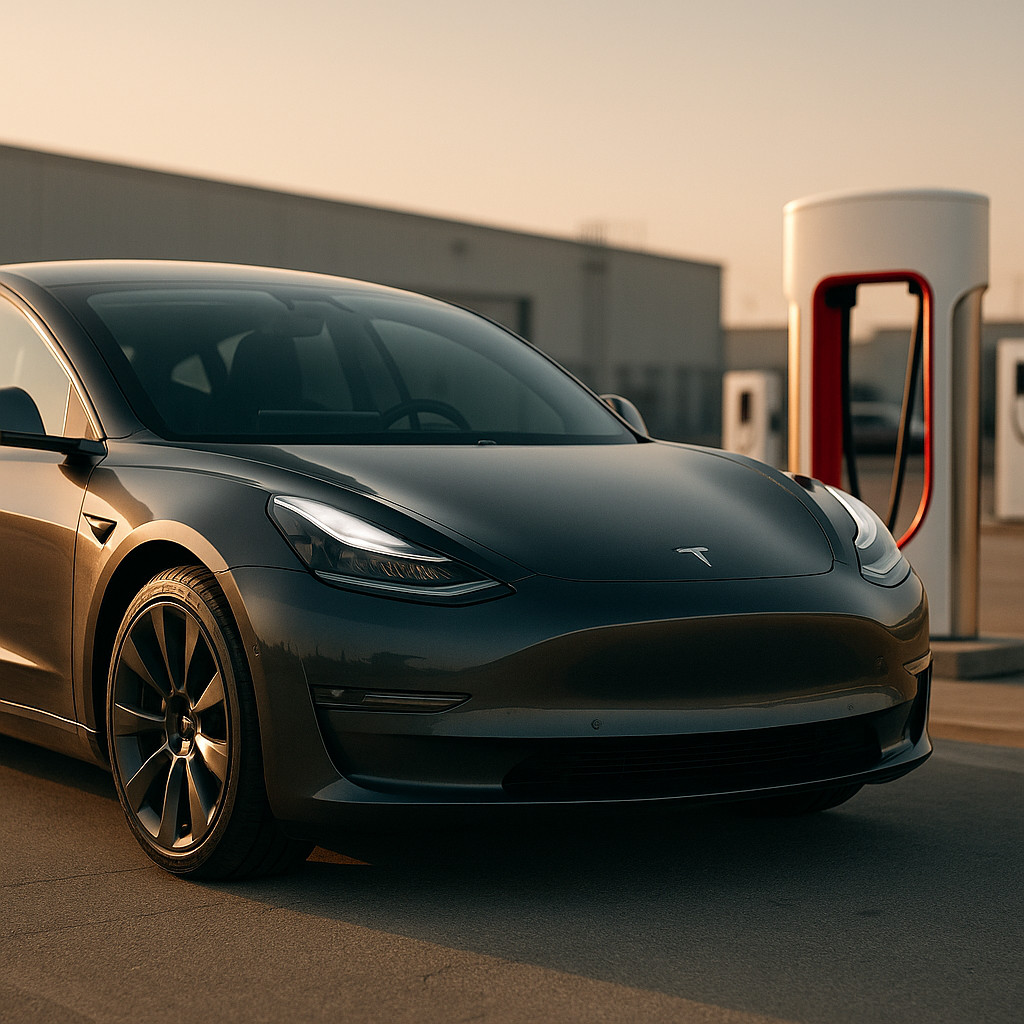
Table of Contents
Introduction — When Silence Replaces Exhaust
A vehicle glides into the workshop with almost no audible cue beyond tire noise on concrete. There is no idle vibration, no smell of unburnt hydrocarbons, no ticking exhaust as metal cools. Instead, diagnostic work begins with high-voltage isolation checks, battery state-of-health reports, and software version logs. For engineers and technicians used to combustion-era routines, Tesla vehicles represent a new baseline: high-voltage systems, software-centric functions, and constant connectivity.
Tesla has re-framed expectations of what a car can be: rapid acceleration without gears, frequent software updates, centralized touchscreens, extensive sensor suites, and integrated charging ecosystems. For a technical audience, Tesla is not just a brand, but a complex set of engineering decisions that challenge conventional assumptions about vehicle architecture, manufacturing, and maintenance.
This article presents a detailed, workshop-focused overview of Tesla – Electric Disruption & the Future of Transportation. It explains core EV architecture, battery and motor design, software and Autopilot systems, manufacturing innovations such as Gigafactories and giga-press castings, materials and structural choices, thermal and charging strategies, maintenance best practices, and safety protocols for high-voltage work. It concludes with data tables, an FAQ section, and references to related articles and resources available via cartechexpert.com and store.cartechexpert.com.
Definition: Tesla – Electric Disruption & the Future of Transportation
“Tesla – Electric Disruption & the Future of Transportation” describes the combination of three interconnected elements:
- Electric Disruption: a focus on battery electric vehicles (BEVs) from the outset, with high-range, high-performance products that forced legacy OEMs to accelerate their EV programs.
- Software-Centric Design: a vehicle architecture that treats the car as a rolling computer, with centralized ECUs, over-the-air (OTA) updates, and tight integration between hardware and software.
- Future-Oriented Ecosystem: vertical integration from battery production to charging infrastructure, plus autonomous driving ambitions via Autopilot and Full Self-Driving (FSD) software.
For engineers, technicians, and industrial planners, this definition highlights why servicing or designing around Tesla is different: instead of treating the EV as a combustion vehicle with the engine swapped for a battery and motor, Tesla rebuilt the stack—from cell chemistry to user interface—around electrification and software control.
Heritage & Disruptive Origin Story
Tesla began as a start-up with a single provocative idea: that electric vehicles could be aspirational, fast, and desirable rather than compromised city cars. The original Tesla Roadster leveraged an existing Lotus chassis but replaced the internal combustion powertrain with a battery pack and electric drive unit. The success of this proof-of-concept led to the launch of clean-sheet designs like the Model S, Model X, Model 3, Model Y, and later heavy-duty and semi-commercial platforms.
Key milestones in Tesla’s disruptive rise include:
- Development of large-format lithium-ion battery packs with sophisticated thermal and safety management.
- High-performance electric motors that deliver repeatable acceleration with minimal mechanical complexity.
- Implementation of OTA updates, enabling post-sale improvements in efficiency, performance, and features.
- Construction of Gigafactories producing batteries, motors, and vehicles with highly integrated supply chains.
- Deployment of Autopilot and FSD driver-assistance software, transforming vehicles into continuous data-collection and algorithm-training platforms.
For workshop and heavy-equipment professionals, Tesla’s heritage means encountering vehicles designed less like traditional cars and more like integrated mechatronic systems, where diagnosing faults often involves understanding both high-voltage hardware behavior and software decision-making.
Core EV Architecture: Batteries, Motors & Inverters
At the core of every Tesla is a high-voltage battery pack, one or more electric drive units, and associated power electronics. Understanding this architecture is essential for safe maintenance and accurate diagnostics.
Battery Packs
Tesla uses modular battery packs composed of many individual cells arranged in series-parallel configurations. Over successive generations, Tesla has moved from cylindrical 18650 cells to 2170 cells and, more recently, larger-format 4680 cells in some platforms. Key engineering features include:
- Cell-level fusing and robust module design to isolate failures.
- Dedicated thermal management through liquid cooling channels integrated with modules.
- Battery Management System (BMS) monitoring of cell voltages, temperatures, and currents to manage charge/discharge and protect the pack.
- Crash protection via structural integration of the pack within the vehicle’s floor and side structures.
Technician focus areas:
- Monitoring pack SOH (state of health) and SOC (state of charge) via OEM diagnostic tools.
- Inspecting for coolant leaks, damage to pack housing after impacts, and connector integrity.
- Respecting strict isolation protocols before any work near the pack or HV lines.
Electric Drive Units (Motors & Reduction Gears)
Tesla uses compact electric drive units integrating motor, reduction gearing, and differential. Depending on model and variant, Tesla deploys:
- Induction motors (earlier and some current rear units).
- Permanent magnet synchronous motors (PMSM) for improved efficiency, especially at partial load.
- Dual- or tri-motor configurations for all-wheel drive and performance variants, enabling torque vectoring and drive mode flexibility.
Technical considerations:
- Cooling circuits for motors, inverters, and gears share coolant with the HVAC or dedicated loops.
- Gear oil service may be limited or lifetime in many cases, but high-mileage or heavy-use fleets should verify fluid condition.
- Motor bearings and shaft seals are critical to longevity; contamination or fluid ingress can be early failure indicators.
Inverters & Power Electronics
Inverters convert DC from the battery into three-phase AC for the motors, controlling torque and speed. Ancillary power electronics include onboard chargers, DC-DC converters, and high-voltage contactors.
Workshop implications:
- Any inverter or charger replacement requires careful HV isolation and post-repair testing.
- Cooling system health directly affects power electronics reliability.
- Software calibration and configuration must match hardware; mismatches can cause drivability faults or derating.
Software-Defined Vehicle: Controls, OTA & Data
One of Tesla’s most significant engineering decisions is to treat the vehicle as a software platform. Rather than distributing functionality across dozens of separate ECUs from multiple suppliers, Tesla heavily centralizes control and firmware.
Centralized Electronics & Networks
- Domain controllers manage powertrain, body, and ADAS functions with integrated firmware.
- High-speed communication networks link sensors, actuators, and user interfaces, with extensive logging capabilities.
- Redundancy and fail-safe strategies are embedded within software logic rather than only hardware duplication.
Over-the-Air (OTA) Updates
Tesla vehicles receive firmware updates wirelessly, enabling:
- Bug fixes and performance improvements without workshop visits.
- Feature additions (new drive modes, UI enhancements, efficiency tweaks).
- Safety-related updates, including changes to Autopilot behavior or energy management.
For workshops, OTA means:
- Software version verification is a critical part of diagnostics.
- Some issues may be resolved or improved by applying the latest firmware.
- Post-repair validation should confirm that the vehicle is on a compatible or recommended software branch.
Data & Telemetry
Tesla vehicles continuously collect operational data, including:
- HV system behavior (currents, voltages, temperatures).
- Motor torque commands, wheel speeds, and stability control interventions.
- Camera inputs and sensor data relevant to driver assistance features.
While much of this data is processed in the cloud or used for fleet analytics, technicians should recognize that Tesla’s design assumes the vehicle is part of a connected, evolving ecosystem—not a static hardware product.
Autopilot, Driver Assistance & Sensor Suites
Tesla’s Autopilot and Full Self-Driving (FSD) packages rely heavily on sensors and advanced perception algorithms. Depending on generation and region, Tesla vehicles may employ:
- Cameras arranged around the vehicle for 360° visual coverage.
- Ultrasonic sensors for close-range parking assistance (removed on some newer models).
- Radar in earlier vehicles; more recent designs may lean heavily on vision-only strategies.
Engineering View of Autopilot Systems
- Autopilot integrates with steering, braking, and powertrain controllers to manage longitudinal and lateral control.
- Redundant sensing (where used) helps manage edge cases, but performance ultimately depends on calibration, software, and environmental conditions.
- Updates may significantly change behavior, which impacts user expectations and workshop test drives.
Workshop Implications
- After replacing windshields, cameras, suspension components, or steering hardware, calibration procedures are mandatory.
- Diagnostic routines must verify sensor status, alignment, and firmware compatibility.
- Technicians should understand system limitations to explain correct usage and to differentiate hardware faults from expected software behavior.
Manufacturing: Gigafactories, Giga-Press & Vertical Integration
Tesla’s manufacturing strategy emphasizes vertical integration and high automation, enabling rapid iteration and cost reduction. Key elements include:
Gigafactories
- Large-scale facilities dedicated to battery cell production, pack assembly, and vehicle manufacturing.
- Tight integration between cell production, pack assembly, and vehicle lines reduces logistics complexity.
- High reliance on robotics and advanced automation for welding, painting, and assembly processes.
Giga-Press & Structural Castings
Some Tesla models use large structural castings produced by giga-press machines:
- Front and rear underbody sections cast as single pieces reduce part count and welding operations.
- Structural battery packs integrated into the body add stiffness and reduce complexity.
- Repairability changes: severe damage to casting regions may require specialized body-shop procedures or module replacement rather than panel repair.
Vertical Integration & In-House Components
- In-house motor and inverter production enables optimization of performance and cost.
- In-house software development allows rapid revisions and unique UI/UX experiences.
- Integration with their own charging network (Supercharger) influences thermal and charging system design.
For technicians outside Tesla’s own service network, understanding these manufacturing choices helps in planning collision repairs, assessing structural damage, and setting expectations for part availability and repair scope.
Materials, Structural Design & Durability
Tesla employs a mix of steel, aluminum, and structural battery integration depending on model and generation. Objectives include high crash performance, reduced weight, and manufacturing efficiency.
- Aluminum-intensive structures on some models for weight reduction and corrosion resistance.
- High-strength steels in impact-critical areas such as pillars and crash rails.
- Structural battery pack designs that act as a floor pan, contributing to torsional stiffness.
- Adhesives and rivet-bonding techniques in mixed-metal joints.
Durability concerns:
- Corrosion if protective coatings are damaged during repairs and not correctly restored.
- Water management around battery pack seals and underbody covers.
- Fatigue behavior of large aluminum castings under repeated stress cycles.
Body shops and workshops should follow manufacturer repair procedures meticulously, especially for structural components and battery-adjacent regions.
Thermal Management & Energy Efficiency
Thermal management is central to Tesla’s performance, efficiency, and battery longevity. Tesla employs integrated cooling/heating strategies connecting:
- Battery pack coolant loops.
- Motor and inverter cooling circuits.
- Cabin HVAC systems with heat pump capability in many newer models.
Examples of thermal strategies:
- Preconditioning the battery before DC fast charging to minimize degradation and improve charge rates.
- Using heat pumps and waste heat from power electronics to heat the cabin efficiently.
- Managing coolant flow with electronically controlled valves and pumps to prioritize components under the highest thermal load.
Workshop best practices:
- Use the correct coolant type and procedures when servicing thermal systems.
- After any cooling system work, perform bleeding procedures to remove air pockets and validate flow.
- Monitor thermal sensor readings and pump duty cycles via diagnostics when troubleshooting performance or charging issues.
Charging Ecosystem & Infrastructure Engineering
Unlike many OEMs, Tesla built its own high-power DC charging network (Superchargers) and integrated charging behavior deeply with vehicle control software.
- AC charging: via onboard charger, suitable for overnight or workplace charging.
- DC fast charging: Supercharger networks and, in some regions, compatibility with other fast-charging standards.
- Charging curves: carefully shaped current/voltage profiles dependent on battery temperature, SOC, and cell chemistry.
For technicians and fleet managers:
- Charging-related complaints may stem from battery SOH, thermal state, or external infrastructure issues.
- Verification of charge port integrity, high-voltage connectors, and contactor operation is essential.
- Software updates can significantly alter charging behavior; verifying version and release notes is key during troubleshooting.
Maintenance Strategies & Workshop Best Practices
Tesla vehicles reduce many traditional maintenance tasks, but add new ones in high-voltage, software, and structural domains. Effective workshop strategies should reflect this shift.
Diagnostic-First Workflow
- Begin every job with a full system scan to read fault codes from powertrain, BMS, Autopilot, body, and infotainment modules.
- Record freeze-frame and live data logs for any HV or Autopilot-related issues.
- Check software versions and open campaigns or service bulletins before initiating mechanical work.
Mechanical Systems
- Inspect suspension components regularly—Tesla vehicles are heavy and may stress bushings, ball joints, and dampers more than comparable ICE vehicles.
- Monitor tire wear; instant torque and weight distribution can accelerate wear, particularly on performance variants.
- Check brake condition, even if pads last longer due to regen; corrosion and uneven wear can occur in climates with road salt or limited friction brake use.
High-Voltage Systems
- Perform HV isolation tests before accessing any orange cables or pack-adjacent components.
- Verify contactor operation and pack pre-charge behavior when diagnosing power-up faults.
- Use manufacturer-approved methods for pack disconnection and, where applicable, module-level diagnostics.
Thermal & Charging Systems
- Inspect coolant circuits for leaks, contamination, and correct fluid levels.
- Test heat pump operation, valve control, and condenser/radiator cleanliness if range drops in extreme temperatures.
- Validate AC and DC charging performance using controlled conditions and log results for trend analysis.
Autopilot & ADAS
- After repairs affecting camera positions, steering, or wheel alignment, perform necessary calibrations and test drives.
- Explain limitations and changes to drivers when returning vehicles with updated software or recalibrated ADAS systems.
Occupational Safety & High-Voltage Protocols
Working on Tesla vehicles involves hazards different from traditional ICE vehicles. A robust safety program is non-negotiable.
- HV certification: only trained and authorized personnel should work on high-voltage components.
- Lockout/tagout (LOTO): isolate the HV battery and verify absence of voltage before service.
- PPE: use insulated gloves, tools rated for HV work, eye protection, and appropriate clothing.
- Safe lifting: recognize altered weight distribution due to battery pack and follow OEM lifting guidelines.
- Thermal event procedures: prepare for potential battery fires with appropriate extinguishers and protocols for post-event cooling and pack quarantine.
In addition, workshops must handle coolant, brake fluid, and any damaged HV components according to environmental regulations and manufacturer guidance.
Illustrative Tables & Technical Comparisons
Table 1 — Powertrain Components & Service Focus in Tesla Vehicles
| Subsystem |
Main Components |
Service Focus |
Typical Risks |
| Battery Pack |
Cells, modules, BMS, contactors, housing |
SOH checks, cooling, mechanical integrity |
HV exposure, thermal events if mishandled |
| Drive Units |
Motors, reduction gears, differentials |
Noise/vibration diagnosis, cooling, seals |
Fluid contamination, bearing wear |
| Power Electronics |
Inverters, DC-DC, onboard charger |
HV checks, cooling, firmware compatibility |
Overheating, isolation faults |
| Autopilot & ADAS |
Cameras, sensors, ECUs |
Calibration, cleaning, alignment |
Misalignment, software mismatch |
Table 2 — Workshop Diagnostic Priority Checklist for Tesla Vehicles
| Task |
Priority |
Why |
| Full-system scan & software version check |
High |
Captures cross-domain faults and ensures up-to-date firmware |
| HV isolation verification |
High |
Protects technicians and prevents HV-related damage |
| Battery thermal performance assessment |
High |
Directly affects charging speed and component life |
| Suspension, steering, and tire inspection |
Medium–High |
EV weight and torque can accelerate wear |
| Autopilot sensor and calibration status |
Medium–High |
Ensures safety and user confidence in ADAS features |
FAQ Section
1. Why are Tesla vehicles considered more “software-defined” than many other cars?
Tesla centralizes many functions into a few powerful controllers and maintains full control over hardware and software integration. Frequent OTA updates adjust everything from motor control to Autopilot behavior, making software a primary lever for performance and functionality rather than a secondary support tool.
2. Are Tesla battery packs serviceable at module level?
In principle, many Tesla packs are modular, but access and replacement procedures are complex and tightly regulated for safety. Some service centers replace entire packs rather than modules for speed and reliability. Independent workshops must follow strict HV and mechanical procedures and may face parts and tooling availability constraints.
3. What maintenance items remain on Tesla vehicles despite the absence of an engine?
Suspension, steering, tires, brakes, HVAC, cabin filters, coolant for power electronics and batteries, and general structural checks all remain essential. Software and sensor calibration tasks replace some engine-related service work, but do not eliminate the need for regular inspection.
4. How do Autopilot updates affect workshop responsibilities?
Updates can change behavior and performance of driver-assistance features. Workshops must verify calibration and sensor functionality, inform customers about changes where possible, and distinguish between hardware faults and software-intended behavior when diagnosing complaints.
5. Can traditional ICE-focused workshops safely service Teslas?
Yes, provided they invest in HV training, appropriate PPE and tooling, and access to requisite repair data. Mechanical systems remain familiar in many respects, but HV, thermal, and software areas require specific knowledge and disciplined procedures to ensure safety and correct repairs.
Suggested Past Article & Further Reading
To place Tesla’s electric disruption into a broader OEM context, we recommend exploring related articles in this series:
For the complete library of technical articles and resources, visit our main site: cartechexpert.com
For diagnostic tools, EV and HV training materials, workshop SOP templates, and engineering guides tailored to modern fleets, explore our store: store.cartechexpert.com
Conclusion & Call to Action
Tesla’s impact on the automotive industry goes beyond launching a few successful electric vehicles. The company reshaped expectations around how vehicles are engineered, manufactured, updated, and serviced. High-voltage systems, structural battery packs, giga-press castings, constant connectivity, and software-driven features are no longer niche concepts—they are becoming the new normal.
For engineers, technicians, and fleet managers, the imperative is clear:
- Develop high-voltage and EV-specific competencies, including isolation procedures, thermal system diagnosis, and battery SOH assessment.
- Adopt a software-aware mindset, treating firmware versions and OTA behavior as integral to diagnostics and repair.
- Upgrade workshop SOPs to include ADAS and Autopilot calibration, structural EV repair guidelines, and EV-specific safety drills.
- Use data-driven methods—logs, trend analysis, and structured test routes—to understand and validate EV performance under real-world conditions.
If this article supports your technical planning, training roadmap, or workshop operations, share it with your team and integrate the checklists and tables into your internal procedures. For specialized EV, HV, and Autopilot-focused training modules, as well as diagnostic and SOP toolkits aligned with Tesla and other advanced OEMs, visit store.cartechexpert.com or connect with us via cartechexpert.com.
Thank you for reading.

