Renault – French Innovation & Global Compact Vehicle Leadership
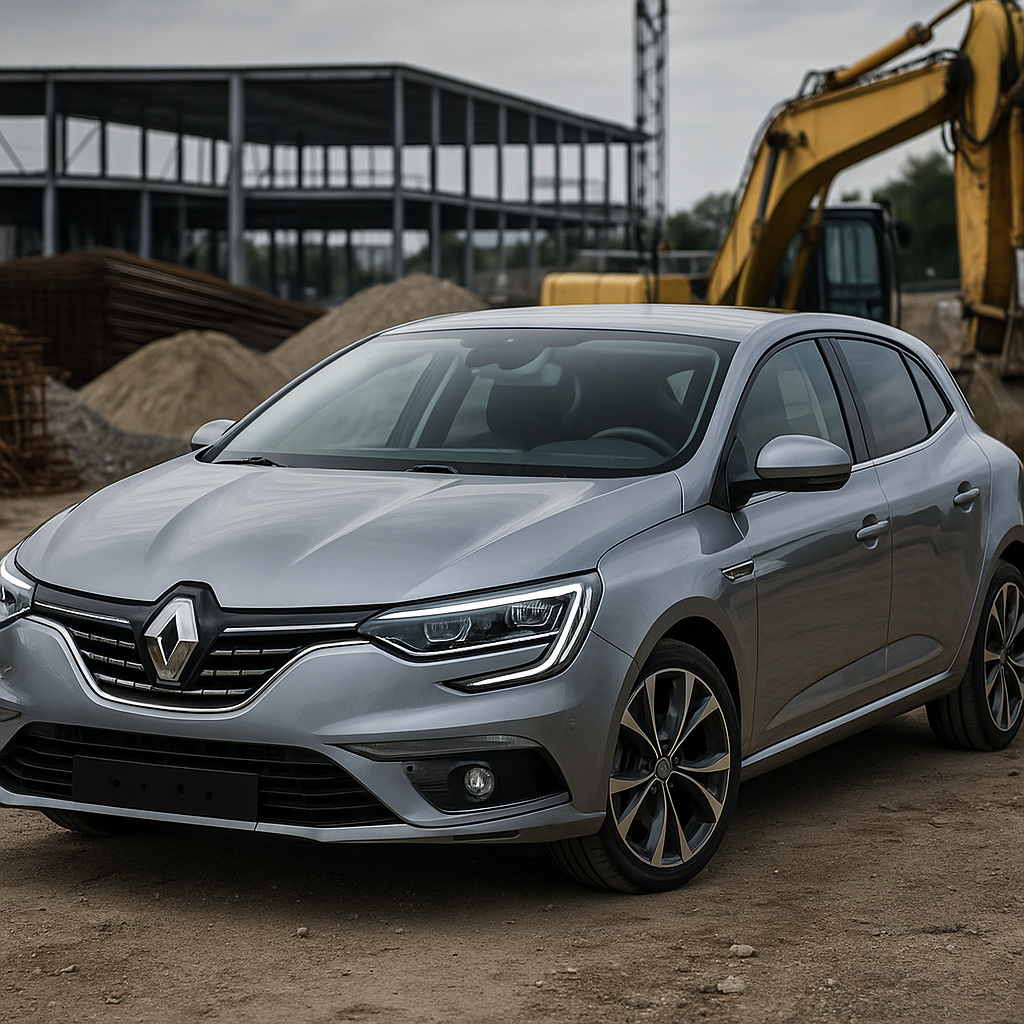
Table of Contents
Introduction — When French Engineering Meets Everyday Mobility
A Renault arrives at the workshop with a unique personality: compact, efficient and unmistakably French. Whether it’s a Clio, Megane, Captur, Kangoo or ZOE, there’s a sense of clever packaging, optimized space and advanced engineering squeezed into a footprint designed for the world’s busiest roads. You immediately notice the distinct balance between simplicity and innovation — something Renault has perfected over decades of serving European cities, global fleets and millions of everyday drivers.
For engineers, technicians and automotive professionals, Renault vehicles provide a rich blend of compact architecture, lightweight construction, fuel-efficient powertrains, advanced electrification and safety-oriented electronics. These vehicles are built with real-world practicality in mind, but under their modest dimensions lies a sophisticated engineering approach tailored for both efficiency and longevity.
Definition: Renault – French Innovation & Global Compact Vehicle Leadership
The phrase reflects a brand known for designing vehicles that define mobility for the masses, while pushing innovation in:
- Compact vehicle engineering — maximizing interior space within minimal external dimensions.
- Advanced small-displacement powertrains — focusing on efficiency, low emissions and responsive performance.
- Electric mobility leadership — pioneering mainstream EV adoption with models like the ZOE.
- Accessible safety — applying advanced driver assistance in affordable vehicle categories.
For technicians, Renault’s philosophy translates into vehicles that are economical, clever in design and highly sensitive to correct maintenance procedures.
Heritage: More Than a Century of Engineering Creativity
Founded in 1899, Renault has long emphasized clever engineering that solves real-world problems. Over decades, the brand developed:
- Revolutionary compact cars like the Renault 4, 5, Clio and Twingo.
- Highly efficient engines like the Energy series and TCe lineup.
- Strong motorsport heritage including Formula 1 innovation in turbocharging.
- Industry-leading electric mobility through ZOE and now the Megane E-Tech.
Renault represents a combination of simplicity, creativity and adaptability — values that are evident in modern service procedures and engineering design.
Renault’s modular platforms are essential for understanding vehicle behavior, serviceability and part interchangeability.
CMF Platform (Common Module Family)
- Shared across Renault, Nissan and Mitsubishi.
- Modular architecture reduces production complexity.
- Improves parts standardization and diagnostic consistency.
B-Platform & B0 Platform
- Used for compact and subcompact models (Clio, Twingo, Captur).
- Emphasizes low weight and simple geometry.
- Known for cost-effective repairs and wide global use.
E-Tech Hybrid Platform
- Incorporates multi-mode hybrid transmissions.
- Electric motor integration simplifies urban efficiency.
- Requires careful diagnostic workflow for HV systems.
Workshop Implications:
- Shared modules mean faster part sourcing.
- Body rigidity and suspension design differ widely across platforms.
- EV variants require isolation procedures and battery thermal-check routines.
Engine Technologies — TCe, dCi & Hybrid E-Tech Powertrains
Renault powertrains emphasize efficiency, responsiveness and low operating cost.
TCe Turbocharged Gasoline Engines
- Small displacement turbocharged units.
- Excellent low-end torque and fuel economy.
- Direct injection for precise combustion control.
Technician notes:
- Check intercooler and intake piping for leaks.
- Monitor timing belts or chains depending on model.
- Turbo lubrication requires regular oil changes.
dCi Diesel Engines
- Common-rail injection systems.
- Efficient and durable for long-distance usage.
- DPF, EGR and SCR systems critical for emissions compliance.
E-Tech Hybrid & Plug-In Hybrid
- Multi-mode clutchless transmission.
- Traction motor supports low-speed driving.
- High-voltage battery cooling must be maintained.
Hybrid specialist tasks include:
- Battery insulation testing.
- Cooling loop bleeding.
- Software updates for energy management systems.
EV Leadership — ZOE, Megane E-Tech & Electric Strategy
Renault was one of the earliest brands to produce mainstream electric vehicles.
ZOE
- Compact EV with widespread European adoption.
- Simple motor–inverter layout and easy maintenance.
- Reliable liquid-cooled battery system.
Megane E-Tech Electric
- New-generation CMF-EV platform.
- High-efficiency permanent magnet motor.
- Regenerative braking adjustable through drive modes.
Workshop Focus for EVs:
- HV safety protocols must always be followed.
- Battery thermal systems must be inspected regularly.
- Inverter connections and seals must be checked for integrity.
- Software updates significantly affect range and drivability.
Safety Innovations & Driver Assistance Technologies
Renault places strong emphasis on accessible safety technology:
- Lane-keeping assistance
- AEB (Autonomous Emergency Braking)
- Blind-spot monitoring
- Traffic sign recognition
- Rear cross-traffic alerts
Technician Notes:
- Camera calibration is required after windshield replacement.
- Radar alignment must be exact for ADAS performance.
- Sensor housings must remain clean and securely mounted.
Maintenance Strategies & Workshop Best Practices
- Use Renault-approved oils for TCe turbo engines.
- Perform DPF regeneration and monitor ash loading on dCi engines.
- Inspect timing components according to service intervals.
- Check coolant quality regularly for hybrid and EV models.
- Verify gearbox calibration on E-Tech hybrid transmissions.
- Inspect suspension bushings and anti-roll bar links on compact city vehicles.
Common Issues, Troubleshooting & Diagnostic Insights
TCe Engines
- Boost leaks from cracked hoses.
- Carbon buildup on intake valves (DI engines).
- Wastegate actuator failures.
dCi Diesel
- Injector seal leaks (“black death”).
- DPF saturation due to short cycles.
- EGR cooler clogging.
E-Tech Hybrid
- HV isolation faults.
- Cooling pumps requiring replacement.
- BMS updates needed to stabilize charging behavior.
Illustrative Tables
Table 1 — Renault Engine Families
| Engine |
Type |
Strength |
| TCe |
Turbo Gasoline |
Responsive & efficient |
| dCi |
Diesel |
Durable & economical |
| E-Tech |
Hybrid/EV |
Low emissions & urban optimized |
Table 2 — Platform Overview
| Platform |
Usage |
Service Notes |
| CMF |
Global models |
Shared modules simplify repairs |
| B/B0 |
Compact cars |
Economical parts, simple suspension |
| E-Tech |
Hybrid/EV |
Requires HV training |
FAQ Section
1. Are Renault vehicles reliable?
Yes — provided maintenance intervals are followed, especially for turbo and diesel engines.
2. Which Renault engine is best for long-distance driving?
The dCi diesel engines offer excellent fuel economy and durability.
3. Are Renault EVs easy to maintain?
Yes. EVs have fewer moving parts, but require careful attention to battery cooling and software updates.
4. Do Renault hybrids require special service procedures?
Yes — HV systems must be handled using approved safety protocols.
Suggested Past Articles & Useful Links
Visit cartechexpert.com for more automotive technical insights.
Explore tools and professional equipment at store.cartechexpert.com.
Conclusion
Renault is a brand built on ingenuity, compact engineering and accessible innovation. From turbocharged gasoline engines to advanced hybrids and well-established electric vehicles, Renault consistently adapts to global mobility needs. For technicians and engineers, these vehicles provide a valuable blend of simplicity and high-tech design — rewarding accuracy, proper diagnostics and adherence to maintenance schedules.
Thank you for reading.

