Physical Address
Arthur Avenue , BrookField , ILLINOIS , 60513 , United State
Physical Address
Arthur Avenue , BrookField , ILLINOIS , 60513 , United State

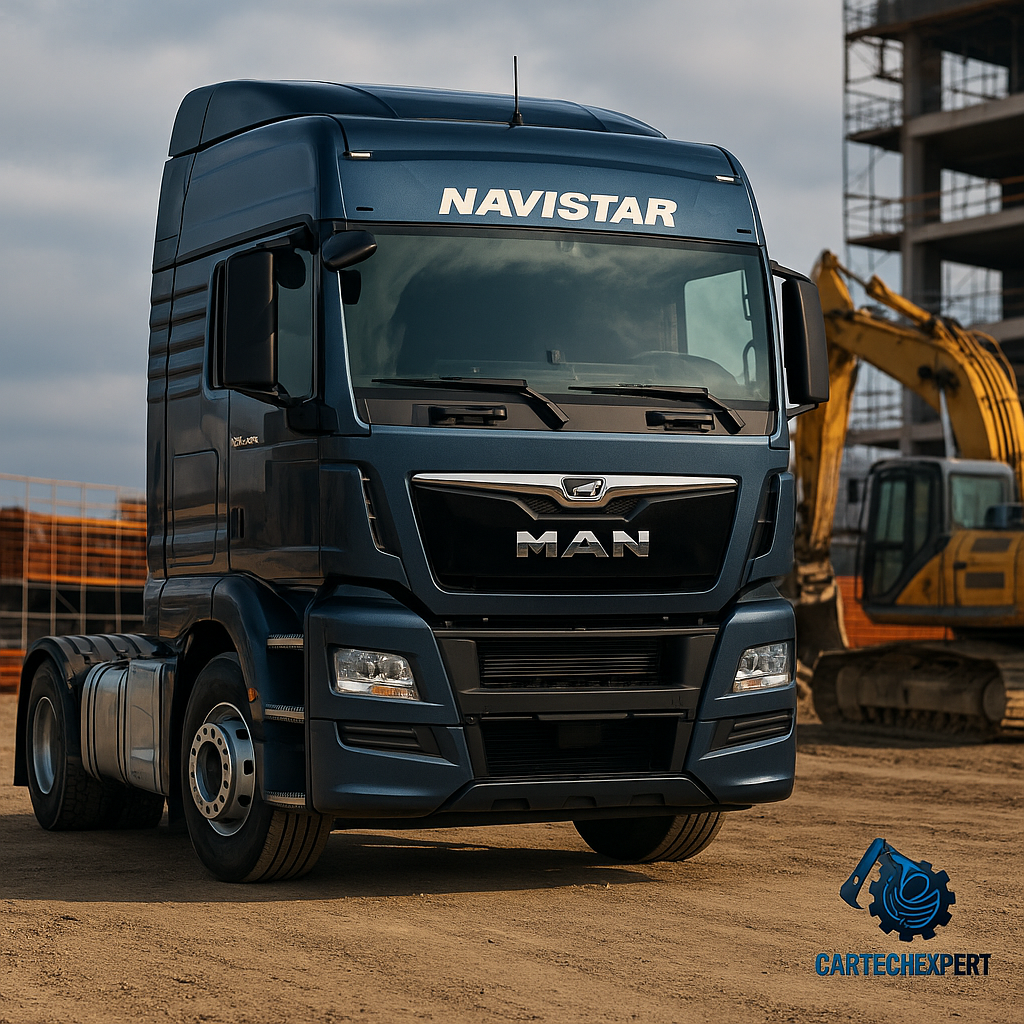
Long before the name Navistar appeared on the side of a corporate headquarters, the machines it would one day command were already shaping the industrial world. Anyone who has worked around heavy equipment remembers the first time they heard the low, confident note of an International diesel engine at dawn — the steady pulse of a machine built not for spectacle, but for purpose. For technicians, engineers, drivers, and fleet builders, International trucks aren’t abstract products. They’re partners in long nights on the highway. They’re iron companions in construction mud. They’re rugged silhouettes parked behind machine shops with decades of stories etched into their frames.
Navistar is the corporate identity that grew from these machines — a century-long story of engineering ambition, bankruptcy and revival, technological leaps, missteps, reinvention, and global integration. Understanding Navistar’s corporate evolution isn’t just business history; it is a technical archaeology of diesel engines, vocational engineering, manufacturing philosophy, safety systems, and the pressures that forged the modern International Truck as we know it today.
“Navistar – The Corporate Story Behind International” refers to the evolution, engineering philosophy, and corporate restructuring that shaped one of the most influential truck builders in North America. Navistar International Corporation became the parent entity responsible for:
Navistar is more than a name change from International Harvester; it is a corporate rebirth forged through adversity and technical innovation.
The company that would eventually become Navistar began in the 1830s with Cyrus McCormick’s mechanical reaper — one of the most significant agricultural innovations of the 19th century. The McCormick Harvesting Machine Company grew rapidly and merged with other manufacturers to form International Harvester (IH) in 1902.
By the early 1900s, IH engineers recognized an emerging market: commercial and industrial motor trucks. Drawing from agricultural engineering, they focused on:
These early designs laid the foundation for the iconic International Truck brand.
During the mid-20th century, International Harvester became a dominant force in truck manufacturing. The company produced:
International trucks gained a reputation for toughness and simplicity — traits still associated with the brand today.
International introduced its DT engine series, including the legendary DT466, an inline-6 engine renowned for:
The DT engines became the beating heart of International trucks for decades and served as a major competitive advantage.
By the late 1970s and early 1980s, International Harvester was in crisis. A lethal mix of high labor costs, economic recession, fierce competition, and internal inefficiencies led to one of the most dramatic declines in American industrial history.
Heavy losses from agricultural equipment, combined with legacy manufacturing inefficiencies, forced IH to sell its agricultural division to Tenneco (which merged it into Case Corporation). What remained of IH was restructured into a new corporate identity: Navistar International Corporation, officially formed in 1986.
Navistar emerged leaner and more focused, carrying forward:
To rebuild, Navistar adopted an engineering-driven approach — cutting unprofitable divisions, modernizing manufacturing, and pushing hard into vocational and on-highway truck markets.
Although the DT466 and its siblings began under International Harvester, Navistar transformed them into modernized workhorses. Throughout the 1990s and 2000s, the DT engines dominated:
Engineers respected DT motors for one major reason: the wet-sleeve block design, which allowed in-frame rebuilds without removing the engine. This made fleet serviceability faster and less costly.
During these years, Navistar:
But the biggest defining chapter — and controversy — was their bold attempt to solve emissions differently than every other OEM.
In the mid-2000s, Navistar made a high-stakes engineering gamble: instead of using Selective Catalytic Reduction (SCR) like the rest of the trucking industry to meet EPA emissions, they invested heavily in an “in-cylinder solution.” This became the MaxxForce EGR strategy, which attempted to meet emissions purely through:
It was brilliant in theory — eliminating the need for DEF and simplifying fleet management. But the reality was harsh.
The MaxxForce EGR-only engines suffered from:
The fallout led to massive warranty costs, lost market share, and a corporate crisis that nearly destroyed Navistar.
By the mid-2010s, Navistar course-corrected, adopting SCR emissions systems and partnering with Cummins for powertrain integration. The shift restored reliability and confidence and set the stage for Navistar’s next major chapter.
With new leadership and improved engineering direction, Navistar rebooted its identity around innovation and reliability. New platforms — including the LT, RH, and HX series — marked a turning point with:
In one of the most significant corporate moves in recent trucking history, Navistar became part of the TRATON Group (Volkswagen’s global commercial truck division). This connected International Trucks with:
The acquisition opened doors to global engineering integration, shared EV platforms, and unified safety technology.
Modern Navistar platforms emphasize:
For technicians, this means better planning. For fleets, it means optimized uptime. For Navistar, it marks the shift from a legacy diesel manufacturer to a digitally integrated OEM.
Navistar’s engineering history — from DT engines to modern SCR-equipped Cummins integrations — means fleets encounter a wide variety of mechanical architectures. The following maintenance framework is structured for technicians, fleet managers, and shop supervisors maintaining mixed-generation Navistar/International trucks.
Despite their challenges, MaxxForce engines remain common in mixed fleets. Technicians should pay special attention to:
Consistent monitoring helps avoid catastrophic failures.
| Era | Engine Family | Power Range | Key Features |
|---|---|---|---|
| 1970s–1990s | DT Series (DT360, DT466) | 160–300 hp | Wet-sleeve, high durability, easy rebuilds |
| 2000s | MaxxForce (EGR-only) | 200–450 hp | Advanced EGR, emissions experimentation |
| 2010s–Present | Cummins ISB, ISL, X15 (integrated) | 200–605 hp | SCR emissions, global standardization |
| Task | Short Interval | Medium Interval | Long Interval |
|---|---|---|---|
| Oil & Filter | 10,000 km | 20,000 km | 40,000 km* |
| Fuel Filters | 10,000 km | 20,000 km | — |
| DPF Service | — | — | 100,000–200,000 km |
| Frame Inspection | Visual daily | Monthly | Annually |
| Year | Milestone |
|---|---|
| 1902 | International Harvester formed |
| 1986 | Navistar International Corporation created |
| 2007 | Launch of MaxxForce engines |
| 2014 | SCR adoption & Cummins integration |
| 2021 | TRATON Group completes acquisition |
Navistar’s EGR-only approach struggled to meet emissions reliably, leading to excessive soot loading, turbo failures, and operational issues. SCR became the industry standard due to its superior reliability, fuel economy, and emissions performance. Navistar fully adopted SCR around 2014, significantly improving engine dependability.
Yes — but with enhanced maintenance discipline. Regular EGR and DPF service, turbo inspections, and proactive coolant monitoring are essential. Many fleets still operate MaxxForce units successfully with rigorous preventive maintenance.
The acquisition connected Navistar with global brands such as Scania and MAN, enabling shared technologies, enhanced telematics, electrification platforms, and streamlined global manufacturing strategies. Future International Trucks will likely incorporate TRATON’s advanced safety and EV systems.
Most modern International trucks utilize Cummins powertrains (ISB, ISL, X15) paired with advanced SCR aftertreatment. Some platforms also use Navistar-designed engines developed in partnership with global engineering teams.
International vocational trucks are known for:
The company is developing electric platforms under the TRATON umbrella, with early models focused on regional distribution, municipal service, and school buses. Shared EV technology with Scania and MAN will accelerate this transition.
“Navistar, the parent company of International Trucks, has a long legacy of industrial engineering, corporate evolution, and heavy-duty innovation. The company has shaped transportation with decades of technical expertise and global manufacturing influence.”
Navistar’s story is one of resilience — a century-long transformation that spans agricultural roots, industrial revolutions, corporate collapse, engineering gambles, and global reintegration. Through every era, International trucks remained a symbol of real-world durability, trusted by technicians, drivers, and fleet builders who rely on them every day.
From the legendary DT engines to the challenging MaxxForce era, from the rebirth through SCR systems to the TRATON acquisition, Navistar’s corporate journey mirrors the evolution of the trucking industry itself: faster, safer, more digital, and increasingly global.
For fleets, understanding Navistar is more than corporate history — it’s insight into the systems, technologies, and engineering philosophies that shape the trucks on today’s roads. And for technicians, the company’s legacy is felt every time a diagnostic tool connects, an engine fires up, or a rebuilt system returns to service.
To explore more heavy-equipment engineering articles, visit:
cartechexpert.com
For tools, diagnostic equipment, truck components, and workshop supplies, visit:
store.cartechexpert.com
