Physical Address
Arthur Avenue , BrookField , ILLINOIS , 60513 , United State
Physical Address
Arthur Avenue , BrookField , ILLINOIS , 60513 , United State

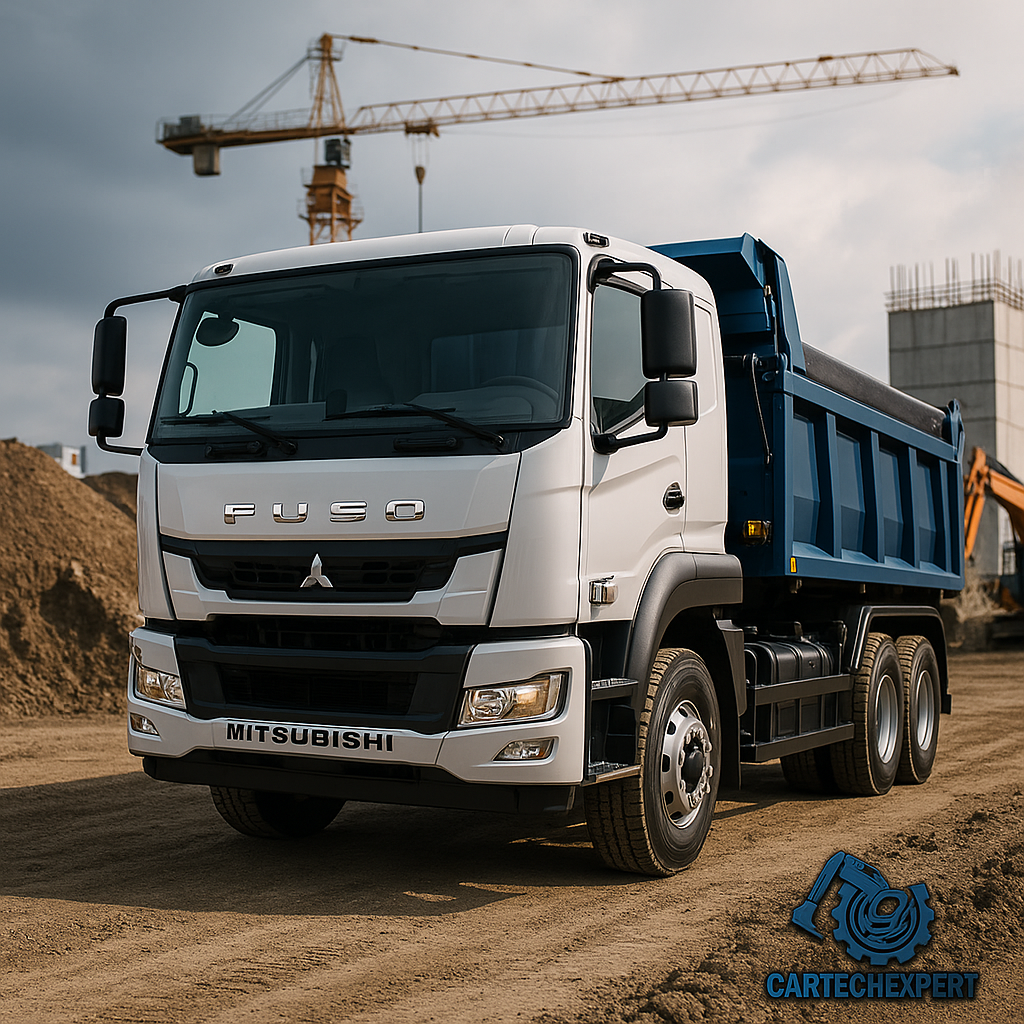
There is a small, unmistakable confidence that arrives with a well-engineered truck: the measured clack of a transmission engaged, the steady note of a diesel settling into idle, the secure click as panels and fasteners align under load. For technicians, fleet managers, and operators who work with Mitsubishi Fuso vehicles, that confidence is practical and earned. It comes from decades of incremental improvement, Japanese production rigor, and an engineering mindset that values reliability, maintainability, and efficient operation in real-world logistics and vocational tasks.
Mitsubishi Fuso’s footprint spans dense urban centers, long regional routes, and demanding industrial sites across continents. From compact Canter light-duty trucks to medium- and heavy-duty fighter-class vehicles, Fuso blends compact Japanese packaging with globally-minded systems engineering. This article maps that trajectory — the technology choices, powertrain evolution, chassis and body modularity, diagnostics and telematics, maintenance regimes, and safety design principles that make Mitsubishi Fuso a durable partner for commercial operations worldwide.
“Mitsubishi Fuso – Japanese Innovation in Global Markets” refers to the engineering lineage, product strategy, and operational value that the Mitsubishi Fuso Truck and Bus Corporation (and its predecessors) have provided since the early 20th century. The term covers:
This definition frames the article’s technical narrative: how engineering decisions translate to uptime, lower lifecycle cost, and safe operation for commercial fleets.
Mitsubishi’s commercial vehicle history extends to the pre-war and wartime industrial efforts in Japan. Early trucks were often simple, robust vehicles adapted for commercial, municipal and military needs. Engineering focus in these formative years emphasized heavy-duty frames, easy-to-service powertrains, and functional bodywork tailored to emerging industrial uses.
Following World War II, Japan’s reconstruction created enormous demand for reliable transport. Mitsubishi and other domestic firms prioritized simple, maintainable designs that could be repaired in modest workshops. The “workhorse” mindset favored:
Trucks from this era laid the foundation for Mitsubishi’s later nomenclature (Canter, Fighter, Super Great) and demonstrated early commitment to producing models across light- to heavy-duty classes to meet a range of vocational needs.
Like many global truck makers, Mitsubishi Fuso shifted emphatically toward diesel engines — driven by torque needs for heavy loads, fuel economy, and durability. During this period engineering priorities included:
In the 1970s and 1980s Mitsubishi introduced modular chassis families that allowed operators to specify wheelbases, axle configurations, and body mounts without bespoke redesigns. This modularity reduced manufacturing complexity and simplified workshop repairs.
Mitsubishi Fuso invested in export markets and local partnerships, adapting vehicles for regional climates and road conditions. Local assemblies in Asia-Pacific, Africa, and the Middle East allowed Fuso to offer vehicles with:
Mitsubishi Fuso consolidated its international partnerships and invested in global R&D aligned with emissions regulations, telematics, and alternative drivetrains. Ownership and strategic alignment within larger industrial groups supported R&D investments, while global sales networks ensured spares and service availability.
The 2000s accelerated adoption of advanced combustion systems, electronic fuel injection, and aftertreatment technologies. Engineering challenges included balancing:
Fuso introduced hybrid systems and developed battery-electric variants — particularly in urban delivery segments — leveraging compact, efficient drivetrains and regenerative braking to reduce fuel consumption and local emissions in stop-start duty cycles.
Modern Fuso cabs integrate improved NVH (noise, vibration, harshness) control, ergonomic seats, simplified switchgear, and cab-over packaging that enhances visibility and maneuverability in urban and tight vocational environments.
The Canter series is a light-duty cab-over workhorse known for:
The Fighter family serves regional distribution and vocational uses with:
The Super Great and other heavy models are configured for:
Fuso has rolled out and piloted electric trucks in targeted urban markets — particularly for the Canter segment — showcasing modular battery systems, electric drivetrains, and integration with fleet charging infrastructure.
Mitsubishi Fuso’s diesel strategy centers on durable engine blocks, conservative mechanical designs tuned for longevity, and clear service access. Key elements:
To meet global emissions requirements, Fuso typically integrates:
Urban duty cycles benefit the most from electrified architectures. Fuso approaches this with:
Mitsubishi offers:
Mitsubishi Fuso’s chassis design relies on modular ladder frames engineered to accept multiple body types. Design goals include:
Vehicle duty dictates suspension choice:
Heavy and medium models may include single- or dual-reduction axles, hub-reduction axles for extreme loads, and limited-slip options for traction-challenged conditions.
Standardization streamlines body fitment:
Modern Mitsubishi Fuso trucks use ECUs to manage injection, turbo boost, regeneration cycles, and fault monitoring. Key diagnostic features for technicians:
Telematics platforms provide fleet managers with:
Fuso incorporates ADAS systems in many markets: lane departure warning, adaptive cruise control, automatic emergency braking, and camera/mirror-assist systems, all contributing to safer, more predictable operation.
| Segment | Common Models | Typical GVW | Primary Applications |
|---|---|---|---|
| Light Duty | Canter (N-Series) | 3.5–7.5 t | Urban delivery, refrigerated vans, municipal |
| Medium Duty | Fighter | 7.5–15 t | Regional distribution, tipper, tanker |
| Heavy Duty | Super Great, Heavy Chassis | 16–49 t+ | Long-haul, construction, heavy vocational |
| BEV/Hybrid | Electric Canter / Hybrid variants | 3.5–7.5 t | Urban low-emission zones, last-mile |
| Task | Urban Light Duty | Mixed Duty | Severe Duty | Purpose |
|---|---|---|---|---|
| Oil & Filter | 10,000–12,000 km | 8,000–10,000 km | 5,000–8,000 km | Engine protection |
| Brake Inspection | 10,000 km | 7,500 km | 5,000 km | Safety |
| DPF Health | Annually | 6 months | 3 months | Emissions & performance |
| Cooling System | Annually | Annually | Every 6 months | Prevent overheating |
| Attribute | Diesel | Hybrid | BEV |
|---|---|---|---|
| Range | High | Extended | Limited per charge |
| Fuel/energy cost | Variable | Lower than diesel in stop-start | Low per km (dependent on electricity cost) |
| Service complexity | Mechanical systems | Added electrical components | High-voltage systems & power electronics |
| Suitability | Long haul & varied fuel quality | Mixed duty & improved efficiency | Urban last-mile & low emissions zones |
Fuso’s strengths are its broad model spectrum tuned for tight urban use (Canter), its vocational flexibility for medium-duty (Fighter), and its integrated approach to emissions, telematics, and electrified drivetrains — all developed with Japanese manufacturing discipline and global adaptation practices.
Yes — many models are engineered with regional cooling packages, reinforced frames, and filtration systems designed for dusty or hot environments. Local assembly and regional variant tuning further improve reliability in specific markets.
Electric Canter (and related city BEV variants) demonstrate strong efficiency in urban routes with predictable mileage and depot charging. Hybrid systems provide balance for mixed routes where full-electric range is insufficient.
Consider route energy profiles (daily km, stop-start ratio), depot charging infrastructure, total cost of ownership modeling, operator training, and maintenance readiness for high-voltage systems.
Use the manufacturer’s diagnostic tools to access ECU live data, confirm sensor health, and follow telematics alerts. Maintain updated service software and train technicians on emissions system operation (DPF regeneration strategies, DEF dosing).
Old Article Placeholder:
“Mitsubishi Fuso trucks are known for practical engineering and efficiency. The Canter, Fighter, and Super Great lines serve urban, regional, and heavy-duty applications worldwide. With investments in electrification and telematics, Fuso continues to adapt to modern logistics challenges.”
Mitsubishi Fuso’s trajectory — from early commercial vehicles to modern, connected, and electrified trucks — illustrates how engineering discipline, modular platform thinking, and global adaptability produce durable, cost-effective commercial transport solutions. For engineers and technicians, the brand represents accessible mechanics paired with progressively complex emissions and electrical systems. For fleet managers, Fuso offers an array of models that match route profiles from dense urban logistics to regional vocational work.
If you operate, maintain, or engineer Mitsubishi Fuso vehicles, your hands-on experience is invaluable. Share your maintenance checklists, diagnostic tips, body-fitment notes, or electrification learnings at cartechexpert.com. Explore compatible tools, spares, and fleet resources in our store at store.cartechexpert.com. Your practical knowledge fuels better uptime and safer operations across the industry.
