Physical Address
Arthur Avenue , BrookField , ILLINOIS , 60513 , United State
Physical Address
Arthur Avenue , BrookField , ILLINOIS , 60513 , United State

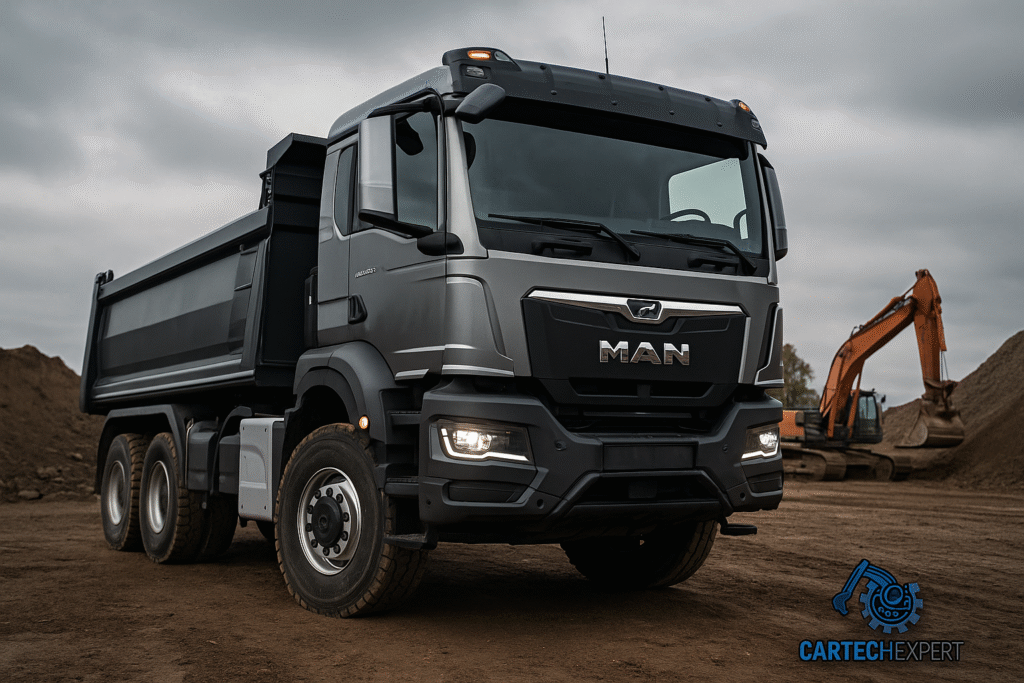
Every technician, engineer, or long-haul driver knows the feeling: that moment when a truck’s ignition turns and something massive comes alive. The vibrations are familiar, steady, and reassuring — a reminder of the mechanical heritage that stretches far beyond any single model or generation. MAN trucks carry that heritage in their steel bones. Whether powering through mountain passes, towing full-weight freight across borders, or working deep inside industrial supply chains, MAN vehicles radiate an unmistakable engineering discipline shaped by more than a century of innovation.
From steam engines to today’s cutting-edge diesel and electric powertrains, MAN has written one of the most technically remarkable stories in heavy trucking. This article explores that evolution — from the earliest steam-driven machines to the modern TGX giants that dominate international freight. It’s a journey defined by precision engineering, German industrial rigor, wartime necessity, postwar reconstruction, and continuous innovation aimed at building trucks that last longer, pull harder, and operate more efficiently than ever before.
“MAN Trucks – From Steam Engines to Modern Freight Kings” describes the full technical evolution of MAN, a German engineering powerhouse whose trucks have grown from early steam-powered machinery to some of the world’s most advanced long-haul freight vehicles. MAN’s history is defined by:
Few companies bridge such a long timeline of engineering transformation — from steam boilers to predictive powertrain control systems.
MAN’s origins date back to 1840 when its predecessor companies formed during the rapid industrialization of Germany. These companies initially specialized in:
Steam engines dominated the era, providing the foundation for MAN’s early expertise in large mechanical systems, heavy castings, and structural metallurgy.
By the late 1800s, increasing demand for transportation led to experimental work on steam-powered tractors and cargo vehicles. These machines used:
Though slow and maintenance-heavy, MAN’s early steam vehicles demonstrated their ability to handle extreme loads, laying conceptual groundwork for future truck designs.
MAN played a crucial role in the development of one of the most important mechanical inventions of the modern age — the diesel engine. Working directly with Rudolf Diesel in the 1890s, MAN helped refine early prototypes, contributing to:
By the 1920s, MAN was producing diesel-powered trucks that delivered:
These early models established MAN as a leader in diesel truck technology — a reputation it still holds today.
As Europe plunged into conflict, MAN’s engineering focus shifted toward military vehicle design. War demands required:
Harsh operational environments and wartime logistics pressures accelerated innovations in:
Much of MAN’s military engineering experience directly influenced its postwar civilian designs.
During Europe’s reconstruction era, MAN shifted rapidly toward commercial trucking. The company built engines and chassis that were:
MAN’s acquisition of Büssing introduced the iconic lion badge still used today. This merger added expertise in:
MAN’s modern lineup features engineering that blends performance with efficiency. The TGX long-haul platform, for example, is renowned for:
MAN’s engines incorporate:
MAN’s modern strategy includes battery-electric trucks for urban logistics and hydrogen combustion research for the future of long-distance freight.
MAN integrates extensive safety features developed from decades of engineering research and driver feedback. These include:
| Era | Engine Type | Output | Key Feature |
|---|---|---|---|
| 1920s | Early diesel | 40–80 hp | Fuel efficiency |
| 1950s | Postwar diesel | 90–150 hp | Durability |
| 1980s | D28 Series | 250–400 hp | Improved cooling |
| 2020s | Euro VI D26/D38 | 420–640 hp | Low emissions & high torque |
| Task | Interval | Purpose |
|---|---|---|
| Oil Change | 30,000–50,000 km | Lubrication |
| Brake Inspection | 10,000 km | Safety |
| Transmission Service | Annual | Shifting quality |
Because it transitioned from steam engineering to diesel innovation and eventually to world-class freight truck design over more than 150 years.
Long-haul freight, construction, mining, municipal services, and cross-border logistics.
Yes — MAN is known for producing durable powertrains and robust chassis systems ideal for high-mileage operations.
Yes — MAN has commercial BEV models designed for urban logistics and is testing hydrogen technologies for long-haul applications.
It originates from Büssing, a company MAN acquired in 1971, symbolizing strength and courage.
“MAN Trucks have a long heritage from steam engines to modern diesel trucks. Their German engineering and durability make them one of the top brands in the trucking industry.”
From its beginnings in the steam era to its role today as a leader in global freight mobility, MAN remains an engineering powerhouse. Every truck in the MAN lineup represents a fusion of heritage, durability, and modern efficiency — built for technicians, operators, and fleet managers who demand reliable performance every single day.
For more technical-heavy equipment resources, visit cartechexpert.com and explore tools, parts, and expert products at store.cartechexpert.com.
