Jeep – The Original 4×4 Spirit & Military DNA
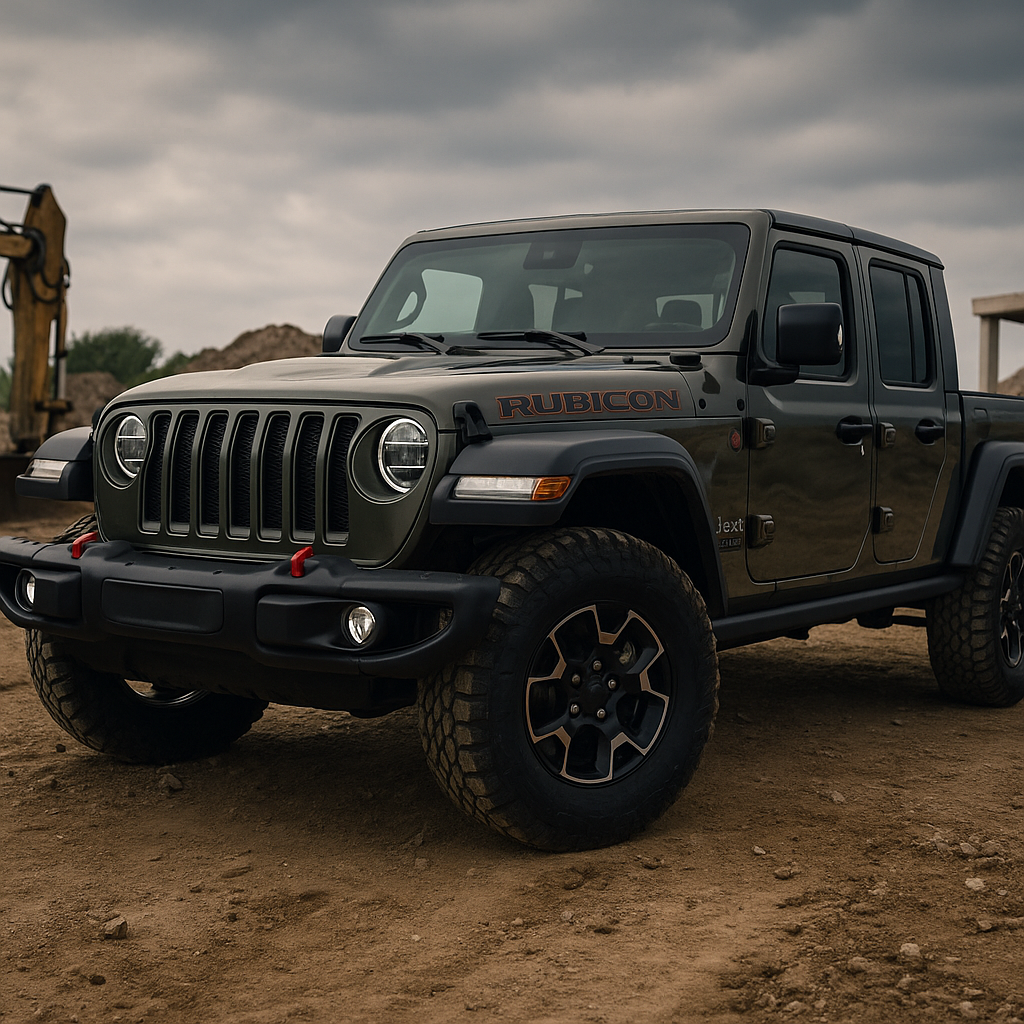
Table of Contents
Introduction — When a Vehicle Becomes a Symbol
A Jeep does not simply arrive at the workshop — it rolls in with a presence. Mud caked into the tire treads, tow hooks scratched from real use, the unmistakable upright stance of a vehicle built to survive places most drivers will never see. Even before you scan the VIN, you feel the history behind the seven-slot grille. Engineers and technicians recognize Jeep models as platforms where durability, modular design and mechanical honesty matter more than elegance or quietness.
Working on a Jeep is different. You’re dealing with high-clearance frames, long-travel coil suspensions, multiple 4×4 systems, and heavy-duty axles designed for torsional punishment. Whether it’s a Wrangler Rubicon ready for rock crawling, a Gladiator built for utility, or a Grand Cherokee blending luxury with capability — the heart remains unmistakably Jeep.
Definition: Jeep – The Original 4×4 Spirit & Military DNA
This phrase captures the fundamental identity of Jeep:
- Original 4×4 Spirit — simple, robust mechanical systems built for rough terrain.
- Military DNA — engineering focused on reliability, modularity and field serviceability.
- Modern evolution — integrating electronics, comfort and advanced traction control while preserving mechanical strength.
For technicians, this means Jeep vehicles demand both old-school mechanical knowledge and modern diagnostic capability.
Heritage: Born on the Battlefield
The Jeep’s origins trace back to 1940–1941, when the U.S. Army issued a request for a light reconnaissance vehicle. What emerged — the Willys MB — became one of the most influential machines in automotive history. Lightweight, durable, simple and repairable in the field, it played a decisive role in WWII mobility.
Key historical traits still present in modern Jeeps:
- Simple ladder-frame foundations for strength and repairability.
- Solid axles for articulation and durability.
- Short overhangs to improve approach and departure angles.
- Field-serviceable components with widely available parts.
Even modern Wranglers and Gladiators maintain these principles — just reinforced with electronics, advanced metal alloys and refined ergonomics.
Jeep uses several platform types depending on model:
1. Ladder-Frame Platforms (Wrangler, Gladiator)
- Exceptional torsional strength.
- Ideal for off-road articulation.
- Highly resistant to harsh terrain impact.
2. Unibody Platforms (Cherokee, Grand Cherokee)
- Improved road comfort and stability.
- Lighter weight for better efficiency.
- Still engineered for off-road durability in Trailhawk variants.
Workshop Implications:
- Lifting points differ significantly between designs.
- Unibody repairs require precise alignment tools.
- Ladder-frame models allow easier driveline service access.
4×4 Systems — Command-Trac, Selec-Trac & Rock-Trac
Jeep’s off-road reputation is built on its diverse 4×4 systems, each designed for specific use cases.
Command-Trac (Part-Time 4×4)
- 2H, 4H, 4L modes.
- No center differential — 4H is for low-traction surfaces only.
- Ideal for rugged terrain and utility work.
Selec-Trac (Full-Time 4×4)
- Full-time AWD capability for on-road use.
- Selectable 4L for off-road crawling.
- Great for mixed environments.
Rock-Trac (Wrangler Rubicon)
- 4:1 low-range ratio for maximum torque multiplication.
- Heavy-duty transfer case.
- Designed for rock crawling and extreme off-roading.
Technician Notes:
- Fluid changes are critical for transfer case life.
- Linkage adjustments ensure smooth mode engagement.
- Electronic 4×4 actuators must be monitored for corrosion and debris.
Axles, Lockers & Off-Road Hardware
Jeep vehicles — especially Wrangler and Gladiator — rely on heavy-duty axles such as:
- Dana 30 — lighter-duty front axle.
- Dana 44 — widely used, strong and highly modifiable.
- Dana 60+ — used in specialty builds and extreme off-road packages.
Locking Differentials
- Electronic locking diffs on Rubicon models.
- Manual locker systems in some aftermarket builds.
Sway Bar Disconnects
- Factory electronic disconnects improve articulation on Rubicon models.
- Sensors must be checked for water and mud contamination.
Engines — Hurricane, Pentastar & Diesel Options
Jeep powertrains blend reliability, torque and modularity.
Pentastar V6
- Widespread across Jeep lineup.
- Smooth, durable and easy to service.
- Timing-chain driven and responsive at low speeds.
Hurricane I4 Turbo
- Strong torque output.
- Compact, efficient design.
- Requires careful cooling and intercooler inspection.
EcoDiesel
- High torque under load.
- DPF and EGR systems require proper maintenance.
- Excellent for towing and crawling.
Cooling, Durability & High-Stress Engineering
Jeep vehicles are often subjected to harsh conditions — deep mud, high ambient temperatures, slow-speed crawling, and heavy loads.
Critical areas for technicians:
- Radiator fin clogging from mud and dust.
- Transmission coolers overheating during towing or off-road climbs.
- Front differential venting during water crossings.
- Intercooler efficiency on turbocharged models.
A Jeep that overheats loses its capability — cooling is central to reliability.
Suspension, Articulation & Off-Road Geometry
Jeep suspension systems are engineered for vertical travel and flexibility.
- Solid axles — consistent ground clearance under the diff housings.
- Long control arms — allowing axle rotation and articulation.
- Coil springs — improved comfort and flex over leaf springs.
- High approach/departure angles — minimizing bumper damage.
Technicians must check:
- Track bar bushings and joints.
- Upper/lower control arm wear.
- Ball joints under high articulation loads.
- Shock absorber condition after rough terrain.
Maintenance Strategies & Workshop Best Practices
- Service differentials regularly — off-road use contaminates fluids quickly.
- Inspect CV boots and U-joints for cracking or contamination.
- Check for mud packed into skid plates and crossmembers.
- Perform alignment after any hard off-road event.
- Monitor DPF loading for diesel Jeeps used on short trips.
- Use correct transfer-case fluid — different 4×4 systems require specific formulations.
Workshop Safety With Heavy 4×4 Vehicles
- Jeep vehicles sit high — ensure proper lift arm engagement.
- Use extra caution with suspension droop to avoid bushing damage.
- Disconnect batteries before working near winch wiring.
- Wear protective gear when removing underbody plates full of hardened mud.
- Follow HV procedures for plug-in hybrid variants.
Illustrative Tables
Table 1 — Jeep 4×4 Systems
| System |
Type |
Strengths |
Notes |
| Command-Trac |
Part-Time |
Strong, simple |
Use 4H off-road only |
| Selec-Trac |
Full-Time |
Great for mixed driving |
Center diff must be serviced |
| Rock-Trac |
Extreme 4×4 |
4:1 low-range |
Ideal for crawling |
Table 2 — Axle Options
| Axle |
Strength |
Service Focus |
| Dana 30 |
Light-duty |
Joint wear |
| Dana 44 |
Heavy-duty |
Locker servicing |
| Dana 60 |
Extreme-duty |
Seal & bearing loads |
FAQ Section
1. Are Jeeps reliable?
Yes — when maintained properly. Off-road use accelerates wear, so inspection intervals should be shorter.
2. What is the best Jeep for rock crawling?
The Wrangler Rubicon, thanks to Rock-Trac, lockers and electronic sway-bar disconnects.
3. Do turbo Jeeps require special maintenance?
Yes — intercooler and oil quality are crucial for Hurricane engines.
4. Are solid axles better for off-road?
For articulation and durability, yes — they remain a Jeep signature for a reason.
Suggested Past Articles
Read more at cartechexpert.com
Workshop-grade tools and diagnostic equipment available at store.cartechexpert.com.
Conclusion
Jeep’s legacy is built on ruggedness, simplicity and field-ready engineering. From the Willys MB to the modern Wrangler, the brand has preserved the core traits of durability, capability and modular design. For technicians, Jeep vehicles combine heavy-duty mechanical components with modern electronics — a blend that rewards careful inspection, proper fluids and precise calibration.
Thank you for reading.

