Physical Address
Arthur Avenue , BrookField , ILLINOIS , 60513 , United State
Physical Address
Arthur Avenue , BrookField , ILLINOIS , 60513 , United State

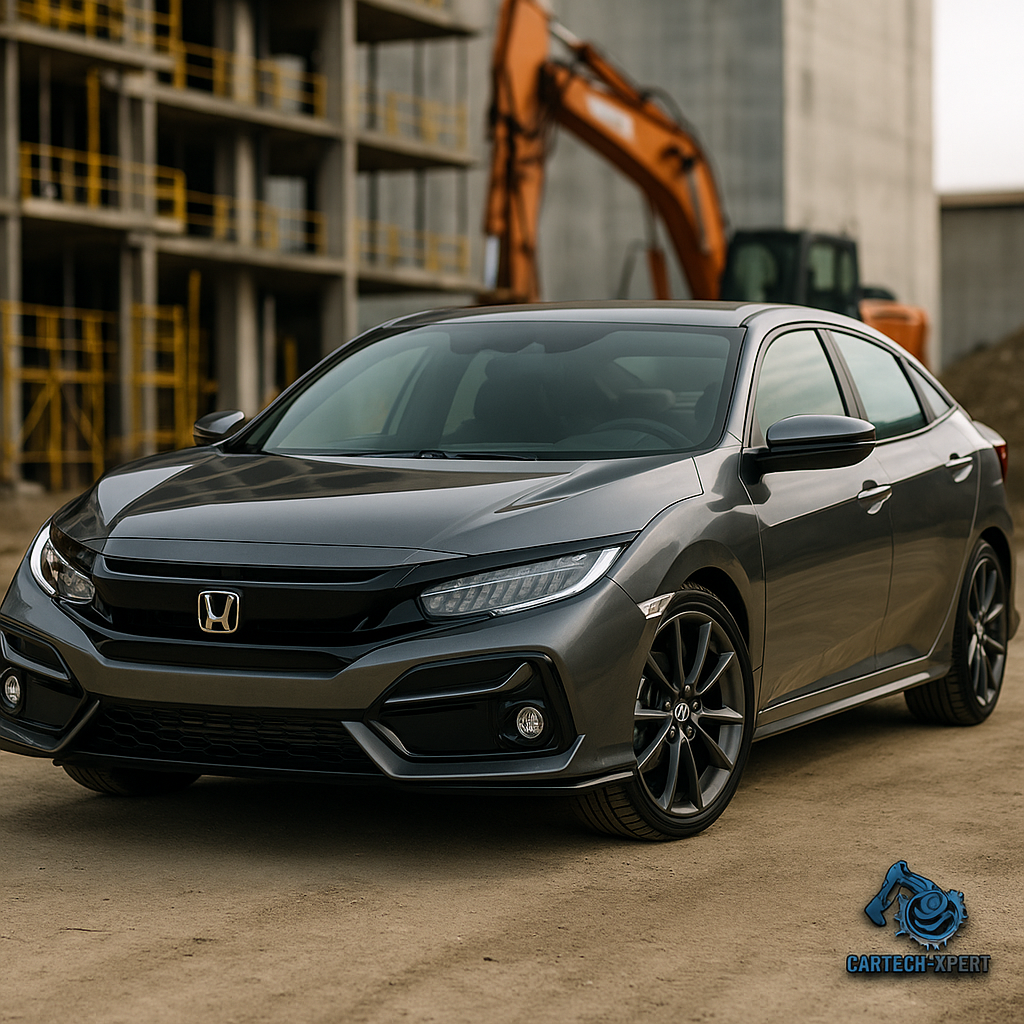
An engineer listens for a specific lift-off note through the scope of a dyno graph: valve timing shifts, a transient rise in volumetric efficiency, and a clean power ascent past the midrange. That tonal transition is the audible fingerprint of intelligent valvetrain design; for many, it is the sound of Honda’s VTEC kicking in. But even beyond the sensation, Honda’s significance lies in a systemic engineering culture: lightweight efficiency, meticulous design, continuous improvement, and an early embrace of software and electronics as enablers rather than appendages.
This article is written for engineers, technicians, fleet supervisors, and professionals in the automotive and heavy-equipment sector. It examines Honda’s technological lineage with emphasis on VTEC and related valvetrain systems, engine manufacturing and materials choices, vehicle electronics, quality systems in manufacturing, practical maintenance advice, occupational safety considerations, illustrative tables to clarify comparisons, and a targeted FAQ section. The goal is a usable, technical reference you can apply in workshops and engineering discussions.
“Honda — VTEC Technology & Japan’s Engineering Breakthroughs” describes Honda’s development trajectory that combined lightweight mechanical innovation with adaptive control systems to produce high-specific-output engines, efficient powertrains, and vehicles that respond with precise driver feedback. The concept includes:
Honda’s engineering identity originates with Soichiro Honda’s insistence on racing-derived experimentation, lightweight construction, and practical ingenuity. Early success in motorcycle racing and small-engine manufacturing created a culture that valued high-revving engines, mechanical elegance, and iterative incremental improvements. This racing DNA influenced production vehicles—engines that rev freely, compact packaging, and a focus on drivability.
The company’s expansion into automobiles brought innovations across engine layout, emissions control, and electronics. Honda’s engineering organization historically emphasized in-house design of critical subsystems—engines, transmissions, and key electronics—allowing tight integration and rapid iteration between design, prototyping, and production.
VTEC (Variable Valve Timing & Lift Electronic Control) is Honda’s trademark variable-valvetrain system first introduced in production in the late 1980s and early 1990s. It allows engines to switch between cam profiles to combine low-speed efficiency with high-speed power. Understanding VTEC requires exploring its mechanical design, control logic, and service implications.
A typical VTEC-equipped head includes multiple cam lobes per valve and rocker geometry that can be locked together at a defined engine speed or load. At low engine speeds, a conservative cam profile provides modest lift and duration, optimizing fuel economy, part-throttle torque, and emissions. As RPM or load increases, the system hydraulically or mechanically connects the rocker arms to a higher-lift, longer-duration cam profile—improving airflow and volumetric efficiency to yield significantly higher peak power and a broadened power band.
VTEC actuation is typically achieved with oil pressure controlled by the ECU. The engine control unit monitors RPM, throttle position, load, and other sensors to decide switching points. A solenoid opens a hydraulic passage, engaging a locking pin that ties the rocker arms together, effectively changing cam profile behavior. Integration with ignition and fueling strategies is essential—switch events are calibrated to avoid drivability disturbances and ensure smooth torque transition.
The design trade-off VTEC addresses is simple: fixed camshafts are optimized either for low-end efficiency or high-end power, but not both. VTEC allows a single engine to achieve both targets, permitting smaller displacement, lighter reciprocating mass, and competitive emissions without sacrificing enthusiasm at the top end—a core Honda value proposition.
Honda optimized engines for low inertia and high rotational speed. Design patterns include short-stroke geometries, lightweight reciprocating assemblies, and robust valvetrain components. Material choices and manufacturing precision underpin both performance and longevity.
Short stroke configurations and forged or high-quality cast pistons decrease reciprocating mass, enabling higher safe redlines. Forged connecting rods and well-balanced crankshafts minimize vibratory loads and bearing stress under high-rev operation.
High-performance and high-durability heads apply improved metallurgy, hardened cam lobes, and precise surface finishes for valve guides and seats. Honda’s attention to sealing, port shape, and combustion chamber design maximizes charge motion and efficient combustion at both low and high speeds.
Tight tolerance machining for journals, bore finishes, and cam profiles ensures that engines operate within narrow clearances—vital for oil control and longevity. Honda’s early adoption of progressive manufacturing jigs and fixture standardization reduced part variance and supported predictable NVH and dynamic behavior across production batches.
Honda’s production culture blends automation with strong human oversight and continuous improvement. The company emphasizes problem-solving at line-level and rapid countermeasure implementation—hallmarks of effective Kaizen practice.
For technicians, understanding Honda’s manufacturing constraints helps explain why certain replacement parts must be procured to exact specifications—improper aftermarket parts can introduce NVH, premature wear, or assembly issues.
Honda’s expertise extends into control strategies—ECU calibrations for VTEC transition, drive-by-wire throttle systems, variable cam phasing control, and integrated engine-transmission management. Modern Hondas rely on software-defined behavior to optimize fuel economy, emissions, and dynamic response.
Critical sensors include crank and cam position sensors, manifold absolute pressure (MAP) or mass air flow (MAF) sensors, throttle position, oxygen sensors, and oil pressure switches used for hydraulic actuation. Drive-by-wire systems add pedal position sensors and redundant pathways for safety and precision.
Many service operations require ECU reflashes, VTEC solenoid relearns, and throttle adaptation sequences after battery disconnects or component replacement. Access to manufacturer tooling and the latest calibration files ensures correct system behavior post-repair.
Maintaining Honda vehicles—especially those equipped with VTEC—requires a combination of oil-care discipline, sensor verification, and attention to hydraulic actuation systems. The following practical procedures help maintain performance and reliability.
VTEC actuation relies on clean oil at proper viscosity. Follow OEM oil-change intervals and use specified oil grades; extended drains or incorrect oils increase risk of solenoid clogging and valvetrain wear. Use high-quality filters and avoid contaminant ingress during service.
When VTEC engagement is lost or delayed:
Torque sequences for cam caps and valvetrain assembly must be followed to prevent distortion. Where hydraulic lash adjusters are used, confirm correct preload and oil feed integrity. For high-mileage engines showing lifter noise, consider inspection and replacement of affected components.
Ensure reliable crank and cam sensor readings; mis-synchronization affects ignition timing and VTEC timing decisions. Use OEM diagnostic tools to view cam and crank correlation, VTEC switching commands, and solenoid current draw during actuation tests.
Honda engines often run higher specific outputs—validate cooling systems, thermostat function, and coolant condition. Overheating accelerates oil breakdown and valve-train wear.
Many Hondas use close-ratio transmissions tuned to engine character. After clutch or transmission work, perform ECU relearns and ensure shift control modules receive updated adaptation data to preserve shift quality and avoid unwanted torque events that stress the valvetrain.
Honda’s culture emphasizes safety at the factory and in the workshop. For technicians, key safety practices include:
Regular training and adherence to manufacturer-specified safety procedures reduce workplace incidents and protect vehicle subsystems from accidental damage during service.
| System | Primary Goal | How It Works | Service Considerations |
|---|---|---|---|
| VTEC (Classic) | Performance at high RPM | Discrete cam profile switch via hydraulic lock | Solenoid cleanliness, oil pressure, cam wear |
| VTEC-E | Fuel economy at low load | Lean-burn strategy with specific intake profile | Combustion monitoring, intake cleanliness |
| i-VTEC | Broader optimization for power & economy | Combined cam phasing (VTC) + profile switching | Cam phaser control, oil quality, ECU calibration |
| Task | Priority | Why |
|---|---|---|
| Full ECU scan & live data | High | Identify solenoid faults, oil pressure, cam/crank correlation |
| Oil condition & pressure check | High | VTEC actuation and valvetrain lubrication |
| VTEC solenoid actuator test | High | Confirm electrical control and hydraulic actuation |
| Camshaft & follower inspection | Medium | Assess wear if abnormal noise or misfires appear |
VTEC engagement is commanded by the ECU when monitored parameters (engine RPM, throttle position, load, and sometimes temperature) meet the calibrated conditions. The ECU energizes a solenoid allowing oil to flow and lock rocker arms to the high-lift cam profile.
Hydraulic actuation relies on unobstructed oil passages and a responsive solenoid. Contaminated oil can clog passages, slow actuation, or prevent engagement entirely—reducing high-RPM power and causing drivability complaints.
Symptoms include loss of top-end power, hesitation during the switching RPM band, VTEC-related diagnostic trouble codes, and sometimes audible clatter if a solenoid or hydraulic circuit is compromised.
If VTEC engages or fails under incorrect conditions—due to timing or lubrication problems—valvetrain stress can increase. Correct oil pressure and timing are critical to prevent excessive wear or mechanical interference in engines with tight tolerances.
To complement this discussion of Honda’s engineering and VTEC technology, we recommend reading related articles in our series that explore manufacturing philosophies and reliability at other major OEMs:
Visit our resource hub for the full archive and technical downloads: cartechexpert.com
Explore specialized tools, training materials, and shop-ready templates at: store.cartechexpert.com
Honda’s contribution to automotive engineering is both technical and cultural: VTEC is a technical solution to a perennial compromise, and Honda’s broader culture transforms racing insight into production reliability. For engineers and technicians, the practical lessons are actionable:
If you found this article useful, share it with your team, incorporate the checklists into your shop SOPs, and consider our workshop resources to help standardize service workflows. For tailored training, fleet consultation, or SOP design for Honda powertrains, contact us via our website.
Thank you for reading.
