Physical Address
Arthur Avenue , BrookField , ILLINOIS , 60513 , United State
Physical Address
Arthur Avenue , BrookField , ILLINOIS , 60513 , United State

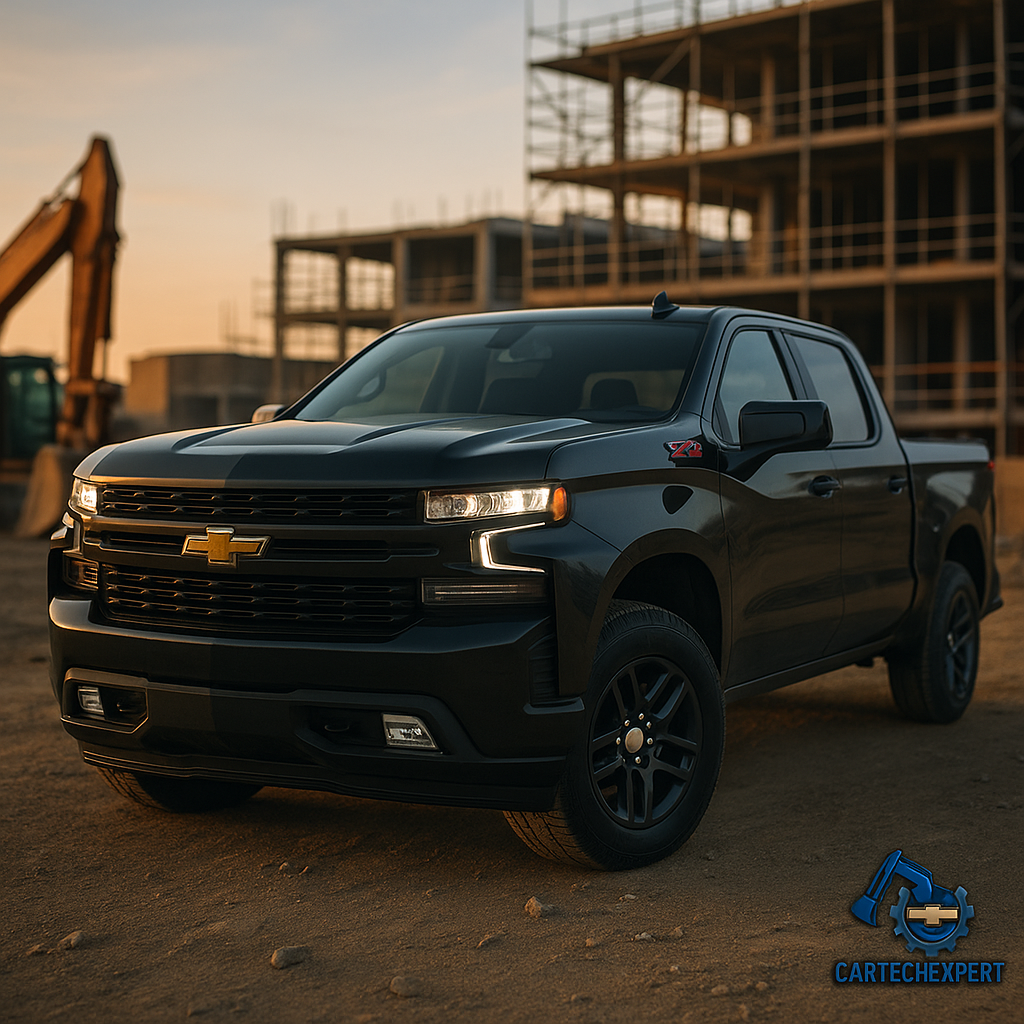
The first turn of a key, the immediate bark of an engine coming to life, the weight of torque transferred to a heavy-duty driveline — these are familiar moments to technicians, fleet managers, and engineers who work with American trucks and performance cars. Chevrolet’s presence in workshops, job sites, racetracks, and suburban driveways is ubiquitous. The brand merges industrial scale with a culture of performance that has influenced engine design, manufacturing practices, and aftermarket ecosystems for decades.
This article is tailored for a professional audience: engineers, technicians, fleet managers, and workshop supervisors in the automotive and heavy-equipment sectors. Its aim is technical and practical — to explain Chevrolet’s engineering evolution, highlight maintenance and diagnostic best practices, outline manufacturing and materials strategies, and provide clear tables and workflows that can be applied in real-world service environments.
“Chevrolet – The American Icon of Power, Trucks & Performance” describes the brand’s identity formed from three core pillars:
The phrase captures both cultural resonance and engineering priorities: straightforward mechanical durability, high serviceability, and an enduring aftermarket and engineering ecosystem that supports heavy use, modification, and endurance.
Chevrolet has been central to American automotive history since its founding in 1911. Over the 20th century, the marque balanced mass-production volumes with engineering experiments that shaped global automotive engineering. The development of the small-block V8 in the 1950s revolutionized packaging and performance by giving high power in a compact, modular footprint. Later derivatives—the big-blocks, the robust LS family, and the modern LT and V-series—built on this ethos: high specific power, accessible service points, and mechanical simplicity where possible.
Parallel to engine lineage, Chevrolet evolved truck architecture to handle increasing payloads, towing ratings, and duty cycles. The company’s commercial and heavy-duty powertrains (including collaborations for durable diesel engines) became staples for fleets and contractors. Meanwhile, performance variants kept engineering knowledge moving forward: suspension tuning, brake development, aerodynamics, and drivetrain cooling required by track use filtered back into production models and aftermarket solutions.
Chevrolet’s engineering philosophy is pragmatic and capability-driven. Key tenets include:
From an engineering workplace standpoint, this philosophy means Chevrolet parts are generally designed to be replaced and maintained at scale: torque specifications are standardized, parts have clear interchangeability, and diagnostic workflows rely on consistent control-module logic.
Understanding Chevrolet requires tracing its powertrain progression. The evolution demonstrates shifts in engineering focus—from displacement and mechanical simplicity to thermal efficiency, forced induction, and now electrification. Each phase imposes unique service and diagnostic requirements.
Introduced in the 1950s, the small-block V8 combined compact size with high specific power, making it a universal candidate for passenger cars, trucks, and motorsport applications. Mechanical features that contributed to its longevity:
Service implications: technicians could rebuild, re-bore or swap rotating assemblies with relatively low tooling complexity compared to overhead cams.
The LS series modernized small-block concepts with improved metallurgy, cross-bolted mains in some blocks, aluminum options, and refined oiling systems. Benefits included lighter mass, higher rev limits, and vast tuning potential. The LS architecture emphasized:
Diagnostics moved toward electronic fueling and ignition calibration, but mechanical service remained accessible—an important trait for heavy-use or modified vehicles.
Chevrolet’s Duramax family, developed with engine partners, addressed the demand for durable diesel power in trucks. Duramax features:
Service implications: diesel units require meticulous fuel system hygiene, periodic injector and pump servicing, and attention to emission control devices (DPF, SCR) where equipped.
To meet efficiency, emission, and packaging demands, Chevrolet employs turbocharged and direct-injection gasoline engines in many models. These require:
Chevrolet’s electric portfolio (Bolt EV and other electrified initiatives) focuses on battery packaging, power electronics, and thermal management. Fleet and workshop considerations include:
Chevrolet’s truck lineage defines a large portion of the brand’s engineering identity. Truck platforms are engineered for:
Key engineering areas of focus for truck design and service:
Modern truck service must account for towing calibration, trailer brake controller integration, and load-conditioned diagnostics (e.g., in-vehicle telemetry during towing).
Chevrolet’s performance program is not an afterthought; it is an engineering incubator. Corvette and Camaro variants influence material choices, cooling architectures, and chassis tuning across the portfolio.
Performance engineering priorities include:
Service teams focused on performance models must handle specialized consumables (high-temp lubricants, track-grade brake fluid), maintain accurate alignment tolerances, and understand owner-use profiles that extend to track-level stresses.
Chevrolet—within General Motors—operates large-scale factories optimized for high volume. Manufacturing priorities include:
A key challenge at scale is variability control: thermal expansion of fixtures, tool wear, and adhesive cure variations can induce batch-level regressions. Modern plants mitigate this with digital twins of process flows, continuous SPC (statistical process control), and predictive maintenance programs for tooling.
Chevrolet uses mixed-material strategies—high-strength steels for crash zones, aluminum components where mass savings matter, and engineered plastics/composites for secondary structures. Corrosion management is a critical long-term durability effort:
In service environments, attention to drainage channels, underbody coatings, and connector backshells prevent premature electrical and mechanical failures—especially in regions with heavy road-salt usage.
Chevrolet vehicles span simple mechanical architectures to modern software-rich systems. A robust workshop program balances traditional mechanical skills with modern diagnostic competencies.
Always begin with a full read of all control modules: powertrain, ABS/ESP, body control, transmission, HVAC, and battery management on electrified models. Document freeze-frame and live data for intermittent faults. Data-driven diagnostics reduces unnecessary disassembly and supports warranty defensibility.
Maintain calibrated torque tools and follow OEM torque sequences for critical assemblies: cylinder heads (where applicable), steering knuckles, suspension links, and driveline flanges. Record calibration dates and tool certificates.
Use OEM or OEM-equivalent fluids and filters. Diesel units often demand specific viscosity and soot-handling properties; turbocharged gasoline engines may be sensitive to oil volatility and detergent technology. Replace fuel-water separators, if present, on specified intervals to protect high-pressure injectors.
Inspect turbocharger oil supply and drain paths for restrictions. For DPF/SCR-equipped diesels, verify regeneration history, differential pressure readings, and urea dosing system operation to avoid drivability issues and premature component failure.
Implement HV isolation checks, battery SOH assessments, and inverter cooling loop inspections. Follow strict LOTO protocols and ensure technicians have appropriate PPE and training for HV work.
For high-mileage trucks, implement scheduled driveline inspections, torque-check campaigns on frame-mounted components, and cooling-system pressure testing to prevent catastrophic failures during towing operations.
Technician safety is paramount. Key program elements include:
Routine drills and competence checks ensure that safety procedures remain practiced and that new staff integrate correctly into hazardous-work controls.
| Powertrain Type | Primary Service Concerns | Recommended Interval Focus |
|---|---|---|
| Small-Block V8 (Classic) | Valve lash (if applicable), oil quality, bearing wear | Oil change intervals; periodic compression & bearing checks on high-mileage engines |
| LS / Modern V8 | Oil degradation, injector & ignition diagnostics, accessory drive integrity | Regular oil changes with OEM spec oil; fuel system inspections |
| Duramax Diesel | Fuel quality, injector health, DPF/SCR systems | Frequent fuel filter replacement; monitor soot loading and dosing systems |
| Turbocharged Gasoline | Turbo oil supply, intercooler cleanliness, fuel system cleanliness | Monitor oil condition; inspect boost control and charge-air plumbing |
| BEV / Hybrid | Battery SOH, cooling loop integrity, inverter diagnostics | HV system checks per OEM schedule; battery capacity assessments |
| Task | Priority | Notes |
|---|---|---|
| Full vehicle scan (all ECUs) | High | Begin every diagnosis with complete data capture |
| HV isolation & safety checks (where applicable) | High | Mandatory prior to mechanical procedures on hybrid/EV |
| Torque & fastener verification | High | Maintain torque tool calibration and sequence records |
| Cooling & oil system inspection | Medium | Critical for turbo/diesel longevity |
| Road test with data logging | High | Verify repairs under controlled load conditions |
Chevrolet designs trucks with reinforced frames, robust cooling systems, heavy-duty drivetrain components, and validated towing calibrations. The combination of mechanical strength and thermal reserve capacity ensures long service life under load when maintained correctly.
Maintain fuel cleanliness protocols, stock appropriate diagnostic tools for diesel control modules, regularly service filters and separators, and monitor DPF/SCR operation to prevent costly forced regenerations or component replacements.
Wear-related issues include cam and lifter wear in high-mileage engines, ring and piston wear causing reduced compression, and seal/ gasket deterioration leading to oil leaks. Proper oil change discipline and periodic inspections extend service life.
EVs and hybrids require high-voltage isolation processes, different diagnostic approaches (battery management, inverter error codes), and thermal-loop maintenance. Shops must adopt HV PPE and ensure technicians receive manufacturer training.
To provide comparative context and additional manufacturing perspectives, we recommend these related articles:
Visit our main site for the complete archive of articles and technical resources: cartechexpert.com
Explore workshop tools, SOP templates, and training materials at: store.cartechexpert.com
Chevrolet’s identity bridges practicality and performance. For engineers, fleet managers, and technicians, the brand’s proposition is clear: vehicles and trucks engineered to be serviceable, durable, and tunable. Whether maintaining a high-mileage Duramax workhorse, prepping a Corvette for track duty, or troubleshooting a turbocharged drive unit in a daily driver, the principles remain the same—diagnose with data, use OEM procedures and fluids, and document every action to support reliability and warranty claims.
Operational takeaways:
If this article supports your team or workshop, share it with colleagues, use the checklists to standardize procedures, and consider our store’s tools and training modules to enhance service capability.
Thank you for reading.
