Physical Address
Arthur Avenue , BrookField , ILLINOIS , 60513 , United State
Physical Address
Arthur Avenue , BrookField , ILLINOIS , 60513 , United State

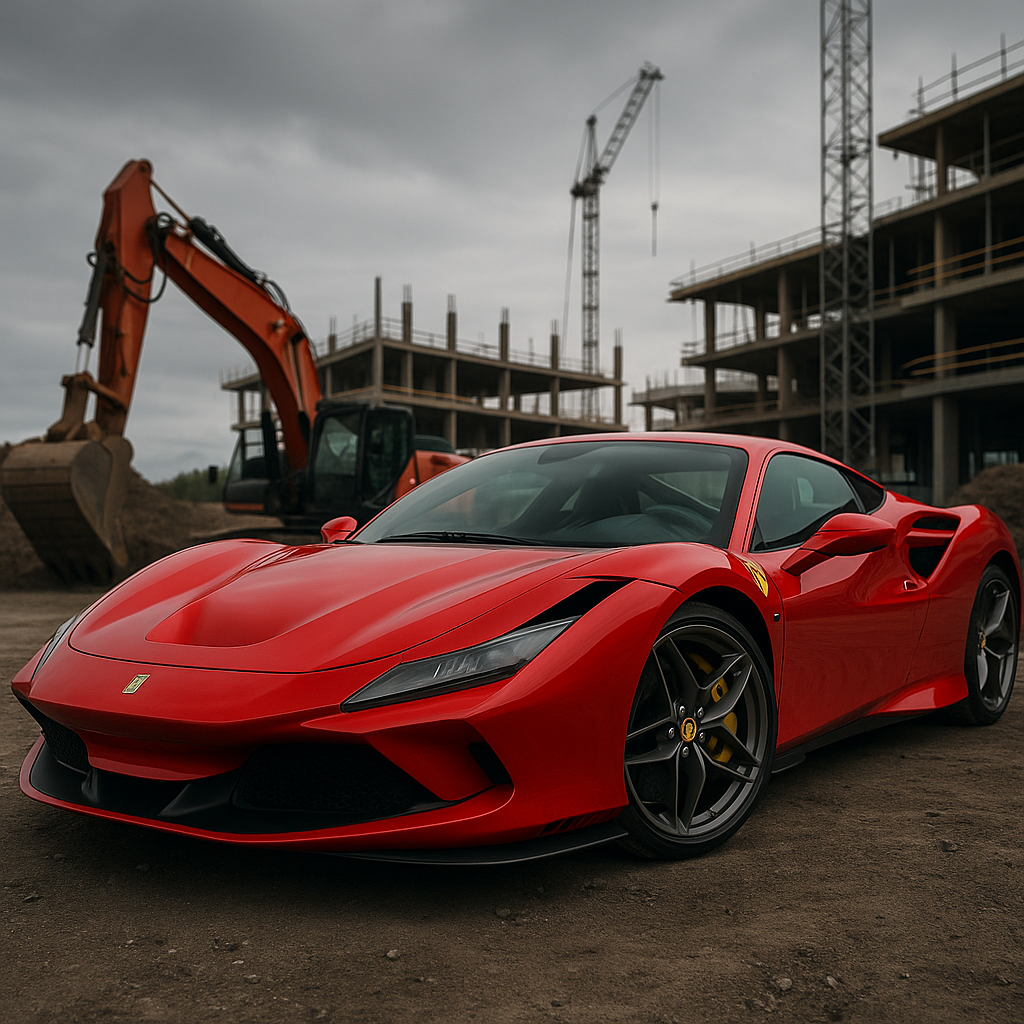
A Ferrari arrives long before you see it. The high-revving note of a V8 or V12 sweeps through the workshop, smooth yet violent, like a precise piece of machinery sharpened for combat. As the car idles into the service bay, the metallic scent of heat, oil, and high-grade exhaust gas fills the air — unmistakably Ferrari. Even the technicians straighten their posture instinctively. These machines are not routine vehicles; they carry decades of racing DNA in every bolt, weld, and carbon fiber panel.
Ferrari represents a specific kind of engineering: emotional, obsessive, and unapologetically performance-driven. For engineers, technicians, and motorsport-focused specialists, maintaining or inspecting a Ferrari is not just another job. It demands precision, delicacy, documentation, and a deep understanding of the materials and systems designed to operate under extreme thermal and mechanical stress.
This article examines Ferrari – Italian Performance Mastery & Racing Dominance with a technical, workshop-focused perspective — covering engines, aerodynamics, chassis behavior, hybrid systems, material science, manufacturing culture, maintenance strategies, and safety procedures required when working with exotic high-output assemblies.
Ferrari’s identity is defined by two pillars:
To technicians, this means that every Ferrari is a race-inspired machine built with minimal tolerance for error. Service procedures, torque values, and calibration steps must be followed with absolute precision.
Enzo Ferrari’s philosophy — “I build engines, and attach wheels to them” — set the tone for the brand’s early decades. Performance was everything. Bodywork, aerodynamics, comfort, even reliability were secondary to raw power. Over time, the engineering matured, integrating structural stiffness, safety developments, and aerodynamics shaped in wind tunnels used for F1 research.
Key heritage milestones include:
Ferrari’s heritage affects service culture: technicians must treat every model as a performance vehicle operating near the limits of materials engineering.
Ferrari’s V12 engines are mechanical art — high-revving, naturally aspirated, and engineered to deliver linear power delivery with emotional intensity. Modern Ferrari V12s combine:
Ferrari’s award-winning V8s use advanced turbocharging systems, electronically controlled wastegates, and complex intercooling networks. Turbo lag is minimized through:
Technicians must monitor:
Ferrari’s hybrid powertrains combine:
Workshop notes:
Ferrari chassis design blends rigidity, lightweight materials, electronically adaptive dampers, and geometry tuned for sharp response. Aerodynamics are equally critical:
Technicians should inspect:
Ferrari uses:
Collision repair must follow Ferrari factory guidelines to preserve structural performance.
Ferrari’s production environment blends:
Each car is effectively “blueprinted,” requiring technicians to maintain similarly high standards.
| Engine | Strength | Workshop Focus |
|---|---|---|
| V12 NA | Linear power | Oil control, cooling |
| V8 Turbo | High torque | Boost leaks, heat shielding |
| Hybrid | Torque vectoring | HV isolation, coolant |
| Component | Priority | Notes |
|---|---|---|
| Suspension | High | Accuracy critical |
| Aero | High | Check actuators |
| Brakes | High | Ceramic care |
They require precision and correct tools, but are extremely well-engineered.
Critical — temperatures run higher than typical performance cars.
Yes — technicians must follow HV protocols and cooling guidelines.
For comparison, read our previous deep-dive: Porsche – Precision Engineering & the 911 Legacy
You can find more articles at cartechexpert.com and professional workshop tools at store.cartechexpert.com.
Ferrari’s dominance in performance engineering comes from relentless refinement, motorsport influence, and uncompromising material science. For technicians and engineers, each model demands discipline, precision, and an understanding of how racing technology behaves under road conditions.
Thank you for reading.
