Physical Address
Arthur Avenue , BrookField , ILLINOIS , 60513 , United State
Physical Address
Arthur Avenue , BrookField , ILLINOIS , 60513 , United State

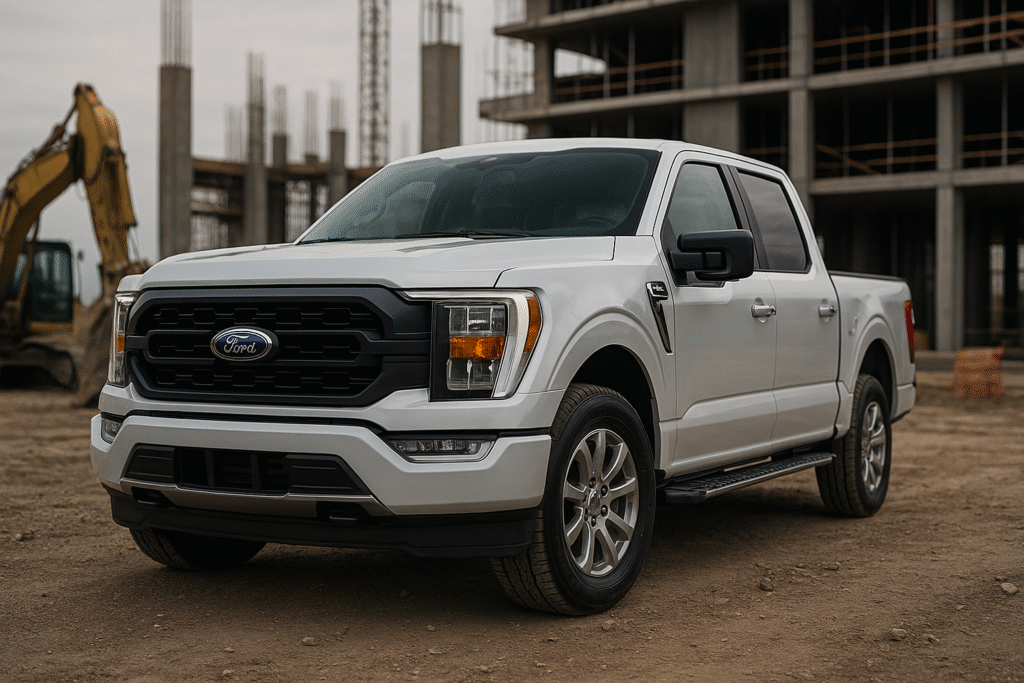
A stamping press drops with a predictable rhythm, rivets flash under robotic weld arms, and paint lines move cars like beads on a string. In parallel, a V8 fires with an answering roar in a test bay, dyno graphs mapping torque curves in tight lines. For technicians, engineers, and plant managers, these are not separate worlds—they are two sides of the same industrial coin. Ford is one of the companies that occupies both worlds: the originator of mass automotive manufacturing and a maker responsible for some of the most iconic performance vehicles in automotive history.
This article is written for engineers, technicians, fleet managers, and heavy equipment professionals who require a technical, practical, and publication-ready reference. It examines how Ford’s legacy of mass production and muscle-car heritage converges with modern innovation—electrification, digital manufacturing, advanced driver assistance, materials science, and new maintenance paradigms. The objective is actionable insight: manufacturing constraints, service implications, diagnostic workflows, and durability best practices that technicians can apply immediately.
“Ford – Mass Production, Muscle Heritage & Modern Innovation” frames Ford’s corporate narrative as an intersection of three durable pillars:
Taken together, these elements define how Ford makes vehicles that must be affordable, durable at scale, and—when required—engineered to deliver high-performance characteristics with predictable serviceability.
Ford’s historical contributions are foundational to modern automotive practice. Henry Ford’s Model T and the moving assembly line redefined manufacturing economics, enabling vehicles to be priced for mass ownership. Social and industrial impacts aside, the technical implications were profound: process standardization, interchangeability of parts, and a production mindset that prioritized throughput while preserving functional quality.
Decades later, the muscle era—anchored by the Ford Mustang and high-performance V8s—demonstrated that mass-market vehicles could be engineered for performance. Mustang’s success established Ford’s credibility in performance engineering and racing derivatives, spawning a lineage of high-output engines, performance suspensions, heavy-duty drivetrains, and torque-rich calibrations that inform modern performance variants (Shelby, GT, Raptor, etc.).
From the original moving line to modern flexible plants, Ford’s manufacturing evolution demonstrates key lessons in process engineering. Core manufacturing principles include:
Modern Ford plants incorporate digital twins, real-time telemetry from production equipment, and predictive maintenance on tooling—minimizing downtime while preserving product consistency. Digital integration also facilitates traceability, linking serial numbers back to material batches, calibration data, and assembly station records—vital for fault analysis at scale.
Ford’s engineering philosophy blends three objectives: cost-effective manufacturability, market-driven performance targets, and long-term durability. Platform strategy is central—Ford’s use of modular platforms (for example, earlier C/D platform families, global architectures for trucks and SUVs, and BEV-specific platforms) allows targeted optimization of powertrain packaging, crash structures, and NVH characteristics while retaining manufacturing economies.
From an engineer’s perspective, platform work emphasizes defining stable interface geometry for suspension mounts, powertrain mounts, and electrical harness routing. These standardized anchor points ensure that production jigs and calibration processes remain consistent across variants—reducing manufacturing variability and simplifying service documentation for technicians.
Ford’s powertrain story is a journey from durable, large-displacement V8s to downsized, turbocharged EcoBoost engines, and now to hybrid and fully electric drivetrains. Each generation introduces unique engineering and maintenance implications.
Large-displacement V8s provided raw torque and aural character. Engineering priorities were:
Maintenance emphasis historically focused on valve lash, ignition system performance, and routine oil quality to manage thermal and mechanical stresses.
EcoBoost engines use turbocharging and direct injection to increase thermal efficiency and specific output. Technical trade-offs include:
Techs must manage turbo cooldown practices, monitor boost control actuators, and validate EGR and DPF operation where applicable.
Hybridization introduces high-voltage systems, power electronics, and energy management controls. Workshop implications include:
Ford’s BEV efforts (e.g., Mustang Mach-E, F-150 Lightning) focus on dedicated battery packaging, inverter/motor efficiency, robust battery thermal management, and charging infrastructure integration. Technician considerations consist of:
Ford’s chassis engineering spans family sedans to high-performance track variants and heavy-duty trucks. The key to achieving target handling characteristics and acceptable NVH is an integrated systems approach: suspension geometry, spring/damper calibration, structural stiffness, and drivetrain mounting all interact to produce perceived vehicle behavior.
Ford engineers tune camber gain, roll center behavior, and anti-dive/anti-squat characteristics to achieve vehicle-specific responses. For performance variants, multi-link rear suspensions, stiffer bushings, and adaptive damping are common.
Adaptive dampers enable a balance between ride comfort and performance. Diagnostics for these systems include valve control checks, electronic actuator verification, and leak detection in hydraulic circuits.
Achieving a quiet cabin in mass-produced vehicles requires consistent sealing, sound-deadening application, and drivetrain isolation. Rapid inspection methods—acoustic mapping and correlation against baseline signatures—help plants avoid batch-level NVH regressions that are costly to rectify post-assembly.
Ford’s approach to materials combines high-strength steels, aluminum, and selective composites to optimize strength, cost, and weight. Durability strategies focus on:
For technicians, corrosion-prone areas (drain holes, door seals, wheel-arches, underbody fasteners) should be inspected regularly, and preventive coatings applied when servicing vehicles in corrosive environments.
Ford continues to invest in technologies that span electrification, autonomy, materials science, and manufacturing digitization. Highlights relevant to engineers and technicians include:
Each of these innovations changes service paradigms: OTA updates require change control in service records; BEV platforms require HVAC-like thermal care for battery systems; and ADAS recalibration requires precise alignment jigs and verification equipment.
Maintaining Ford vehicles across generations requires a hybrid skill set: mechanical aptitude for legacy engines and high-voltage competency for modern electrified units. The following best practices keep shops efficient and vehicles reliable.
Start with a comprehensive scan across powertrain, body, ADAS, and battery management controllers. Record freeze-frame data and live parameters. Many intermittent faults are reproducible only with logged data; technicians should adopt logging procedures and correlate them with operational conditions (load, temperature, speed).
Maintain calibrated torque tools and follow OEM sequences—especially for high-load assemblies (engine mounts, driveline flanges, suspension knuckles). Fastener traceability helps in warranty and failure analysis.
For hybrids and BEVs:
For EcoBoost and turbocharged engines, monitor turbocharger shaft play, boost pressure consistency, oil pressure under load, and intercooler cleanliness. Implement cool-down procedures where applicable to prolong turbo life.
Post-repair road tests should be structured: defined test routes, telemetry capture, and checklist-based validation (braking performance, steering response, ADAS behavior). These steps ensure both safety and performance alignment to factory intent.
Modern workshops handling Ford vehicles must be competent in both conventional hazards and the new risks associated with electrification and advanced systems.
| Attribute | V8 Muscle | EcoBoost (Turbo I4) | Hybrid | BEV |
|---|---|---|---|---|
| Peak Torque Delivery | High, at higher RPM | High, from lower RPM via turbo | Blended torque—electric fill at transients | Instant torque at low RPM |
| Thermal Complexity | Moderate | High (turbo/intercooler) | High (battery + ICE cooling) | High (battery & inverter cooling) |
| Maintenance Focus | Ignition, valves, oil systems | Turbo health, oil quality | HV battery & power electronics | Battery SOH, inverter, cabling integrity |
| Task | Priority | Notes |
|---|---|---|
| Full system scan (all ECUs) | High | Start point for diagnostics |
| HV isolation check (for hybrids/BEVs) | High | Mandatory before mechanical service |
| Torque tool calibration | High | Recalibrate periodically and document |
| Turbocharger inspection | Medium | Examine shaft play and oil supply |
| Post-repair road test | High | Structured test conditions with data logging |
Ford uses platform modularity and targeted performance sub-architectures to preserve mass-production economies while enabling high-performance derivatives. Common interface points allow production lines to assemble both high-volume and performance variants with controlled process steps.
EcoBoost engines require vigilance on turbocharger systems, oil quality, and high-pressure fuel cleanliness; V8s demand attention to mechanical wear items and consistent oil management. In both cases, OEM specification adherence is critical.
HV safety, battery thermal management, inverter diagnostics, and software/OTA update management. Technicians must use OEM-approved diagnostic tools and adhere to HV procedures.
Establish separate service areas for HV work, invest in HV training and PPE, ensure diagnostic tool availability for all platforms, and maintain inventory strategies that reflect diverse component needs (e.g., turbochargers, battery service kits, inverter coolant).
For comparative perspectives and complementary technical philosophies, read the related articles available on our site:
Visit our main website: cartechexpert.com
Explore our store: store.cartechexpert.com
Ford’s technical legacy is broad: it is the company that industrialized vehicle manufacturing and also produced vehicles that defined performance culture. Today, the company integrates its heritage with modern priorities: electrification, digital manufacturing, safety, and continuous improvement. For engineers and technicians, the practical lessons are straightforward:
If this article supports your work, share it with your team, reference our other manufacturer-specific articles for comparative insights, and visit our store for diagnostic tools, SOP templates, and training modules designed for modern workshops.
Thank you for reading.
