Hyundai Trucks – Modern Tech & Fuel-Cell Innovation
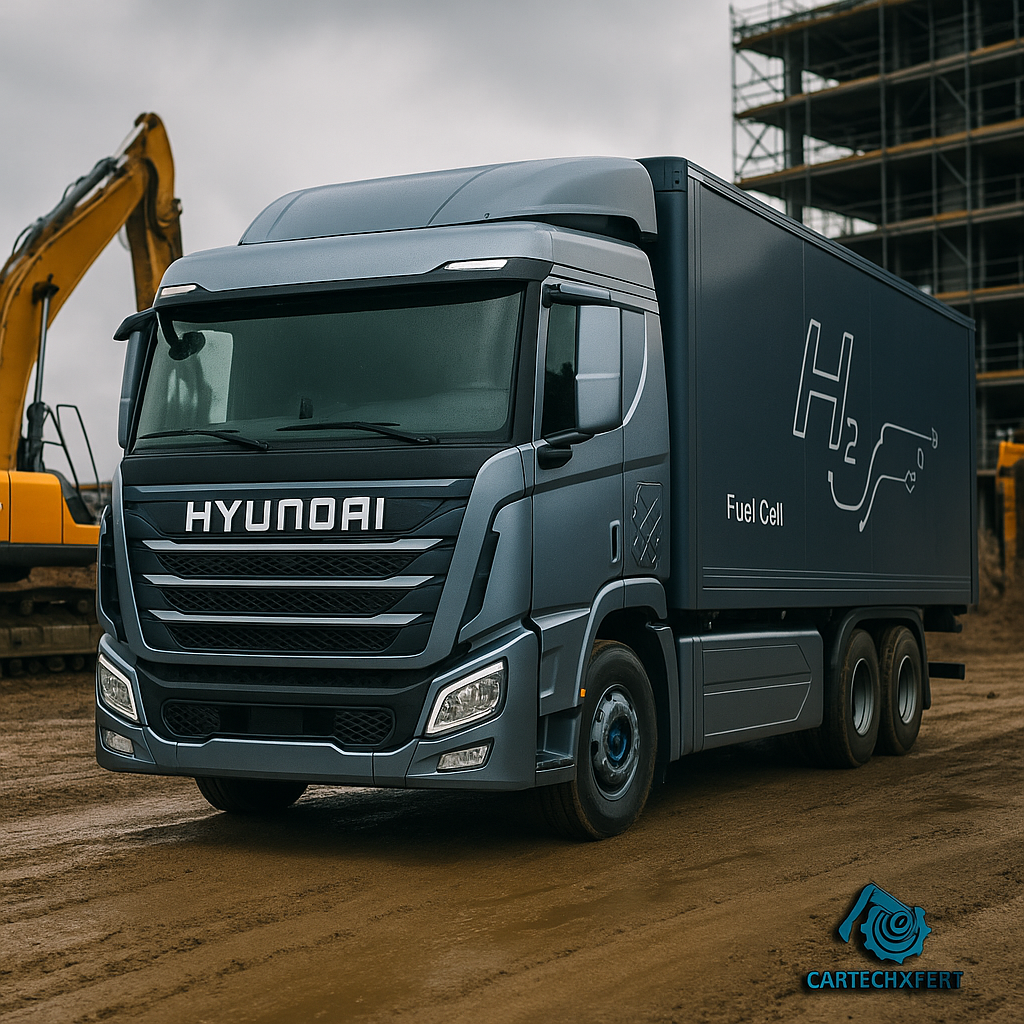
There is a certain precision in the way a Hyundai truck moves—clean acceleration, refined engineering, and a sense of modern composure. For technicians and drivers, Hyundai represents a shift in global trucking: a transition from conventional heavy-duty machinery to smart, efficient, and digitally connected systems.
Across Asia, the Middle East, and rapidly growing markets worldwide, Hyundai trucks have become synonymous with dependability and innovation. Their rise captures the evolution of South Korean engineering—from early diesel platforms to cutting-edge hydrogen fuel-cell trucks redefining zero-emission transport.
Table of Contents
- Definition – Hyundai Trucks: Modern Tech & Fuel-Cell Innovation
- Origins of Hyundai Trucks – Building a Korean Industrial Powerhouse
- Evolution of Hyundai Trucks (1980s–2010s)
- Hyundai’s Modern Lineup – Digital, Efficient & Global
- Fuel-Cell Innovation – Hyundai’s Zero-Emission Leap
- Engineering Features & Advanced Powertrains
- Maintenance Best Practices for Hyundai Trucks
- Safety Systems & Operator Protection
- Technical Tables & Specifications
- Frequently Asked Questions
- Old Website Article
- Conclusion
Definition – Hyundai Trucks: Modern Tech & Fuel-Cell Innovation
“Hyundai Trucks – Modern Tech & Fuel-Cell Innovation” refers to Hyundai Motor Company’s evolution into a global commercial vehicle manufacturer offering advanced diesel trucks, LNG/CNG solutions, battery-electric models, and pioneering hydrogen fuel-cell trucks such as the Hyundai Xcient Fuel Cell.
Hyundai trucks serve global industries including:
- Long-haul freight transport
- Construction & vocational applications
- Urban delivery and logistics
- Municipal & special-purpose vehicles
Origins of Hyundai Trucks – Building a Korean Industrial Powerhouse
Hyundai’s Industrial Beginnings
Hyundai began in 1947 as a construction company and expanded rapidly into shipbuilding, steel, automotive, and heavy industries. By the 1970s, Hyundai Motors began producing commercial vehicles to meet South Korea’s growing industrial demand.
Early Truck Development
The first Hyundai trucks were built with global partnerships, leveraging Japanese and European engineering for:
- durable diesel engines
- simple mechanical systems
- flexible chassis layouts
Entry into Export Markets
By the 1980s, Hyundai trucks gained traction across Asia and the Middle East due to:
- low operating cost
- solid mechanical reliability
- affordable service and parts
Evolution of Hyundai Trucks (1980s–2010s)
1980s–1990s: Regional Dominance
Hyundai expanded its truck lineup with medium-duty and heavy-duty platforms, improving:
- payload capacity
- engine performance
- cab ergonomics
2000s: Global Expansion
Hyundai invested heavily in research, design, and international manufacturing, leading to modernized platforms such as:
- Hyundai HD series (light/medium duty)
- Trago (heavy duty)
- Mighty commercial series
2010s: Emphasis on Technology
By 2015, Hyundai moved toward:
- Euro-6 compliant engines
- Automated manual transmissions (AMT)
- Driver comfort upgrades
- Advanced diagnostics integration
Hyundai’s Modern Lineup – Digital, Efficient & Global
Hyundai Xcient – The Flagship
The Hyundai Xcient represents the brand’s global heavy-duty identity, offering:
- powerful Euro-6 diesel engines
- improved aerodynamics
- high-comfort sleeper cabs
- advanced infotainment and digital controls
Electric & Zero-Emission Development
- Battery-electric trucks for urban distribution
- Hydrogen fuel-cell heavy-duty platforms
- Partnerships for charging and hydrogen refueling infrastructure
Smart Connectivity
- remote diagnostics
- telematics integration
- driver-behavior monitoring
- fleet optimization software
Fuel-Cell Innovation – Hyundai’s Zero-Emission Leap
The Xcient Fuel Cell
Hyundai’s Xcient Fuel Cell is the world’s first mass-produced hydrogen fuel-cell heavy-duty truck. It features:
- Multiple hydrogen tanks for extended range
- Fuel-cell stacks producing electrical energy on-demand
- Zero tailpipe emissions
- Quiet, smooth operation ideal for urban and long-haul duty
Advantages of Fuel-Cell Trucks
- Fast refueling compared to battery-electric trucks
- No particulate or NOx emissions
- Longer range for heavy loads
Hyundai’s Hydrogen Ecosystem
Hyundai is developing a complete hydrogen ecosystem, integrating:
- production of green hydrogen
- fuel-cell R&D centers
- partnerships for hydrogen refueling networks
Engineering Features & Advanced Powertrains
1. Diesel Engines
- Euro-5 and Euro-6 options
- Turbocharged common-rail systems
- Strong torque curves for hauling
2. Electric Powertrains
- High-capacity battery packs
- Regenerative braking
- Quiet, low-vibration operation
3. Hydrogen Fuel-Cell Powertrains
- Zero-emission operation
- Extended range capability
- Low maintenance compared to ICE platforms
4. Chassis & Suspension
- High-strength frame rails
- Air-suspension systems
- Multiple wheelbase configurations
Maintenance Best Practices for Hyundai Trucks
Daily Checks
- Check coolant and DEF (diesel models)
- Tire pressure and tread depth
- Air-system leak inspection
- Battery and connector checks (electric models)
Weekly Checks
- Draining air tanks
- Brake pad visual inspection
- Software diagnostic scan
Medium-Interval Maintenance
- Oil & filter every 20,000–30,000 km
- Transmission fluid checks
- Cooling system inspection
Long-Interval / Annual Service
- DPF service (diesel)
- Battery health report (electric)
- Hydrogen stack inspection (fuel-cell)
Safety Systems & Operator Protection
Active Safety
- Forward Collision Avoidance
- Lane Keeping Assist
- Adaptive Cruise Control
- ESC and ABS integration
Passive Safety
- High-strength cab structures
- Energy-absorbing zones
- Improved rollover resistance
Technical Tables & Specifications
Table 1: Hyundai Engine Overview
| Powertrain |
Output |
Usage |
| Diesel Euro-6 |
250–520 hp |
Heavy haul / regional |
| Battery-electric |
200–350 kW |
Urban delivery |
| Fuel-cell |
350–500 kW equivalent |
Long-haul zero-emission |
Table 2: Maintenance Summary
| Task |
Interval |
Platform |
| Oil Change |
20,000–30,000 km |
Diesel |
| DPF Service |
Annual |
Diesel |
| Battery Health Check |
Annual |
Electric |
| Fuel-Cell Stack Inspection |
Annual |
Hydrogen |
Frequently Asked Questions – Hyundai Trucks
1. Are Hyundai trucks reliable?
Yes. Hyundai has earned a strong global reputation for durability and low operating cost.
2. Does Hyundai produce hydrogen fuel-cell trucks?
Yes. The Hyundai Xcient Fuel Cell is a leading zero-emission heavy-duty truck.
3. Are Hyundai trucks expensive to maintain?
No. Their maintenance schedules are straightforward, and parts availability is expanding worldwide.
4. Do Hyundai trucks use modern connectivity systems?
Yes. Hyundai integrates telematics, remote diagnostics, and driver monitoring tools.
Old Website Article
“Hyundai produces a wide range of commercial trucks known for modern design, reliability, and increasing global presence.”
Conclusion
Hyundai Trucks represents a new era in global transport—one defined by advanced diesel platforms, growing electric mobility, and groundbreaking hydrogen fuel-cell innovation. Hyundai’s commitment to efficiency, driver comfort, and zero-emission development positions it as one of the fastest-advancing truck manufacturers in the world.
To explore more heavy-duty engineering articles, visit:
cartechexpert.com
For tools, diagnostics, workshop equipment, and fleet supplies, shop at:
store.cartechexpert.com

