Physical Address
Arthur Avenue , BrookField , ILLINOIS , 60513 , United State
Physical Address
Arthur Avenue , BrookField , ILLINOIS , 60513 , United State

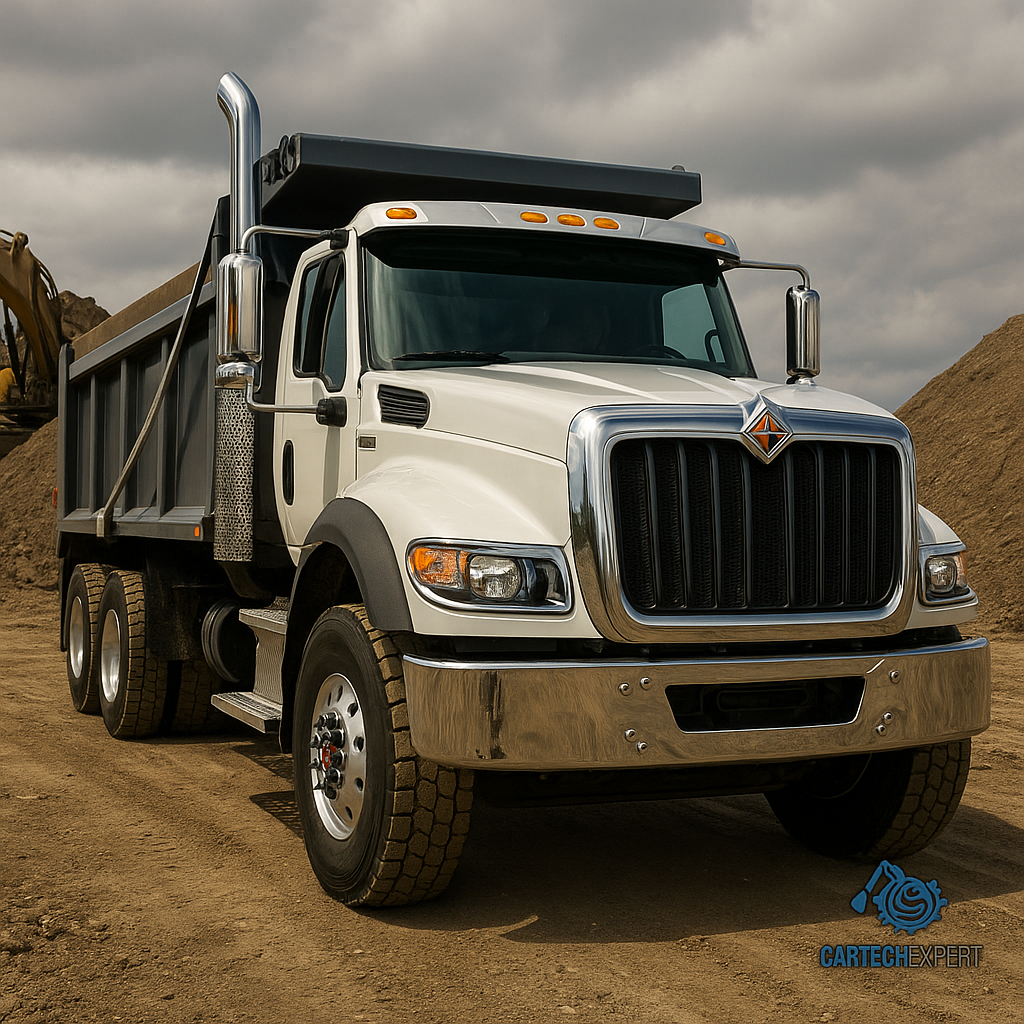
There are vehicles that become fixtures in our lives — the silhouette of a school bus on a quiet morning, the low rumble of a highway tractor on a long night run, the steady roll of a dump truck announcing a workday. International Trucks has given the world many such iconic presences. As an engineer or technician, you feel the continuity of design and purpose: decades of incremental improvements, parts engineered to be serviceable, systems hardened to survive commercial duty.
From its roots producing reliable school buses and medium-duty workhorses to evolving as a backbone supplier of heavy-duty hauling rigs, International forged a reputation built on practicality, accessibility for maintenance teams, and adaptability to varied vocational tasks. This article traces International Trucks’ technical lineage, explores the engineering decisions behind durable platforms, and provides practical guidance for maintenance, safety, and fleet optimization.
“International Trucks – School Bus Icon to Heavy-Duty Backbone” refers to the historical and technical progression of International Harvester’s truck division (later Navistar International) as it grew from a maker of durable medium-duty work vehicles and school buses into a manufacturer of comprehensive heavy-duty vocational and on-highway truck solutions. The phrase encompasses:
Engineers and fleet professionals examine International Trucks as a case study in balancing operator ergonomics, service accessibility, and rugged component architecture.
International Harvester (IH) emerged from the agricultural machinery industry in the late 19th and early 20th centuries. The company’s initial engineering emphasis on heavy-duty mechanical components and robust metallurgy translated well into truck production. Early IH trucks prioritized load-carrying capacity, simple drivetrains, and rugged frames suitable for industrial and rural conditions.
During the mid-20th century, International became synonymous with reliable school buses — designs that influenced wider truck ergonomics: greater driver visibility, improved ingress/egress, and accessory mounting standards used by municipal bodies.
Postwar demand for transportation and construction equipment pushed International to design trucks for city delivery, municipal service, and construction. Key engineering moves included:
IH invested in modular chassis platforms that allowed diverse body fitments — bodies for school buses, flatbeds, tippers, and specialized municipal vehicles. Standardized mounting points simplified retrofitting and aftermarket conversions.
Improvements to driver ergonomics (better seats, simplified dashboards, and improved steering effort) reduced operator fatigue in long municipal shifts and repetitive urban routes, demonstrating an early focus on HMI (human–machine interface) for vocational use.
In the latter half of the 20th century, International’s truck division consolidated under Navistar International. The company advanced diesel engine development (notably with the DT and later the VT family) and refined vocational chassis to improve uptime and lifecycle value.
The adoption of turbocharging and, later, electronic fuel injection systems allowed better torque curves and improved fuel economy. Engines were designed for:
In the 1990s and 2000s, International incorporated onboard diagnostics, multiplexed electrical systems (CAN), and telematics integration — tools that transformed maintenance workflows from reactive to predictive and allowed fleet managers to optimize scheduling based on real-time vehicle health.
Modern International Trucks offer a range of powertrains: efficient diesel families tuned for heavy hauling, and, in some applications, alternative-fuel options (CNG/LNG and hybrid systems) for municipal and regional use. Emissions strategies incorporate DOC, DPF, and SCR systems coupled with ECUs that manage regeneration cycles and dosing to meet stringent NOx/PM limits.
International’s telematics platforms provide:
The brand offers bodies and spec packages tuned to industries: refuse collection, construction tipper trucks, concrete mixers, heavy-haul tractors, and vocational bucket trucks. Engineering choices — axle ratings, PTO interfaces, and strengthened tie-in points — are designed to minimize field modification while maximizing service life.
International Trucks are engineered for long service life when maintained with structure and discipline. The following is a practical maintenance playbook for technicians and fleet engineers.
Safety is structural, mechanical, and procedural — International Trucks embed all three within their engineering and recommended operational protocols.
| Era | Engine Family | Typical Output | Key Feature |
|---|---|---|---|
| 1970s–1980s | Early diesel families | 150–300 hp | Durable block & simple injection |
| 1990s–2000s | DT/MaxxForce | 200–400 hp | Turbocharging & electronic control |
| 2010s–Present | Cummins/International modern engines | 300–600+ hp | Common-rail, DPF & SCR aftertreatment |
| Task | Urban/Stop-Start | Mixed Duty | Long-Haul |
|---|---|---|---|
| Oil & Filter | Every 5,000–10,000 km | 10,000–20,000 km | 20,000–40,000 km |
| Air Filter | Inspect monthly | Inspect every 20,000 km | Inspect every 50,000 km |
| DPF Check | Quarterly | Biannually | Annually |
| Application | GVW Range | Recommended Engine | Key Spec |
|---|---|---|---|
| School Bus / Municipal | 10–18 t | 200–300 hp | Cruise & idle control, AC & HVAC robustness |
| Construction Tipper | 18–40 t | 350–450 hp | High-ratio axles, heavy-duty frames |
| Long-Haul Tractor | 40–80 t (combined) | 450–600+ hp | Aerodynamic cab, AMT, high-capacity cooling |
International provides strong vocational chassis, expansive spec options, and dealer networks experienced in body integration and vocational upfits. Their historical emphasis on serviceability makes them a practical choice for heavy-duty applications.
On older units monitor DPF and SCR degradation (if retrofitted), turbocharger bearing wear, prop-shaft U-joint play, and frame fatigue at body-mount interfaces — especially where payloads are inconsistent or frequently exceed rated values.
Adopt scheduled DPF checks and proactive regeneration strategies, ensure DEF supply chain quality, and use telematics to identify frequent regeneration events that indicate upstream issues (e.g., injector faults, boost leaks).
Yes — standard frame pre-drill patterns, PTO interfaces, and heavy-duty electrical harnesses make upfitting straightforward. Choose heavier rail and cross-member upgrades for severe-service mining or aggregate haulage.
Monitor fuel consumption vs. historical baselines, engine coolant temp excursions, turbo boost consistency, oil consumption rates, and telematics fault-code frequency. Increasing idling time without proportional mileage is also a red flag for urgency.
Old Article Placeholder:
“International Trucks evolved from early school buses and farm equipment into a major player in vocational and heavy-duty markets. Known for practical engineering and serviceability, International remains a backbone for many fleets across municipal and construction segments.”
International Trucks’ evolution — from recognizable school-bus silhouettes to heavy-duty vocational backbones — demonstrates a consistent engineering philosophy: prioritize durability, ease of maintenance, and adaptability to real-world duty cycles. For the engineers and technicians who keep these machines running, that philosophy translates into accessible components, predictable service intervals, and platforms designed to accept vocational bodies without extensive modification.
If you maintain, spec, or operate International Trucks, share your practical insights, service techniques, or spec recommendations at cartechexpert.com. For parts, tools, and professional-grade equipment, visit our store at store.cartechexpert.com. Your hands-on knowledge helps refine best practices and keeps fleets moving.
