Physical Address
Arthur Avenue , BrookField , ILLINOIS , 60513 , United State
Physical Address
Arthur Avenue , BrookField , ILLINOIS , 60513 , United State

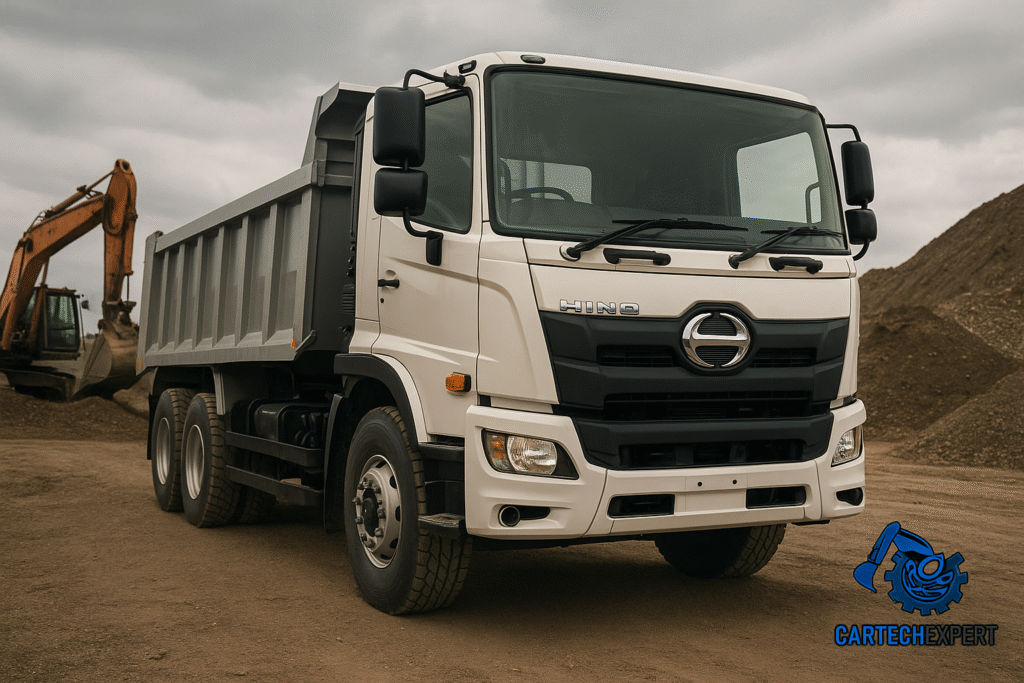
There are vehicles that simply move freight — and then there are the machines that anchor entire supply chains. For many technicians, fleet managers, and operators across Asia, Oceania, and beyond, Hino trucks have become that anchor. Standing beside a Hino at first light, you feel a compact, engineered confidence: tight panel fitment, purposeful cab ergonomics, and a sound from the powertrain that says it was designed to be maintained and to last. This is not sentimental admiration; it is professional respect earned through decades of dependable service in urban logistics, construction, municipal work, and regional haulage.
Hino’s story is inseparable from Toyota’s industrial trajectory. Born in the crucible of early 20th-century Japanese industry, refined through postwar reconstruction and international expansion, and matured with modern diesel, hybrid, and electronic systems, Hino now sits at the intersection of proven mechanical engineering and forward-looking efficiency. This article traces that century-long evolution from technical foundations to the best practices that keep Hino trucks running in the toughest duty cycles.
“Hino – Toyota’s Heavy-Duty Arm With a Century of History” describes the technical, commercial, and organizational development of Hino Motors — a manufacturer of light-, medium-, and heavy-duty commercial vehicles that evolved from early Japanese automotive workshops into a global brand well-known for reliable diesel powertrains, progressive hybrid systems, and a service-oriented product strategy. As Toyota’s heavy-vehicle affiliate, Hino combines Japanese manufacturing discipline with vocational engineering focus to deliver trucks optimized for uptime, repairability, and lifecycle cost efficiency.
This definition emphasizes four core dimensions:
Hino’s roots stem from early Japanese motor activity in the 1910s and 1920s. Initially engaged in carriages, bus bodies, and industrial components, the company shifted toward purpose-built trucks as Japan industrialized. Early engineering priorities were straightforward and practical: robust frames, simple powertrains that could be field-serviced, and configurations suited to local road networks.
Wartime logistics accelerated the need for rugged transport. Hino-produced trucks and bus chassis were engineered for durability in supply chain roles; solutions favored reliability, heavy-duty cooling, and mechanical simplicity. These early wartime lessons later influenced Hino’s approach to vocational durability in civilian markets.
The 1950s and 1960s were a period of intense rebuilding. Hino shifted toward mass-produced commercial vehicles — light and medium trucks that serviced domestic economies. Japanese engineering at the time favored refined manufacturing techniques, narrow tolerances, and improved quality control, which translated into longer-lived vehicles and predictable service intervals.
By the 1970s Hino was a recognizable presence in domestic Japan and increasingly present in export markets. The company’s trucks were prized for long useful life, predictable fuel consumption, and low overall cost of ownership — traits that appealed to owners and fleet managers in developing and industrializing regions.
Hino’s international expansion relied on both direct exports and localized assembly partnerships. These strategies reduced logistics costs and enabled Hino to adapt vehicle specifications to regional operational requirements — from tropical cooling packages to reinforced chassis for heavy-duty mining work.
From the 1980s onward, emissions regulations and fuel economy demands pushed Hino to refine combustion systems, introduce electronic fuel control, and adopt aftertreatment systems (EGR, DPF, and SCR). The technical roadmap included:
Chassis design matured with attention to torsional rigidity, optimized cross-member geometry, and standardized mounting points for vocational bodies (refrigerated vans, tippers, tankers). Transmission offerings expanded from fully manual boxes to automated manual transmissions (AMTs) tailored for fuel efficiency and driver stress reduction.
Hino’s affiliation with the Toyota Group deepened its access to advanced manufacturing systems, lean processes, and cross-brand component strategies. Platform synergies enabled Hino to benefit from Toyota’s R&D in materials, electronics, and alternative drivetrains while preserving its vocational engineering expertise.
Modern Hino diesel engines combine high-pressure common-rail injection, sophisticated turbocharging, and advanced aftertreatment (DOC, DPF, SCR) to meet stringent emissions standards while preserving torque delivery essential for commercial duty. Engine control units (ECUs) now manage injection timing, boost control, and regeneration algorithms for particulate filters.
Recognizing urban emissions and duty-cycle needs, Hino invested in hybrid drivetrains and battery-electric vehicle (BEV) research for delivery fleets. Hybrid systems pair an internal combustion engine with electric assist and regenerative braking to reduce fuel consumption and emissions in stop-start city routes. BEV prototypes leverage modular battery packs, high-efficiency inverters, and thermal management tailored to vocational loads.
Hino’s digital offerings integrate vehicle telemetry (fuel usage, fault codes, driving behavior) with fleet management platforms. Predictive maintenance models use telematics data to forecast component wear and schedule targeted servicing, reducing unplanned downtime and optimizing spare parts inventory.
Hino engineering emphasizes serviceability. Long Uptime is achieved through routine checks, parts modularity, and adherence to manufacturer schedules. Below are disciplined practices for workshop teams, fleet engineers, and mobile technicians.
Hino integrates safety as a design requirement across vehicles: from cab structure to driver assistance and fleet-level protocols. Safety for Hino encompasses machine protection, human protection, and operational policies.
| Era | Engine Family | Displacement | Typical Output | Key Feature |
|---|---|---|---|---|
| 1950s–1970s | Early OHV diesel | 4.0–7.0 L | 80–160 hp | Simple, robust, field-serviceable |
| 1980s–1990s | J & T series | 6.0–9.0 L | 140–260 hp | Turbocharging & improved metallurgy |
| 2000s–2010s | A05 & A09 | 4.5–8.0 L | 150–300 hp | Common-rail injection & EGR |
| 2010s–Present | Hino hybrid & modern diesels | 4.0–9.0 L | 160–360 hp | DPF, SCR, and hybrid assist |
| Task | Light Urban Duty | Mixed Duty | Severe/Vocational | Purpose |
|---|---|---|---|---|
| Oil & Filter | 10,000–15,000 km | 10,000 km | 5,000–8,000 km | Engine life |
| Brake Inspection | 10,000 km | 7,500 km | 5,000 km | Safety |
| DPF Condition Check | Annually | 6 months | 3 months | Emissions & performance |
| Transmission Fluid | Annually | Every 40,000 km | Every 20,000 km | Drivability |
| Attribute | Hino | Typical Competitor |
|---|---|---|
| Serviceability | High — modular parts & extensive dealer support | Moderate — varies by brand |
| Fuel Efficiency | Competitive — modern engines & hybrid options | Comparable |
| Lifecycle Cost | Low to moderate — strong resale values | Variable |
| Vocational Durability | Strong — reinforced chassis options | Moderate to strong |
Hino produces light-duty, medium-duty, and heavy-duty trucks, plus buses. Applications range from city delivery and refrigerated logistics to construction tipper bodies and long-haul regional rigs.
The partnership brings manufacturing discipline, cross-brand R&D advantages (materials, electronics), and a stronger global parts and dealer network—translating into better quality control and predictable lifecycle support.
Yes — hybrid Hino models are purpose-built for stop-start urban routes where regenerative braking reduces fuel consumption and lowers total cost of ownership. They are particularly effective in delivery and waste management fleets.
Hino integrates DOC, DPF, SCR, and advanced ECU controls to meet regional emissions standards (Euro, EPA, Japan), and offers tailored aftertreatment maps to match fuel quality and duty cycles in global markets.
Adhering to recommended oil and filter intervals, monitoring DPF & SCR systems, keeping cooling systems clean, and addressing telematics fault codes promptly are the most effective longevity practices.
Old Article Placeholder:
“Hino trucks, a core part of the Toyota Group’s commercial vehicle operations, are recognized worldwide for durability and value. Over decades of development, Hino has produced reliable commercial vehicles across light to heavy-duty categories, offering diesel and hybrid options for modern fleets.”
Hino’s century-long evolution—from early mechanical simplicity to modern, digitally-supported diesel and hybrid systems—illustrates how a manufacturer can preserve vocational focus while adopting progressive technologies. For engineers and technicians, Hino vehicles reward disciplined maintenance, attention to emissions systems, and a service-first approach to parts management. For fleet managers, Hino presents cost-effective ownership through reliability, resale value, and expanding electrified options for urban operations.
If you work with Hino vehicles — as a mechanic, fleet engineer, or operator — your expertise helps shape practical knowledge that benefits the entire industry. Share your maintenance tips, diagnostic tricks, or real-world performance data at cartechexpert.com. Explore compatible tools, parts, and fleet resources in our shop at store.cartechexpert.com, and help other professionals keep their fleets on the road.
