Isuzu Trucks – The Global Light-Duty Workhorse
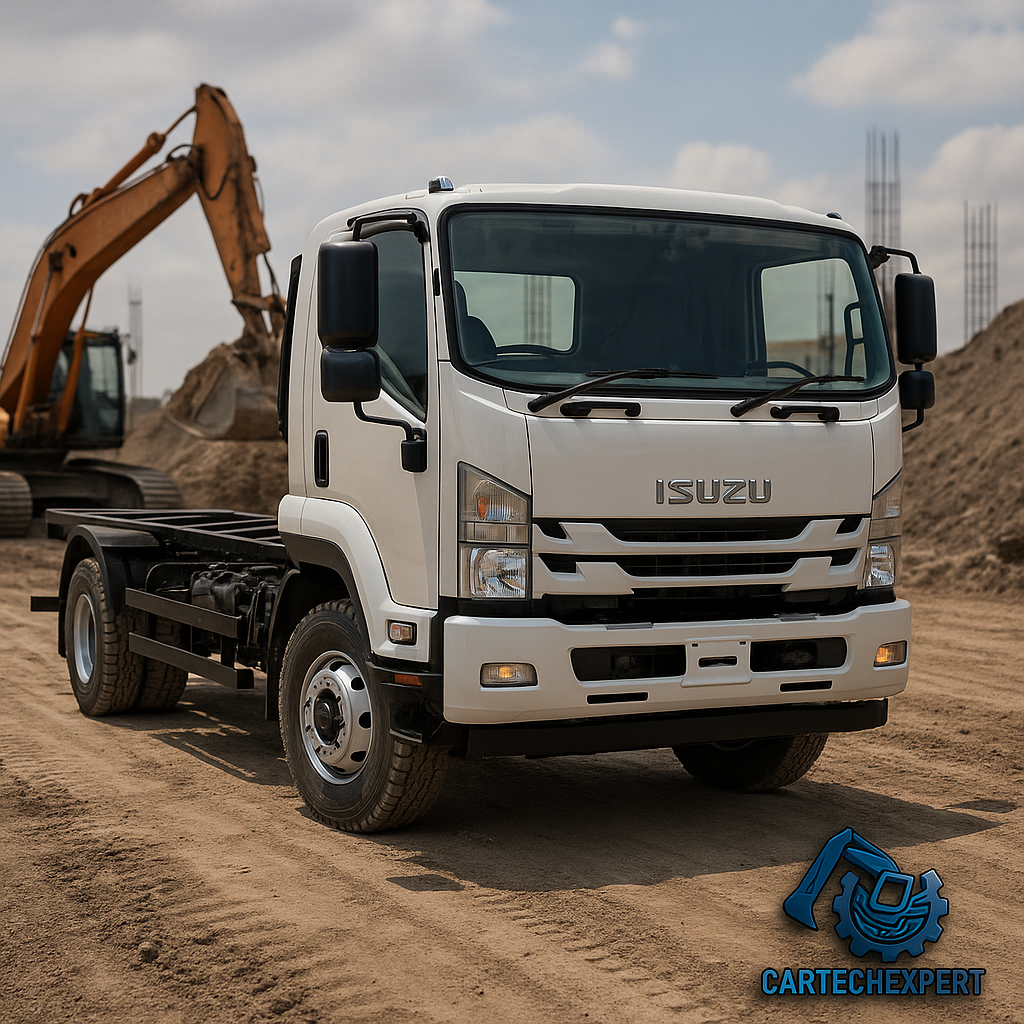
There’s a certain quiet determination in the way an Isuzu truck moves through a city. No drama, no noise, no wasted effort—just purposeful motion. Whether it’s a cold morning delivery route, a construction site with tight corners, or a long day of stop-and-go transport, Isuzu trucks show the type of resilience technicians and drivers quickly learn to trust.
Across the world—from Tokyo to Dubai, from Cape Town to New York—Isuzu’s light-duty trucks have become an essential backbone of logistics. Fleet managers rely on them because downtime is expensive, technicians appreciate their straightforward systems, and drivers respect their efficiency and maneuverability. To understand why Isuzu dominates the light-duty segment, you have to trace the engineering mindset behind every model: simplicity, durability, and purpose-driven efficiency above everything else.
Table of Contents
- Definition – Isuzu Trucks: The Global Light-Duty Workhorse
- Origins of Isuzu (1910s–1950s): Foundations of Japanese Commercial Engineering
- Isuzu’s Light-Duty Breakthrough (1960s–1980s)
- The N-Series Era (1980s–Present): Efficiency, Reliability & Global Standardization
- F-Series & Medium-Duty Expansion
- Modern Isuzu Engineering (2000s–Present)
- Key Engineering Features & Systems
- Maintenance Best Practices
- Isuzu Safety Systems & Engineering Philosophy
- Technical Tables & Comparative Data
- Frequently Asked Questions
- Old Article Version
- Conclusion
Definition – Isuzu Trucks: The Global Light-Duty Workhorse
“Isuzu Trucks – The Global Light-Duty Workhorse” refers to the dominant role Isuzu has held in the global commercial truck market for decades, especially in light-duty and medium-duty segments. It highlights:
- Light-duty commercial trucks that prioritize uptime
- Highly fuel-efficient diesel engines
- Simple, durable mechanical engineering
- Global-standard chassis design for versatile body configurations
- A reputation built on reliability more than raw power
From small businesses running daily delivery routes to multinational logistics fleets, Isuzu trucks exist for one core purpose: consistent, low-cost operation with minimal downtime.
Origins of Isuzu (1910s–1950s): Foundations of Japanese Commercial Engineering
Early Beginnings: The Ishikawajima Automotive Works
Isuzu’s lineage begins in 1916 with Ishikawajima Automotive Works—one of Japan’s earliest motor manufacturers. Collaboration with European engineers helped shape strong mechanical fundamentals, including:
- High-quality castings
- Reliable geartrain engineering
- Durable frame design
The First Commercial Vehicles
By the 1930s, the company produced its first commercial trucks, which were:
- Diesel-powered
- Designed for heavy loads
- Built for simple field repairs
These early principles remain embedded in Isuzu’s DNA today.
Isuzu’s Light-Duty Breakthrough (1960s–1980s)
The Global Shift Toward Light-Duty Trucks
During the 1960s, global markets demanded lighter, more fuel-efficient trucks for urban logistics. Isuzu recognized this shift early and engineered trucks that:
- Used efficient small-displacement diesel engines
- Had strong but lightweight chassis rails
- Offered maneuverability in tight cities
The Birth of a Reputation
By the late 1970s, Isuzu trucks were already common in Asia, the Middle East, and Australia. Their reputation was built on three pillars:
- Reliability: engines designed to run hundreds of thousands of kilometers
- Serviceability: easy-to-access components
- Fuel Efficiency: unmatched in the light-duty segment
The N-Series Era (1980s–Present): Efficiency, Reliability & Global Standardization
The Most Famous Isuzu Line
Introduced in 1980, the Isuzu N-Series—known as the NPR, NQR, and NRR in various markets—became the world’s best-selling light-duty truck lineup.
What Made the N-Series a Global Success?
- Cab-over design for superior maneuverability
- Strong ladder-frame chassis for multiple body types
- Industry-leading fuel economy
- Easy maintenance access via tilting cab
- Highly modular design
Engine Families
Prominent N-Series engines include:
- 4JB1-T (legendary 2.8L diesel)
- 4HK1-TC (modern common-rail 5.2L)
- 4JJ1 (known for reliability)
F-Series & Medium-Duty Expansion
F-Series Capabilities
The F-Series broadened Isuzu’s presence in medium-duty markets with:
- Higher payload capacities
- Longer wheelbase options
- 6-cylinder diesel engines
- Improved braking and cooling systems
Applications
- Construction materials transport
- Refrigerated delivery trucks
- Waste management bodies
- Tanker and flatbed configurations
Modern Isuzu Engineering (2000s–Present)
Emissions & Efficiency
- Common-rail injection systems
- Improved engine mapping
- SCR & DPF emission technologies
Advanced Cabin Design
- Better visibility
- Improved seating ergonomics
- Modern infotainment and telematics
Electric & Hybrid Models
Isuzu is expanding into low-emission vehicles including BEV variants for urban use and hybrid systems for efficiency improvement.
Key Engineering Features & Systems
1. Powertrain Engineering
- Low-displacement turbo diesels
- Optimized torque curves for city operation
- High durability injection systems
2. Chassis & Frame
- Highly adaptable ladder frame
- Wide availability of mounting points
- Multiple wheelbase configurations
3. Suspension
- Leaf-spring systems for durability
- Optional rear air suspension on select models
- High-load shock absorbers for commercial duty
4. Electronics & Telematics
- Onboard diagnostics
- Fuel economy tracking
- GPS fleet management integration
Maintenance Best Practices
Daily Tasks
- Fluid checks (oil, coolant, brake, washer)
- Tire condition assessment
- Brake air pressure verification (where applicable)
- Visual checks for leaks
Scheduled Maintenance
- Every 10,000–15,000 km: Oil & filter service
- Every 50,000 km: Transmission and differential checks
- Annual: Chassis torque check and full diagnostics
Longevity Practices
- Use OEM-approved filters
- Monitor DPF condition to avoid clogging
- Ensure regular injector cleaning or replacement
Isuzu Safety Systems & Engineering Philosophy
Isuzu emphasizes practical, cost-effective safety systems aligned with global commercial standards:
- High-visibility cab designs
- ABS and stability control systems
- Reinforced cabin structures
- Driver-assist technology in new models
Technical Tables & Comparative Data
Table 1: Popular Isuzu Engines
| Engine |
Displacement |
Power |
Key Feature |
| 4JB1 |
2.8L |
75–100 hp |
Legendary durability |
| 4JJ1 |
3.0L |
120–177 hp |
Modern efficiency |
| 4HK1 |
5.2L |
150–240 hp |
Medium-duty strength |
Table 2: Maintenance Task Summary
| Task |
Interval |
Purpose |
| Oil Change |
10,000–15,000 km |
Engine protection |
| Brake Inspection |
10,000 km |
Safety |
| DPF Cleaning |
Annually |
Emissions performance |
Frequently Asked Questions – Isuzu Trucks
1. Why are Isuzu trucks so popular for delivery and logistics?
Because they combine fuel efficiency, low maintenance costs, and excellent reliability—ideal for frequent-stop operations.
2. Are Isuzu diesel engines long lasting?
Yes. Many fleets report Isuzu engines surpassing 500,000 km with routine maintenance.
3. What makes the N-Series unique?
Its maneuverability, low cost of ownership, modularity, and globally proven design.
4. Does Isuzu make electric trucks?
Yes, Isuzu offers BEV variants for urban delivery markets.
5. Are Isuzu parts expensive?
No—Isuzu is known for accessible parts pricing and simplified repair procedures.
Old Website Article (Placeholder)
“Isuzu trucks are widely recognized for their reliability, lightweight design, and global presence in delivery and commercial transport.”
Conclusion
Isuzu’s dominance in light-duty trucking is no accident. It comes from decades of engineering refinement, practical design choices, global market understanding, and a commitment to delivering trucks that last. Whether in tight city streets or demanding industrial routes, Isuzu trucks continue to set the standard for reliability, efficiency, and low operating cost.
For more heavy-equipment engineering articles, visit
cartechexpert.com
and explore tools, parts, and specialized resources at
store.cartechexpert.com.

