Physical Address
Arthur Avenue , BrookField , ILLINOIS , 60513 , United State
Physical Address
Arthur Avenue , BrookField , ILLINOIS , 60513 , United State

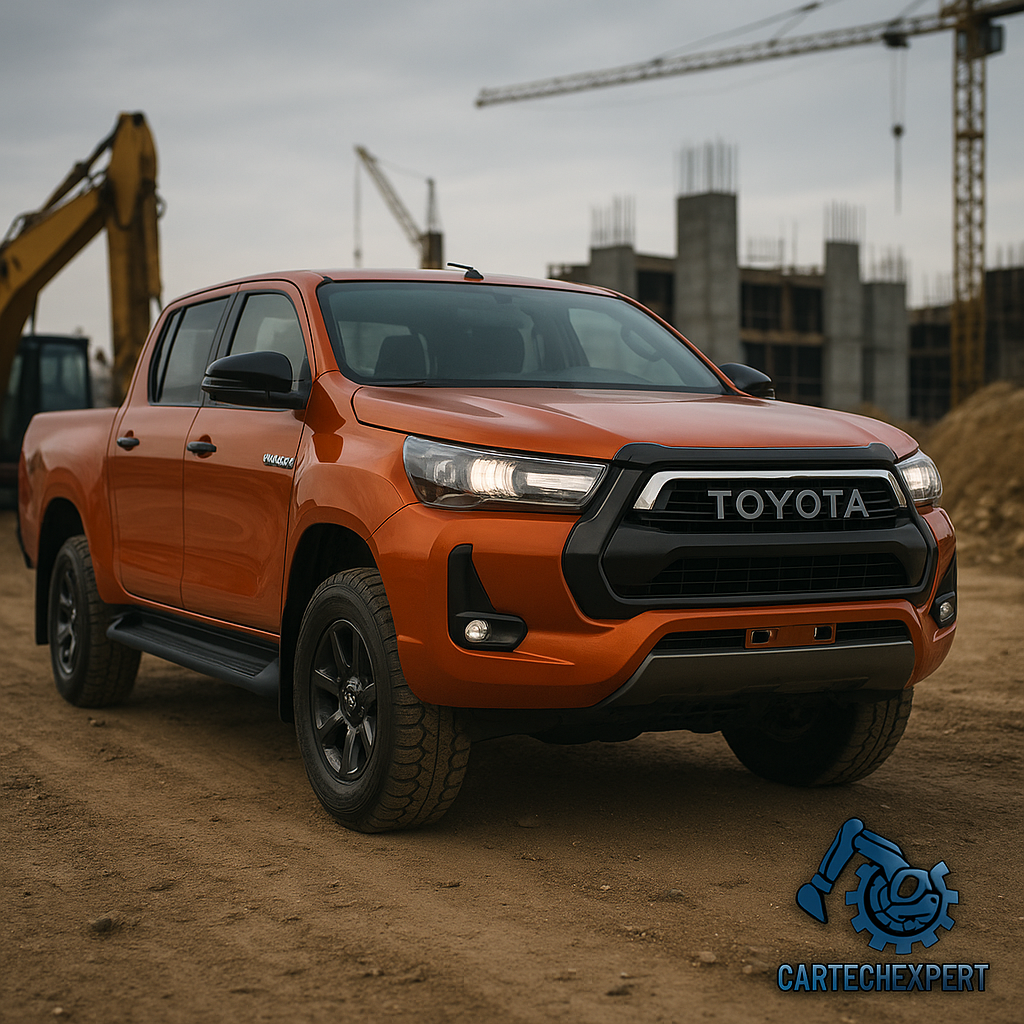
There are trucks that work, and then there are trucks that survive. Engineers, operators, and technicians across deserts, jungles, mountains, and conflict zones tell the same story: when everything else breaks, the Toyota Hilux or Land Cruiser keeps going. It’s a reputation earned not through marketing, but through decades of real-world hardship—trucks that have crossed continents, delivered life-saving supplies, hauled impossible loads, and run for hundreds of thousands of kilometers with only minimal servicing.
Whether navigating rocky mining sites, remote oil-field roads, or military convoys, Toyota trucks bring a kind of mechanical certainty. You can feel it when a Hilux shakes off a rough start on a cold morning, or when a Land Cruiser’s big diesel wakes with the confidence of a machine built for extremes. This article traces that legacy—from the early days of Toyota’s rugged 4x4s to the powerful, electronically enhanced trucks of the modern era. What emerges is not simply a history lesson, but a technical case study in durability, engineering discipline, and global influence.
“Toyota Trucks – Hilux & Land Cruiser Legacy” refers to the evolution of Toyota’s most iconic and durable off-road and utility vehicles. For more than 50 years, the Hilux and Land Cruiser families have defined global standards of:
Today, these vehicles are embedded in global operations from humanitarian aid to heavy mining, proving repeatedly that Toyota engineering is built on durability first, performance second, and refinement third.
Toyota’s journey into off-road and heavy-duty truck engineering began with the 1951 BJ—a military-inspired, rugged 4×4 designed to tackle Japan’s challenging terrain. The BJ proved its capability by driving up Mount Fuji farther than any previous motor vehicle. This achievement secured Toyota a contract with the National Police Reserve and laid the groundwork for future Land Cruiser models.
The Hilux was launched with a clear mission: build a compact truck that could handle work conditions normally reserved for heavier platforms. The first Hilux models featured:
It was during the 1980s that the Hilux earned its global status as an unbreakable machine—famously surviving destructive tests, conflicts, harsh climates, and industrial use far beyond normal automotive expectations.
Arguably the most iconic Land Cruiser line ever produced, the 40 Series became the backbone of remote industry. Known for its ruggedness, it featured:
From African mining fields to Australian cattle stations, the 40 Series proved itself in conditions that destroyed other vehicles.
The 70 Series—still produced today—remains one of the world’s most respected heavy-duty off-road platforms. Key engineering highlights:
The Land Cruiser earned its role as the “go-anywhere, survive-anything” vehicle of choice for industrial fleets.
Modern Hilux models incorporate:
Toyota’s modern Land Cruiser models emphasize:
Still in service worldwide, the 70 Series remains the gold standard for:
Toyota approaches safety with a layered philosophy: mechanical strength first, electronic support second. Safety features include:
| Era | Engine | Power | Notes |
|---|---|---|---|
| 1970s | 2.2L diesel | 60–70 hp | Early reliability |
| 1990s | 3.0L diesel | 90 hp | Improved fuel delivery |
| 2020s | 2.8L GD diesel | 204 hp | Modern efficiency & torque |
| Series | Production | Engine | Purpose |
|---|---|---|---|
| 40 | 1960–1984 | H-series Diesel | Heavy off-road |
| 70 | 1984–Present | 4.2L Diesel | Industrial & mining |
| 200 | 2007–2021 | V8 Diesel | High-end off-road |
| 300 | 2021–Present | V6 twin-turbo diesel | Modern durability |
Because Toyota builds them with over-engineered components, thick frames, conservative tuning, and global testing in extreme conditions.
Mining, oil & gas, humanitarian work, military operations, forestry, and remote logistics rely on Hilux and Land Cruiser platforms.
Yes, though electronics require more careful servicing. The mechanical durability remains one of the best in the industry.
Because global demand from industrial sectors remains extremely high and no modern platform matches its simplicity and strength.
Absolutely — their torque tuning, cooling systems, and drivetrain strength make them ideal for towing and high-load work.
“Toyota trucks, especially the Hilux and Land Cruiser, are famous worldwide for their reliability, durability, and strong off-road performance.”
From early post-war off-road platforms to today’s advanced diesel and electronic models, Toyota trucks continue to define global benchmarks of durability and reliability. Hilux and Land Cruiser represent two sides of the same philosophy: build machines that last, machines that survive, and machines that earn the trust of operators across industries and continents.
For more professional heavy-equipment articles, visit cartechexpert.com
and explore tools, parts, and expert resources at store.cartechexpert.com.
