Scania – The Legendary V8 and Nordic Engineering
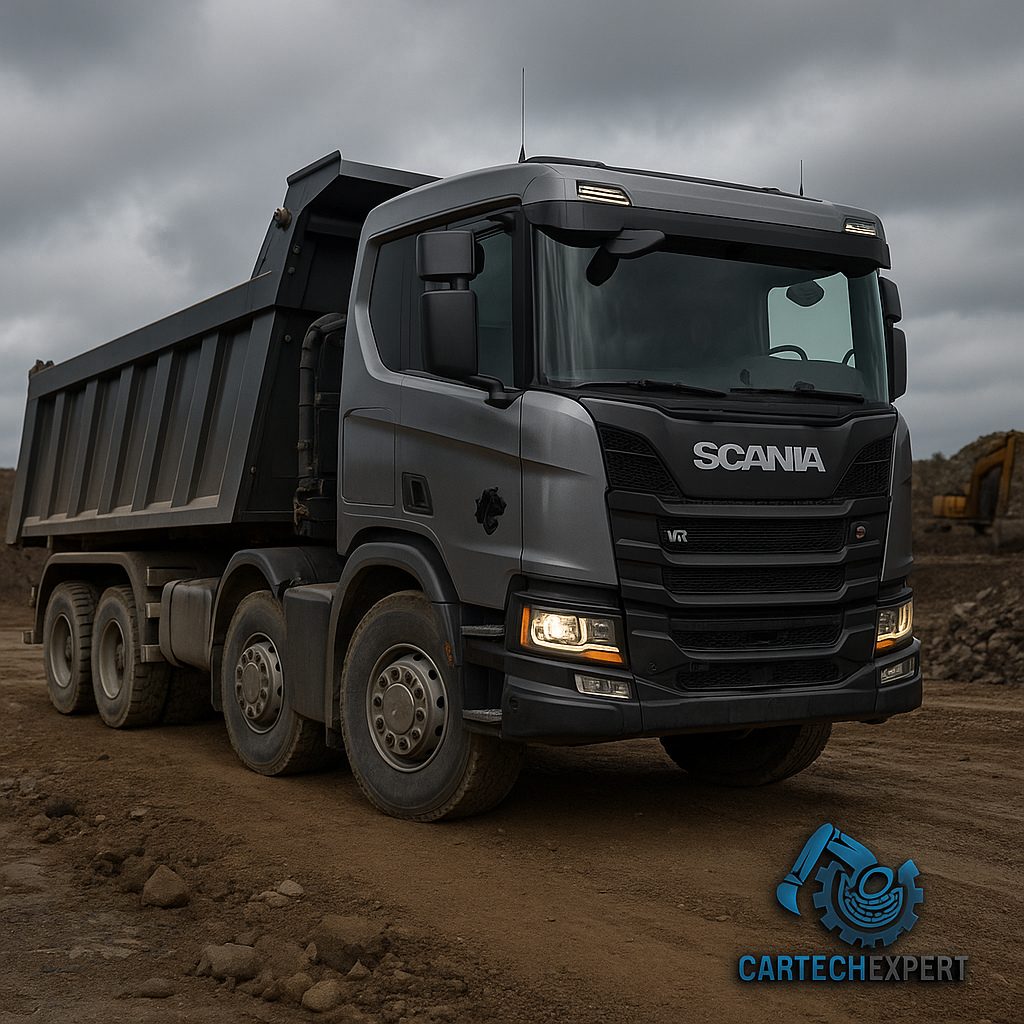
There are machines that command attention the moment they start. Before the wheels turn, before the first shift, the sound alone tells you a story. A deep-throated rumble, measured and confident, vibrating through steel and soil. For many operators, technicians, and engineers across the world, that sound has a name — Scania V8.
Scania trucks carry a presence that feels unmistakably Nordic. Their lines are clean, their stance controlled, and their behavior under load remarkably intelligent. These trucks have hauled timber through frozen forests, carried freight across continental roads, and proven themselves in conditions that would break lesser machines. To understand Scania is to understand the interplay between disciplined engineering, environmental resilience, and mechanical artistry — a balance forged in the Scandinavian landscape and perfected over more than a century.
Table of Contents
- Definition – Scania’s Legendary V8 & Nordic Engineering Identity
- Origins of Scania (1890s–1930s): Forging a Nordic Engineering Culture
- The Birth of the Scania V8 (1969): An Engineering Turning Point
- Technological Evolution (1970s–2000s): Efficiency, Torque & Durability
- Modern Scania Engineering (2010s–Present)
- Key Technical Features & Engineering Systems
- Maintenance Best Practices
- Occupational Safety & Nordic Design Philosophy
- Technical Tables & Comparisons
- Frequently Asked Questions
- Old Article Version
- Conclusion
Definition – Scania’s Legendary V8 & Nordic Engineering Identity
“Scania – The Legendary V8 and Nordic Engineering” refers to the technical heritage, engineering discipline, and mechanical philosophy behind Scania trucks — with specific emphasis on the iconic V8 engine series introduced in 1969. Over decades, Scania has become synonymous with:
- High-torque, high-efficiency V8 diesel engines
- Nordic design principles: simplicity, reliability, and environmental adaptation
- Modular engineering across powertrains, chassis, and cabins
- Exceptional performance in harsh climates and long-haul conditions
- Technological leadership in low-emission heavy-duty vehicles
The Scania V8 is not merely an engine — it is a global symbol of durability, pulling power, and engineering precision.
Origins of Scania (1890s–1930s): Forging a Nordic Engineering Culture
Early Roots in Swedish Industry
Scania’s story begins in the late 19th century with Scania-Vabis, a merger between two pioneering vehicle manufacturers in Sweden. This union combined mechanical sophistication with Swedish industrial resilience, giving rise to early truck models engineered for:
- Harsh cold climates
- Rugged terrain
- Payload stability under uneven conditions
Emergence of a Unique Engineering Philosophy
Unlike many global manufacturers, Scania focused on long-term sustainability of components rather than mass production. Modules were designed for easy replacement, a principle still central to Scania’s design architecture today.
The Birth of the Scania V8 (1969): An Engineering Turning Point
In 1969, Scania introduced an engine that would permanently change heavy-duty trucking: the 14.2-liter V8. At a time when most manufacturers relied on inline-6 engines, Scania pursued a radical architecture offering:
- Exceptional torque delivery at low rpm
- Greater cylinder displacement without increasing engine height
- Smoother vibration characteristics
- Superior power for long-haul and heavy loads
Why the V8 Was a Game Changer
The original Scania V8 produced 350 hp — an extraordinary figure for the era — instantly making it the preferred choice for timber haulers, mining fleets, and long-distance European transport.
Engineering Priorities Behind the V8
- Robust crankshaft and bearing geometry
- Large displacement with balanced fuel economy
- Cool-running cylinder layout
- Deep sump lubrication for incline stability
Technological Evolution (1970s–2000s): Efficiency, Torque & Durability
1970s–1980s: Scaling Power
- Introduction of turbocharging and intercooling
- Improved fuel injection pressures
- Increased horsepower to 450+
1990s: Electronics Redefine Diesel Control
- Electronic Diesel Control (EDC)
- Adaptive fuel mapping
- Advanced turbocharger geometry
2000s: Emission-Driven Engineering
- SCR aftertreatment systems
- High-pressure common-rail injection
- Increased torque outputs exceeding 2,700 Nm
Modern Scania Engineering (2010s–Present)
New Generation Scania V8 (2017)
Modern Scania V8 engines push 520, 580, 650, and 770 hp — making them some of the most powerful production truck engines globally.
Key Innovations
- Thermal efficiency breakthroughs
- Low-friction internal components
- Improved breathing and combustion chamber geometry
- Weight-optimized blocks and heads
Modular Platform Engineering
Scania’s modular design enables:
- Commonality of parts across multiple models
- Streamlined maintenance
- Faster repairs and minimal downtime
Electric and Alternative Fuel Trucks
- Battery-electric models for urban logistics
- LNG-powered long-haul solutions
- Hybrid systems for mixed-duty cycles
Key Technical Features & Engineering Systems
1. Powertrain & V8 Architecture
- Large displacement diesel V8 engines up to 16.4 L
- Low-rpm torque for steep gradients and heavy gross weights
- Turbocharged with optimized intercooling systems
2. Chassis & Frame
- High-strength steel rails with low torsional twist
- Configurable wheelbases for vocational applications
- Air and steel suspension options
3. Gearboxes & Driveline
- Scania Opticruise automated manual transmission
- High-ratio rear axles
- Engine braking and retarder systems
4. Cabin Ergonomics
- Driver-centered Scandinavian layout
- Adjustable, vibration-damped seating
- Digital instrument clusters with telematics integration
5. Electronics & Telematics
- Predictive cruise control
- Remote diagnostics
- Fleet management analytics
Maintenance Best Practices
Daily Checks
- Oil, coolant, and fuel-water separator inspection
- Tire condition and tread depth
- Brake system air pressure
- Visual checks for leaks and vibration points
Service Intervals
- Every 30,000–45,000 km: oil and filter service
- Every 80,000–120,000 km: drivetrain and suspension checks
- Annual: full diagnostic scan, retarder inspection
Longevity Tips
- Use Scania-approved lubricants
- Monitor EGR/SCR systems for soot buildup
- Maintain intercooler and radiator cleanliness
Occupational Safety & Nordic Design Philosophy
Scandinavian engineering emphasizes not only mechanical integrity but also human safety. Scania reflects this through:
- High-visibility cabin geometry
- Controlled vibration exposure
- Predictive safety systems
- Crashworthy cab structures
Technical Tables & Comparisons
Table 1: Scania V8 Engine Evolution
| Era |
Displacement |
Power |
Key Feature |
| 1969 |
14.2 L |
350 hp |
First V8 launch |
| 1980s |
14.2 L |
380–420 hp |
Turbocharging maturity |
| 2000s |
15.6 L |
500–620 hp |
Electronics and SCR |
| 2020s |
16.4 L |
520–770 hp |
High thermal efficiency |
Table 2: Maintenance Overview
| Task |
Interval |
Purpose |
| Oil & Filter |
30,000–45,000 km |
Lubrication & cooling |
| Brake Inspection |
10,000 km |
Operational safety |
| Transmission Service |
Annually |
Smooth gear shifting |
| Telematics Diagnostics |
Every 6 months |
Predictive maintenance |
Frequently Asked Questions – Scania V8 & Nordic Engineering
1. What makes the Scania V8 so iconic?
Its unmatched blend of torque, longevity, sound signature, and engineering durability makes it one of the most respected truck engines ever built.
2. Are Scania trucks good for extreme climates?
Yes — they are engineered for Nordic winters, making them highly reliable in snow, ice, and harsh cold conditions.
3. Is the V8 still relevant with electrification?
For heavy-haul, long-range, and extreme-duty work, the V8 remains indispensable. For urban logistics, Scania’s electric models are rapidly growing.
4. Why are Scania cabins considered among the best?
Their ergonomic layout minimizes fatigue, improves visibility, and enhances safety through intuitive control placement.
5. What industries rely heavily on Scania V8 models?
Timber transport, mining, long-haul freight, heavy towing, and energy-sector logistics.
Old Website Article (Placeholder)
“Scania trucks are known for their powerful V8 engines, Swedish engineering, and durable build quality. They are widely used across Europe and remain a symbol of strength, efficiency, and reliability.”
Conclusion
From its early Swedish origins to its legendary V8 dominance, Scania has built a legacy deeply rooted in precision engineering and resilience. Every truck reflects Nordic values: simplicity, durability, intelligence, and environmental respect.
For more expert heavy-equipment engineering articles, visit cartechexpert.com and explore technical tools, parts, and resources at store.cartechexpert.com.

